
Downsizing Movers in Windsor, Ontario: How to Plan a Smaller Move
Planning a smaller move in Windsor? Compare packing options, prepare accurate quotes, and avoid common access, storage, and scheduling problems with confidence.

Downsizing movers in Windsor can handle the physical work of relocating the belongings you have chosen to keep, including agreed packing, loading, transport, unloading, and setup. They generally do not decide what you should sell, donate, discard, or retain unless those services are specifically included in writing.
The best approach is to separate the downsizing decisions from the move itself. First reduce the inventory, then choose the right level of packing help, provide accurate access details, and compare written estimates that clearly describe the work.
Quick summary

- Sort belongings before requesting quotes so the estimate reflects what is actually moving.
- Choose between self-packing, partial packing, and full-service packing based on your time, energy, and the items involved.
- Give movers details about stairs, elevators, parking, loading windows, storage, fragile items, and specialty belongings.
- Ontario guidance recommends comparing at least three written estimates and confirming the scope, insurance, inventory, and contract terms.
- For Windsor condos and busy moving periods, reserve building access and book as early as your schedule allows.
What downsizing movers can and cannot do
Downsizing is usually a smaller residential relocation, such as moving from a house to a condo, from a larger apartment to a smaller one, or into a more manageable home. A moving company can usually help with the physical relocation of the items listed for transport. Depending on the agreed service, that may include packing, loading, protective materials, transportation, unloading, furniture placement, and setup.
Sorting and disposal are separate decisions. Do not assume that a moving crew will sell furniture, arrange donations, appraise valuables, remove unwanted items, or clear an estate. Ask each provider what it does and does not handle, and arrange those tasks separately before moving day if they are not included.
People planning a smaller household should also decide how much support they need for the complete move. A guide to residential moving Windsor can help you compare packing, loading, transport, unloading, and setup before choosing a service level.
A practical downsizing workflow before moving day
1. Measure the new home
Measure rooms, closets, doorways, stairwells, and any areas where large furniture must turn. Note built-in storage, appliance spaces, and restrictions that may affect what can realistically fit. If you are moving into a condo or apartment, obtain the building’s moving rules before deciding which large items to keep.
Create a simple list of essential furniture, preferred furniture, and items that are too large or unsuitable for the new space. Measurements make these decisions more objective and reduce the risk of paying to move belongings that cannot be placed properly.
2. Sort into clear categories
Use separate groups for move, sell, donate, dispose, and undecided. Set a date for resolving the undecided group. Items that remain unresolved can affect the quote, storage needs, and the amount of packing required.
Arrange the removal or collection of non-moving items before the crew arrives. A clear path through the home helps movers work safely and keeps the moving inventory from being confused with belongings that are staying behind.
3. Prepare an inventory for estimates
List major furniture, appliances, boxes, fragile items, outdoor belongings, and anything unusually heavy. Include the number of bedrooms only as a starting point. Two homes of the same size can have very different moving volumes, especially after a substantial reduction in belongings.
Identify items that require special handling, such as a piano, hot tub, pool table, safe, artwork, or delicate heirloom. Ask whether the mover has a suitable service for each item rather than assuming it is included in a standard residential move.
Choose the right level of packing support
Downsizing does not automatically mean that a move will be simple. Fewer belongings may still include fragile china, framed artwork, electronics, documents, or furniture that needs disassembly and protection. Compare the following options with the time and effort you can realistically provide.
| Option | Best suited to | Tradeoffs to consider |
|---|---|---|
| Self-packing | People who have time, suitable materials, and control over the sorting and labelling process. | Usually requires more personal labour and planning. Confirm whether the mover will handle customer-packed boxes and what packing standards apply. |
| Partial packing | Households that can pack routine items but want help with fragile, bulky, or time-sensitive areas. | Clarify which rooms and items are included, who supplies materials, and whether boxes will be labelled or unpacked. |
| Full-service packing | People with limited time, significant fatigue, many fragile items, or a short gap between homes. | It offers convenience but changes the scope and price of the move. Confirm the materials, packing sequence, labelling, unpacking, and final setup. |
EC Movers describes full and partial packing, packing-material consultation, and storage support as available options. Confirm the exact combination in your written quote, including whether unpacking, furniture assembly, and setup are part of the selected service rather than assuming they are automatic.
How to request an accurate downsizing moving quote
Give every mover the same information so estimates can be compared fairly. Include the pickup and delivery addresses, approximate inventory, packing level, distance, stairs, elevators, parking conditions, access restrictions, fragile items, specialty items, and any storage requirement.
Tell the mover if the new building has a reserved elevator, a fixed loading window, a height restriction, or a requirement for proof of insurance. At the pickup address, identify narrow staircases, tight turns, long carries, gravel paths, or limited truck access. These details can affect the crew plan and the time required.
Ontario recommends getting at least three written estimates and clarifying what each company includes, such as packing services. The guidance is especially useful for a downsizing move because a lower item count does not by itself explain the full cost. Compare the service scope, not just the total price: Ontario’s moving guidance recommends making the inclusions clear before signing.
Ask whether the quote is flat-rate or based on changing time and materials. If a provider offers flat-rate pricing, confirm what could still create an additional charge, such as extra packing, waiting time, difficult access, storage, a changed inventory, or a requested change in delivery. Obtain deposits, cancellation terms, arrival windows, and payment requirements in writing.
Windsor-specific logistics to plan early
Local conditions can matter as much as the distance. Anyone moving in Windsor should check building access, parking, elevator reservations, and loading time slots before the date is finalized.
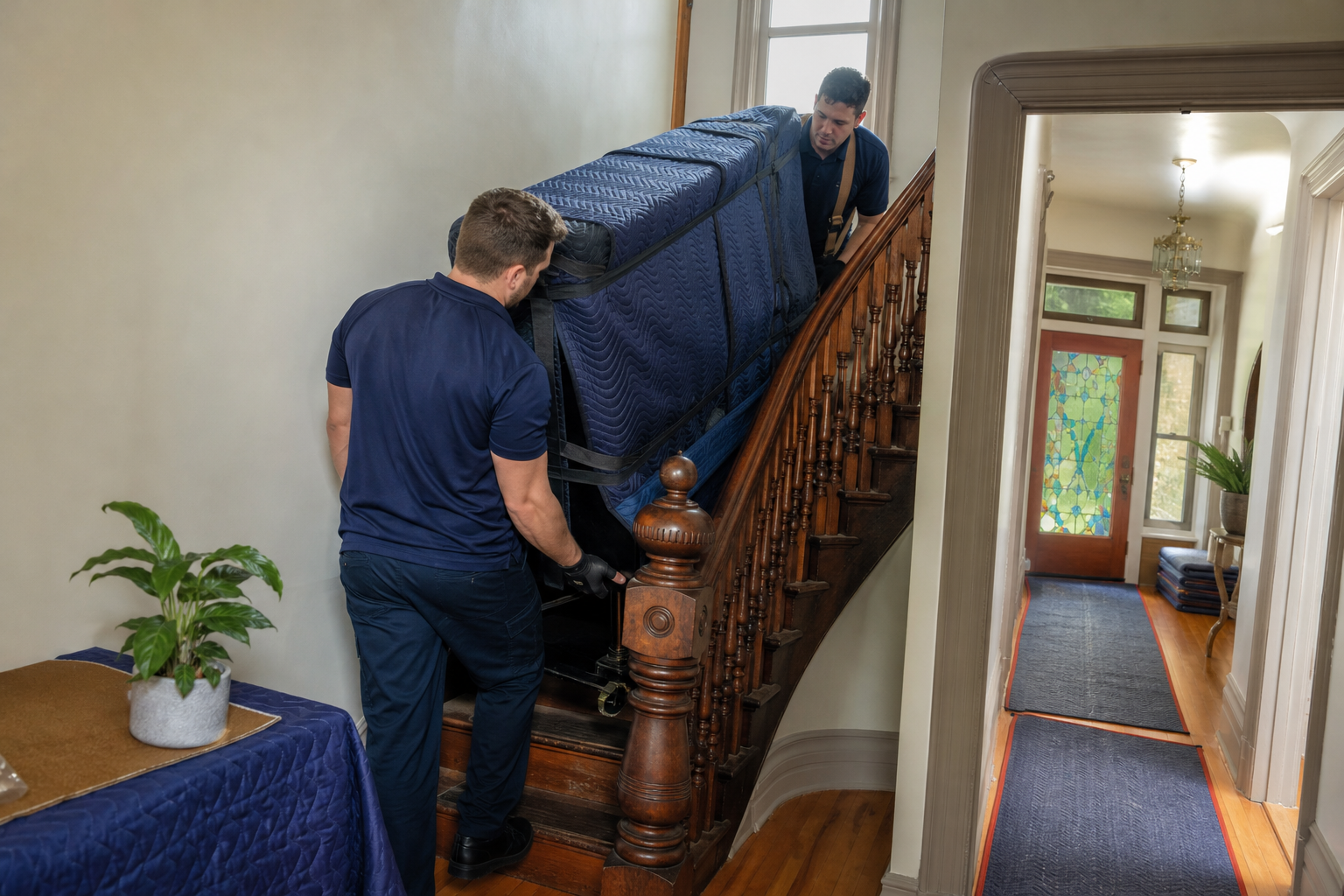
Older Windsor homes may have narrow staircases and tight turns. A condo move may require a booked service elevator and a specific loading window. Ask the building manager whether movers need a certificate of insurance, a damage deposit, protective floor coverings, or advance notice for the truck.
End-of-month dates and student moving periods can be busier. The available Windsor guidance recommends booking one to three weeks ahead during busy periods, while same-day service depends on whether a suitable crew is free. If your move has a firm closing date or elevator reservation, request quotes as soon as the date is known.
When storage or specialty-item moving makes sense
Storage can be useful when the new home is ready before you have made a final decision about a small number of belongings, or when possession dates do not line up. Storage is not a substitute for sorting indefinitely. Label each stored item, set a review date, and confirm the storage term, access rules, protection, and charges in writing.
Specialty items deserve their own plan. A piano, hot tub, or pool table may require different equipment, preparation, protection, access, and reinstallation than ordinary furniture. Tell the mover about these items during the quote process and confirm whether disconnecting, dismantling, levelling, repairs, storage, or reassembly are included.
Do not pack valuables, personal documents, medication, keys, or essentials that you will need immediately. Keep those items with you where practical, and ask how the mover records the inventory and handles pre-existing marks or damage.
Downsizing moving checklist
- Measure the new rooms, doorways, stairways, and storage areas.
- Finish the move, sell, donate, dispose, and undecided categories before the quote is finalized.
- Prepare an inventory of furniture, boxes, fragile items, appliances, and specialty belongings.
- Reserve the condo elevator, loading bay, parking space, or building time slot.
- Confirm the packing level, materials, labelling, unpacking, assembly, and setup responsibilities.
- Obtain the quote, inventory, deposit terms, arrival window, cancellation policy, and additional-charge rules in writing.
- Ask about insurance, exclusions, claims procedures, and how pre-existing damage will be documented.
- Keep valuables, documents, medication, keys, chargers, and an overnight bag separate.
- On delivery, check the inventory and condition of belongings before confirming that the move is complete.
Canadian consumer guidance also recommends checking references, reviewing the inventory with the mover, confirming completion, and retaining documents connected with the move. Keep your estimates, contract, inventory, receipts, photographs, and written messages together in one place. Canadian moving advice explains why this record is useful if a question or dispute arises.
Questions to ask before booking
- What exact rooms, items, and services are included in the written scope?
- Is the estimate flat-rate, hourly, or subject to specific conditions?
- What insurance applies, what exclusions exist, and how are claims handled?
- Will the crew pack, label, unpack, assemble, or set up furniture, and what is excluded?
- How will specialty items, fragile belongings, and pre-existing damage be documented?
- What arrival window, crew size, vehicle, and access assumptions appear in the estimate?
- What deposit is required, and what are the cancellation or rescheduling terms?
- Could waiting time, extra stairs, parking difficulties, added inventory, or storage create additional charges?
- Who should be contacted if the building changes the elevator booking or access arrangements?
Conclusion: choose the smallest service that removes the biggest risk
A successful downsizing move starts before the movers arrive. Measure the new home, reduce the inventory, arrange the items that will not move, and provide a realistic list of what remains. Then choose the packing support that matches your available time and energy.
For a Windsor move, access details are part of the plan, not minor administration. Confirm elevators, loading windows, parking, stairs, storage, specialty items, insurance, and written pricing before booking. Comparing at least three written estimates makes it easier to see which provider offers the clearest scope.
For residential or local moving in Windsor and Essex County, including agreed packing support, transparent quoting, and insured, WSIB-certified operations, contact EC Movers Ltd to discuss the belongings, access conditions, and service level your smaller move requires.
Ready to move?
Get your free quote from EC Movers today.