Furniture Hoisting Service: How to Choose the Safest Moving Option
Learn when furniture hoisting is necessary, what access details to provide, and which safety, insurance, and building questions to ask before booking.
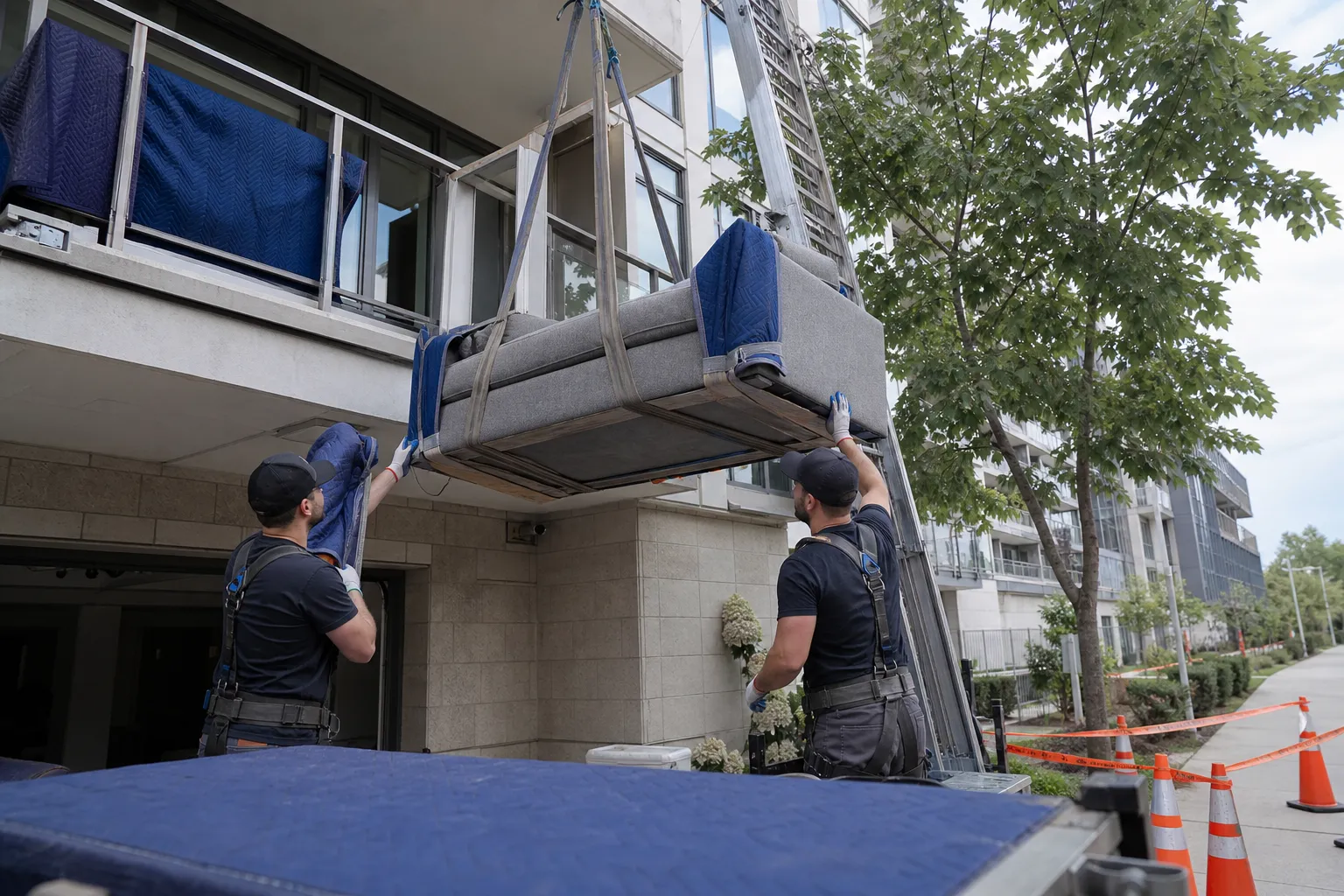
Furniture hoisting may be appropriate when a large or fragile item cannot safely pass through a doorway, stairwell, hallway, or elevator. However, lifting furniture through a window or balcony should not be the first assumption. The safer approach is to assess the item and route, then compare standard carrying, disassembly, specialty rigging, and external hoisting.
This guide explains what to check before booking a furniture hoisting service in Windsor and Essex County. It does not guarantee that a particular item can be lifted or that a property permits external access. A qualified provider must assess the furniture, building, equipment, crew plan, and surrounding hazards.
Quick summary
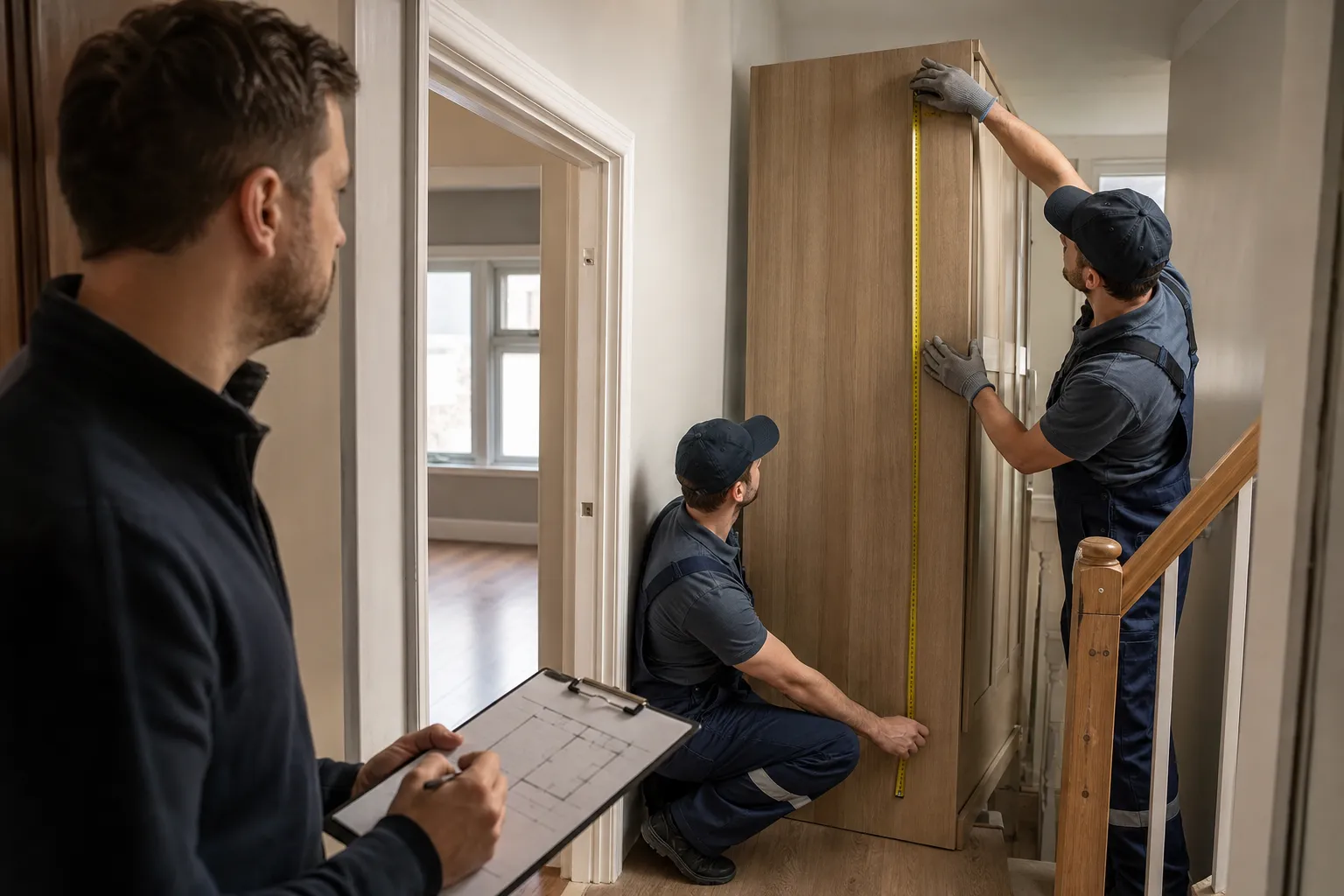
- Measure the furniture, every doorway, stair turn, elevator, window, balcony, and placement area.
- Investigate standard carrying or professional disassembly first. External hoisting is a specialist option, not a shortcut around access planning.
- Ask the property manager about balcony, window, elevator, parking, loading, and approval requirements.
- Confirm the equipment plan, insurance, WSIB status where applicable, written scope, responsibilities, and weather contingency.
- Request a written assessment for the specific item and route instead of relying on a generic price.
What does furniture hoisting mean?
Furniture hoisting generally means raising or lowering an item with lifting equipment, rigging, or a furniture lift when normal access is impractical. In residential moving, the term may refer to bringing furniture through a balcony or window, but it can also describe internal rigging or use of a material lift.
That distinction matters because “furniture hoisting service” is not a standardized Ontario residential-moving licence or programme name. The wording does not prove that a provider operates a crane, material lift, balcony lift, or window-removal service. Ask exactly what method is proposed and who is responsible for each part of the operation.
Ontario requirements may become relevant when lifting devices, hoists, cranes, rigging, or workers are involved. Ontario safety regulations address load movement, elevating devices, and lifting equipment. These sources provide useful context, but they are not a property-specific engineering or legal assessment.
Choose the moving approach before choosing the equipment

Start with the least complex method that can move the item safely without damaging the furniture, building, or people nearby. A professional assessment may show that a standard carry is suitable, or that removing doors, legs, shelves, or other components solves the access problem without external lifting.
| Approach | When it may fit | Advantages | Questions to ask |
|---|---|---|---|
| Standard carry | The item fits through doors, stairs, halls, and elevators with adequate clearance. | Usually the simplest route, with fewer equipment and approval requirements. | Are the turns, thresholds, flooring, and carrying distance manageable? |
| Disassembly and reassembly | Removable parts reduce the item’s dimensions. | Can make a difficult item manageable through a conventional route. | Who labels hardware, protects parts, and reassembles it? |
| Specialty rigging | The item is heavy, fragile, awkward, or difficult to control normally. | Provides a planned handling method for complex access. | What rigging and protection plan is proposed, and what are the rated limits? |
| External hoisting | The item cannot safely pass through normal openings or routes. | May create an alternative access path when the property and equipment support it. | Who approves the lift, controls the exclusion zone, protects the building, and manages weather? |
Guidance on safe lifting, narrow stairwells, and furniture dollies can help identify access problems before a crew arrives. The goal is not to select impressive equipment. It is to select a method that matches the furniture, route, property, and risk.
Signs that ordinary carrying may not be enough
Narrow stairwells and tight turns are common warning signs, especially when a sofa, cabinet, wardrobe, or table cannot be tilted without striking a wall or ceiling. An elevator may also be unsuitable if its door, car depth, weight rating, or booking window does not accommodate the item.
Look closely at the furniture itself. Oversized one-piece construction, fragile finishes, glass, stone, mirrors, antiques, high weight, an unstable centre of gravity, or components that cannot be safely removed may justify a specialty assessment. An item that technically fits is not automatically safe to carry.
External access introduces additional concerns. The truck may need to park close to the building, the lift path may cross above people or property, overhead wires or trees may obstruct the route, and wind or rain may make the operation unsuitable. These are reasons to plan early, not reasons to attempt a DIY lift.
Information to provide for an accurate quote
A provider cannot assess a difficult move accurately from the furniture name alone. Send clear photographs and measurements, and describe the route from the truck to the final room. If you have a floor plan, mark the pickup and delivery paths.
- Furniture details: length, width, height, estimated weight, removable parts, fragile surfaces, and whether it can be safely tilted.
- Building access: door and frame dimensions, hallway widths, stair width and turns, ceiling height, elevator dimensions, weight limits, and booking times.
- Potential external route: window or balcony opening, balcony dimensions and condition, railing configuration, ground distance, and intended placement point.
- Site hazards: overhead wires, trees, awnings, neighbouring property, uneven ground, traffic, parked vehicles, and pedestrian areas.
- Logistics: truck parking distance, loading restrictions, building rules, access hours, weather exposure, and whether doors or windows may be removed by an authorized party.
Be honest about previous alterations, loose flooring, narrow landings, or existing damage. These details may change the recommended method, crew plan, protection requirements, or whether external hoisting is appropriate.
Safety, building rules, and responsibility checks
Before booking, identify who controls the property and obtain approval in writing where required. A condo board, landlord, building manager, or commercial property manager may set rules for balcony use, window access, elevator reservations, loading zones, parking, floor protection, work hours, and liability documentation.
Ask how the proposed equipment will be selected and how the load will be secured. Ontario rules include requirements concerning rated loads and lifting equipment, but the applicable requirement depends on the equipment, workplace, and operation. A general weight estimate is not a substitute for a proper equipment assessment.
For operations involving a hoist, crane, lift, or rigging, confirm how workers and bystanders will be kept clear of the load path. A provider should explain its safety process in plain language and identify when another qualified contractor or property professional must be involved.
Questions to ask before booking
- Have you assessed the item, access route, parking position, and final placement area?
- Do you recommend a standard carry, disassembly, specialty rigging, or external hoisting, and why?
- What equipment and protection plan would be used, and are its limits suitable for this load?
- Who handles disassembly, reassembly, window or door access, floor protection, and final placement?
- What happens if the furniture cannot pass safely or conditions change on moving day?
- Is the quote flat-rate, and does it identify access constraints, extra handling, waiting time, or cancellation conditions?
- What insurance applies to the furniture, property, workers, and lifting operation?
- Can you provide current WSIB documentation if relevant to the work?
- What is the weather, wind, parking, and exclusion-zone plan?
- Who reports and manages damage if the furniture or building is affected?
For commercial, healthcare, or institutional moves, also request a documented route and responsibility plan for public areas, operating equipment, and site access. Commercial furniture planning examples can help managers identify coordination questions.
Before booking, confirm specialty-item handling, door removal, and access constraints in the written scope. These details can affect the method and final cost.
How to discuss a difficult furniture move with EC Movers
EC Movers Ltd serves Windsor and Essex County with residential, commercial, local, long-distance, and specialty moving services. Its published services include moving for pianos, pool tables, hot tubs, apartments, homes, and offices. The company also identifies custom rigging in its piano-moving context, along with protection equipment, insured operations, WSIB certification, and transparent quote planning.
This context is relevant if your furniture needs specialist handling, but it does not confirm a dedicated crane, balcony lift, material lift, window-hoisting, window-removal, or building-envelope service. When contacting EC Movers, send measurements, photographs, access details, and building requirements. Ask whether the specific item and route can be assessed through its specialty moving services.
Request the proposed method and written scope before treating the move as confirmed. The scope should explain what is included, what remains the property owner’s responsibility, what happens if access differs from the information supplied, and how the crew will protect the furniture and building.
Furniture hoisting booking checklist
- Photograph the furniture and record dimensions, weight estimate, removable parts, and fragile areas.
- Measure every relevant opening and route, including doors, halls, stairs, elevator, window, balcony, and final placement area.
- Record parking distance, overhead obstacles, power lines, trees, railings, traffic, and pedestrian concerns.
- Ask the property manager about approvals, access hours, elevator bookings, insurance documents, and protection requirements.
- Request assessments from providers that handle specialty or oversized moves. Do not assume a general moving crew can perform external lifting.
- Compare written scopes for method, equipment, protection, responsibilities, insurance, pricing, weather, cancellation, and contingency planning.
- Confirm the plan again if furniture, access, weather, parking, or building rules change.
Furniture hoisting service FAQ
Can furniture be hoisted through a window or balcony in Windsor?
It may be possible in some properties, but suitability depends on the item, opening, balcony or window condition, equipment, hazards, building approval, and weather. Request a specific assessment.
How do I know whether furniture needs hoisting or disassembly?
Measure the item and entire route first. If removable parts create enough clearance, professional disassembly may be simpler. If the item remains too large, heavy, fragile, or difficult to control, ask about specialty rigging or another approved method.
What measurements should I send?
Send the furniture’s length, width, height, and estimated weight, plus door, hallway, stair, elevator, window, balcony, and final-room measurements. Include photographs, parking distance, and obstacles.
Does moving insurance automatically cover external furniture lifting?
No. General moving coverage may not answer questions about lifting equipment, property damage, building access, or specialty operations. Ask what coverage applies to the item, building, workers, equipment, and proposed method.
What should condo or apartment residents confirm?
Confirm permission for balcony or window access, elevator reservations, loading and parking rules, work hours, protection requirements, insurance documents, and whether doors or windows may be removed.
Can EC Movers confirm whether my oversized furniture can be handled?
Ask EC Movers to review the item, photographs, measurements, access route, and building requirements. The company can then advise whether the move fits its verified specialty-moving services without assuming dedicated external hoisting is available.
Conclusion: confirm the access method before booking
The safest furniture hoisting decision begins with access, not equipment. First determine whether a standard carry or professional disassembly can work. If not, investigate specialty rigging or external hoisting only after the item, route, building rules, equipment limits, worker safety, insurance, and contingency plan have been reviewed.
For a move in Windsor or Essex County, provide complete measurements, photographs, floor plans, parking information, and property requirements. Then ask EC Movers Ltd whether your specific furniture and access route can be assessed through its specialty moving services, and request a written quote stating the proposed method and responsibilities.
Ready to move?
Get your free quote from EC Movers today.