
Hot Tub Installation Considerations: What to Arrange Before Delivery and Placement
Plan hot tub installation with a clear checklist for the site, base, access, electrical handoffs, draining, transport, placement, and startup in Windsor.
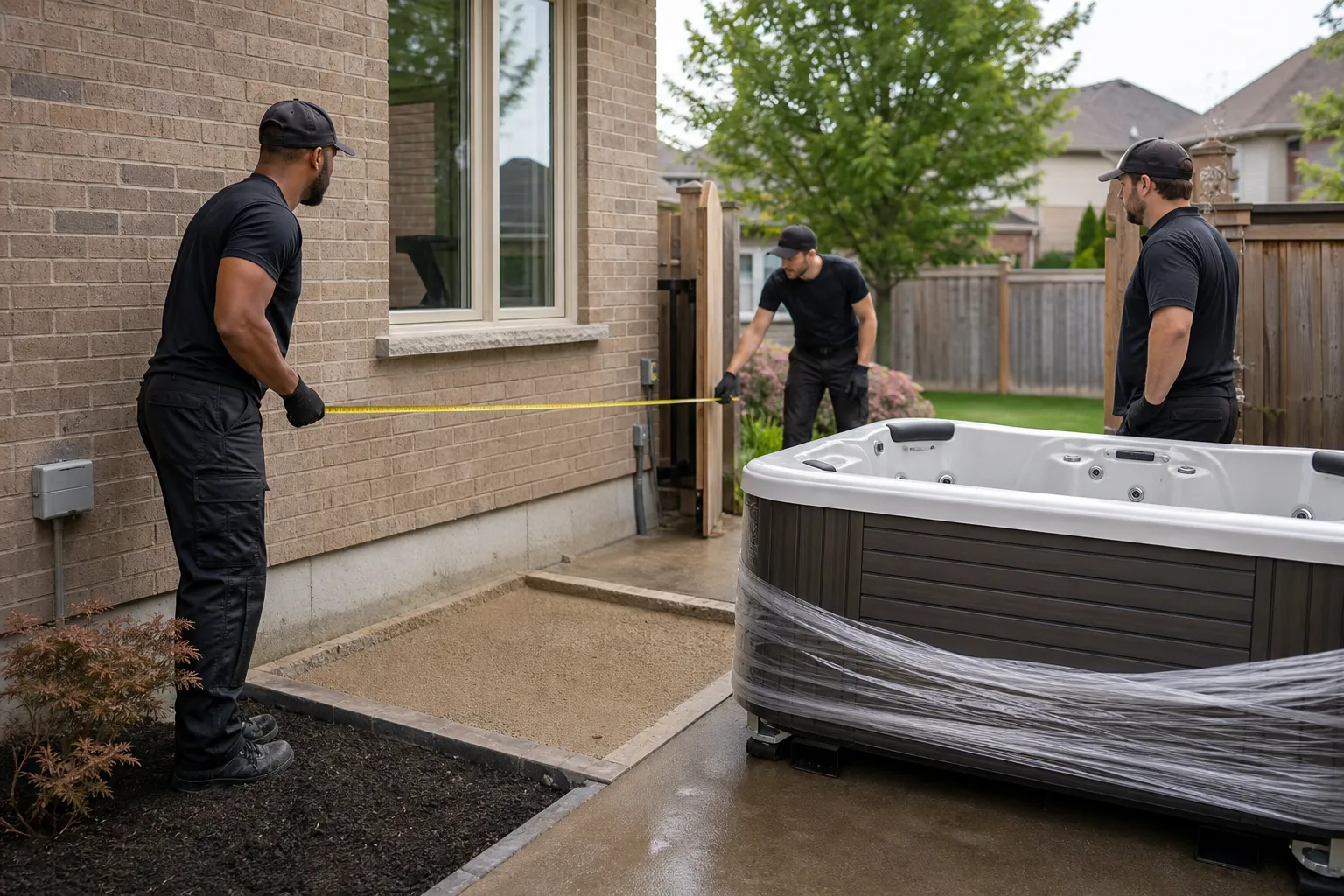
Hot tub installation is not just a delivery appointment. A successful setup depends on coordinating the tub’s specifications, supporting base, drainage, access route, electrical work, preparation, transport, final placement, and startup. Different parts may belong to the homeowner, a qualified electrical contractor, a spa technician, a site contractor, or a hot tub mover.
Use the sequence below whether you are installing a new tub or relocating an existing one in Windsor or Essex County. Do not schedule the move until the route, disconnection plan, placement, and trade responsibilities are confirmed in writing.
Quick summary
- Record the model, dimensions, dry weight, accessories, and handling instructions.
- Confirm the base, final position, service access, drainage, and site work before delivery.
- Measure gates, doors, stairs, slopes, tight turns, overhead obstacles, and parking.
- Assign electrical, plumbing, draining, transport, placement, and startup responsibilities.
- Request a written estimate covering the actual route and scope, not just curb-to-curb transport.
1. Confirm the hot tub’s specifications first
Begin with the model label, owner’s manual, or installation documentation. Record the length, width, height, dry weight, orientation requirements, removable panels, cover lifter, steps, and other accessories. Dry weight is not the same as filled weight, but it remains important for planning the move and site work.
If the label or manual is missing, contact the manufacturer or dealer with photographs and serial information. A mover needs accurate specifications to assess handling, equipment, staffing, and the space required at each stage.
Stop point: Pause if you do not know the model, dimensions, dry weight, or approved handling instructions. Guessing can lead to an incomplete route assessment or unsuitable estimate.
2. Check the installation site, base, and drainage
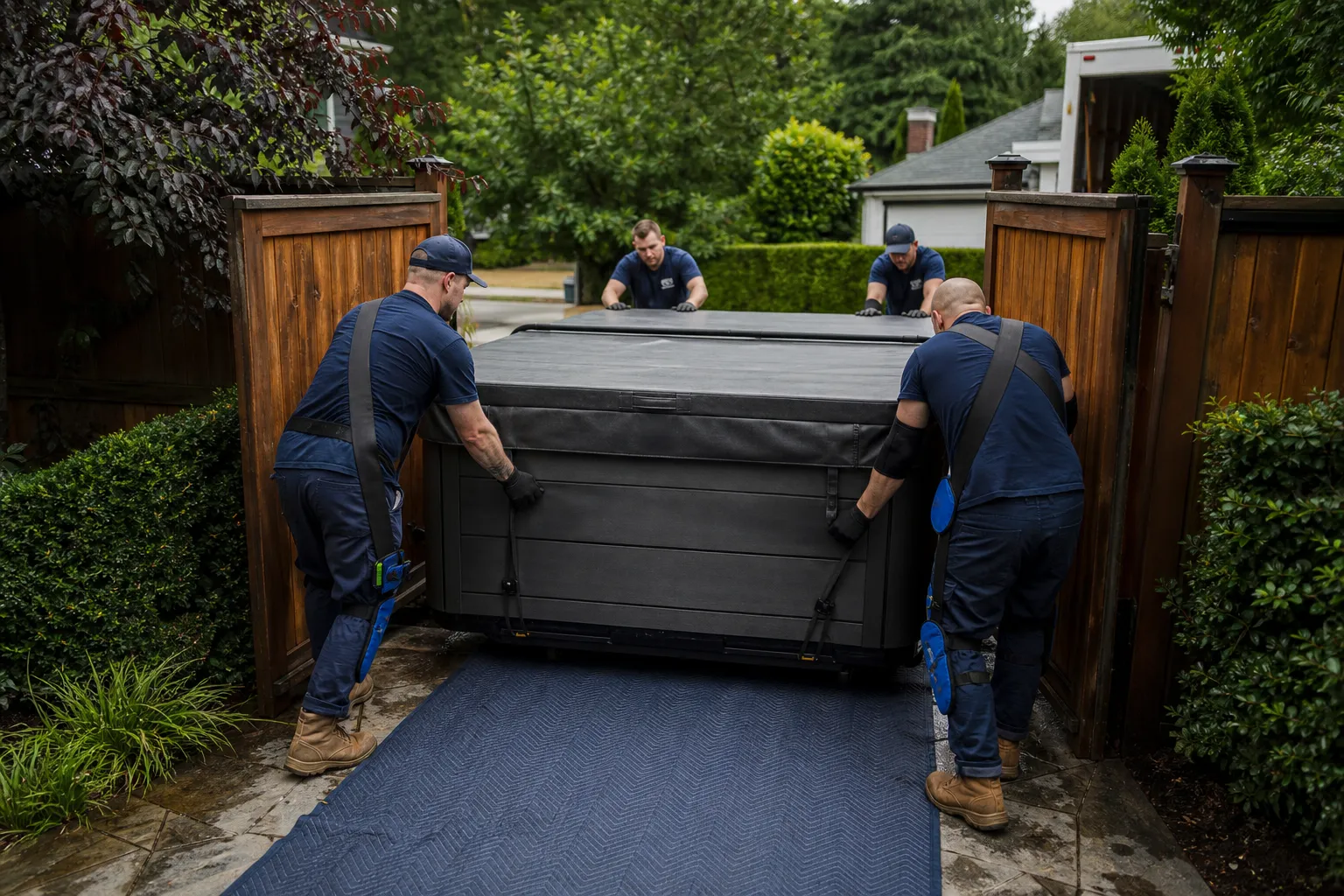
Inspect the proposed location before arranging delivery. The area needs suitable support, practical service access, and a drainage plan that does not direct water towards the home, neighbouring property, walkways, or other vulnerable areas. If the location needs construction, grading, concrete work, or another permanent base, confirm that scope with an appropriate site contractor.
Consider how the tub will be accessed after placement. Leave practical space for servicing, cover operation, cleaning, and future repairs. Your spa manual and local requirements should guide the final layout rather than an assumption that any flat-looking surface is suitable.
For Windsor properties, check the City of Windsor’s building permit information and applicable residential construction guidance before beginning site work. Requirements can depend on the project and property, so confirm the current answer with the City or responsible contractor.
Stop point: Do not book delivery or relocation if the base is unfinished, the site is not ready, or drainage and service access remain unresolved.
3. Measure the complete access route
The shortest route is not always the usable route. Walk the tub’s path from its current position or delivery point to the final site. Measure gates, doorways, narrow passages, stairways, slopes, retaining walls, fences, tight turns, and every point where the unit may need to change orientation.
Look above and below the route as well. Low branches, roof lines, wires, soft lawns, uneven ground, underground features, and limited parking can affect the method and equipment required. Photograph every restricted section and include a tape measure in the images where possible.
If the project involves a narrow gate, slope, soft ground, or complicated route, a hot tub moving service can assess equipment, property protection, rigging, navigation, and final placement. Distance alone does not describe the difficulty of a hot tub move.
4. Assign electrical, plumbing, and preparation responsibilities
Installation is a handoff between several parties, not a task a mover should automatically be expected to complete. Write down who is responsible for each item before anyone arrives.
| Task | Likely responsible party | Confirm before booking |
|---|---|---|
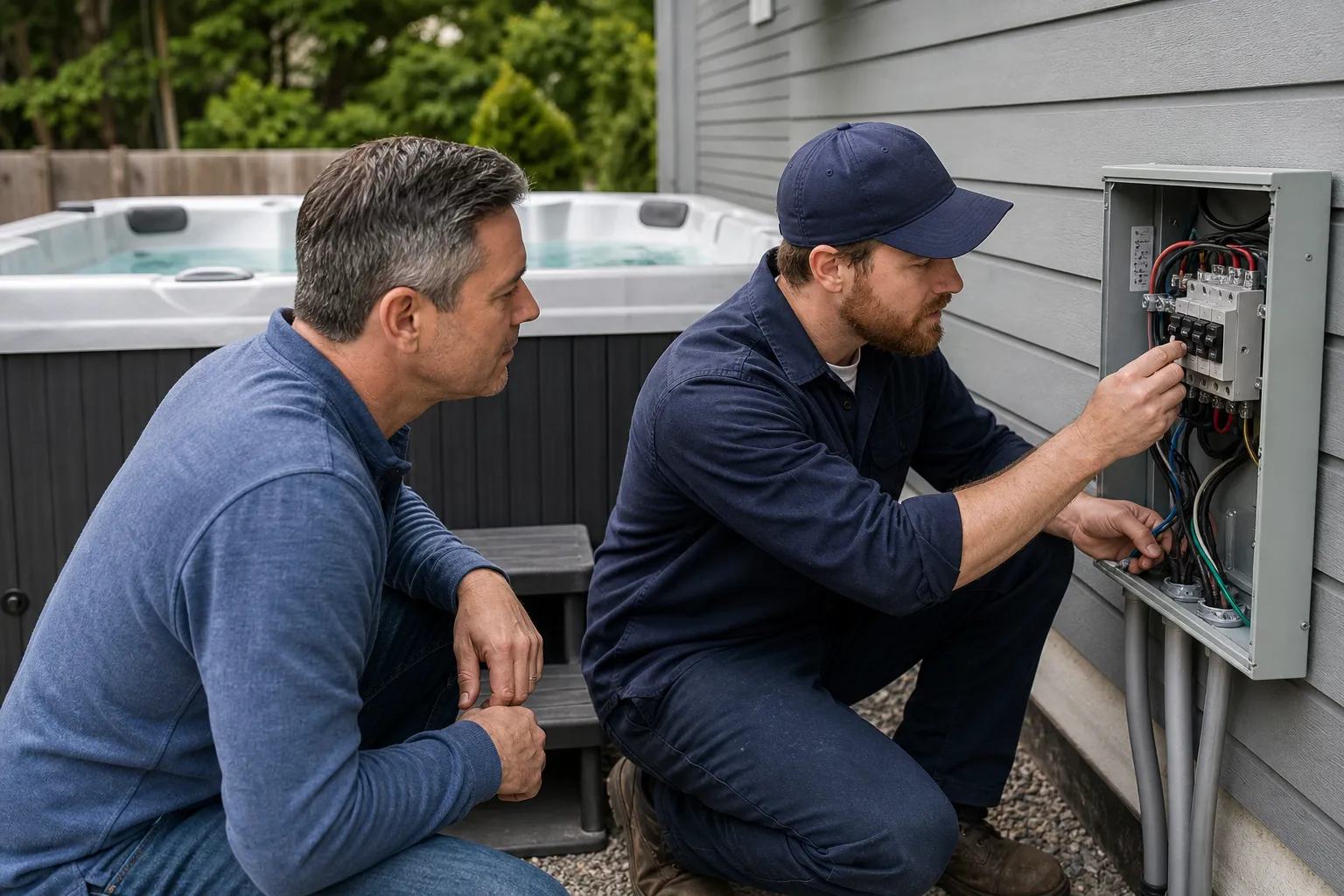
| Electrical isolation and reconnection | Licensed Electrical Contractor where required | Scope, timing, required permits or notifications, and testing |
| Draining, purging, and drying | Homeowner, dealer, spa technician, or mover if agreed | Exact method, responsibility, and deadline |
| Panel, cover, and accessory removal | Homeowner, technician, or mover | What is removed, packed, transported, and reinstalled |
| Base, grading, and drainage work | Site contractor or other appropriate professional | Readiness, access, water management, and approvals |
| Rigging, transport, and placement | Hot tub-capable mover | Route, crew, equipment, protection, and exact placement |
| Startup and commissioning | Qualified tradesperson, dealer, or spa technician | Electrical connection, filling, testing, and warranty requirements |
Electrical work deserves particular care. The Electrical Safety Authority publishes guidance for swimming pool, hot tub, and spa installations. Review the relevant ESA hot tub and spa installation bulletin, then confirm the work with a Licensed Electrical Contractor where required. Do not treat a moving quote as an electrical installation quote.
5. Drain, dry, disconnect, and protect the tub
Follow the manufacturer’s instructions for draining and preparing the exact model. Water may remain in internal plumbing, pumps, filters, or low points after the shell has been emptied. The tub should be properly drained and dry before transport, with the electrical supply isolated by the responsible qualified party.
Confirm how panels, steps, cover lifters, covers, filters, hoses, controls, and loose accessories will be handled. Photograph existing condition and label small parts. Protect floors, door frames, siding, decking, landscaping, and corners along the route.
Confirm who handles draining, plumbing disconnections, and specialty-item preparation before moving day. Use a qualified technician for tasks that exceed ordinary homeowner preparation.
Stop point: Do not transport the tub if it is still connected to power, contains avoidable water, has unsecured components, or has not been cleared for handling by the responsible technician or mover.
6. Confirm the moving and placement scope
Ask whether the estimate covers only delivery to a curb or driveway, or the complete route to the prepared base. These are different services. A full relocation or placement scope may need to address loading, rigging, route protection, transport, unloading, final positioning, and the limits of any disconnect or reinstall work.
EC Movers lists hot tub moving among its specialty services and describes draining, rigging, tight-space navigation, placement, and reinstall-related support. Its booking information also identifies hot tub moving with full disconnect, drain, and reinstall service. Confirm the exact inclusions for your model and property in the written proposal. Do not assume every booking includes electrical work, construction, crane service, plumbing, startup, or site preparation.
Before approving the scope, ask:
- Where will the crew collect and place the tub?
- Who is responsible for disconnecting power and plumbing?
- Who removes and reinstalls panels, covers, and accessories?
- What route and property-protection measures are included?
- Is the base ready when the crew arrives?
- Where exactly will the tub be positioned?
- What work remains for the electrician, spa technician, or site contractor?
7. Prepare a complete quote request
A useful estimate needs more than two addresses and the phrase “hot tub move.” Send the model and serial information, dimensions, dry weight, photographs, current and final addresses, and a clear description of the route.
- Photographs of the tub, panels, cover, steps, and accessories
- Measurements of gates, doors, stairs, slopes, tight turns, and overhead restrictions
- Photos showing the current position, loading area, final site, and soft or uneven ground
- Parking, elevator, gate, condo, or access restrictions
- Whether the tub is drained, dry, disconnected, and ready to move
- Whether the base, drainage, and final placement area are complete
- Requested services, such as transport, placement, disconnect, drain, or reinstall support
When comparing providers, account for hot tub moving costs based on the unit’s model, weight, route, equipment, crew, disconnection responsibilities, site preparation, and final placement. Compare written estimates by scope, not headline price alone.
For additional budgeting questions, this hot tub moving cost guide can help you identify details to discuss before accepting an estimate.
8. Complete the final placement and startup handoff
Before the moving crew leaves, inspect the tub’s position, orientation, service-panel access, route condition, and visible property protection. Check that covers, steps, panels, and accessories identified in the scope are accounted for.
Do not fill or energize the tub until the responsible professionals confirm that the base, plumbing, electrical connection, and equipment are ready. Electrical reconnection and testing should be handled by the appropriate qualified contractor. A dealer or spa technician may also need to complete startup, check for leaks, and confirm correct operation.
Keep the written estimate, photographs, manuals, receipts, and completion documents together. If the final placement differs from the agreed position, record the change before the crew departs.
Frequently asked questions
Does a hot tub need a special base before delivery?
It needs a suitable, prepared support surface for the specific tub and location. The correct construction method depends on the property and project. Confirm base readiness, drainage, and approvals with the appropriate site professional.
Who should disconnect and reconnect a hot tub’s electrical supply?
Electrical isolation and reconnection should be assigned to a qualified electrical contractor where required. A mover should not be assumed to provide electrical installation services. Confirm the scope, timing, and testing responsibilities in writing.
How do I measure whether a hot tub can fit through my access route?
Measure every narrow point, including gates, doors, stairs, slopes, turns, and overhead obstructions. Record the tub’s dimensions in the orientation proposed for each section, then provide photographs to the mover.
Should a hot tub be completely drained before it is moved?
It should be drained and prepared according to the manufacturer’s instructions, with avoidable water removed from the shell and relevant components. Confirm who will drain, purge, dry, and disconnect the model before moving day.
What is the difference between hot tub delivery, moving, and installation?
Delivery may mean transporting the tub to a property. Moving can include handling it from its current position, navigating the route, protecting the property, and placing it on the prepared site. Installation may also involve base work, electrical connection, plumbing, filling, testing, and startup, which may require separate qualified professionals.
Conclusion: pause until the full scope is clear
The safest way to plan hot tub installation is to treat it as a coordinated project. Confirm the model and weight, prepare the base and drainage, measure the full access route, assign electrical and plumbing responsibilities, drain and protect the tub, and obtain a written moving and placement scope.
If any handoff remains unclear, pause before moving day. Homeowners can collect measurements, photographs, manuals, access details, and property information, while qualified trades and an experienced mover confirm specialist work and equipment.
For hot tub relocation and placement planning in Windsor and Essex County, request a written moving quote from EC Movers Ltd with your tub details, route photographs, access measurements, and preferred final position.
Ready to move?
Get your free quote from EC Movers today.