
A Hot Tub Moving Cost Guide for Windsor Homeowners
Learn which route, equipment, preparation and placement factors shape hot tub moving costs in Windsor, then compare written estimates by scope.
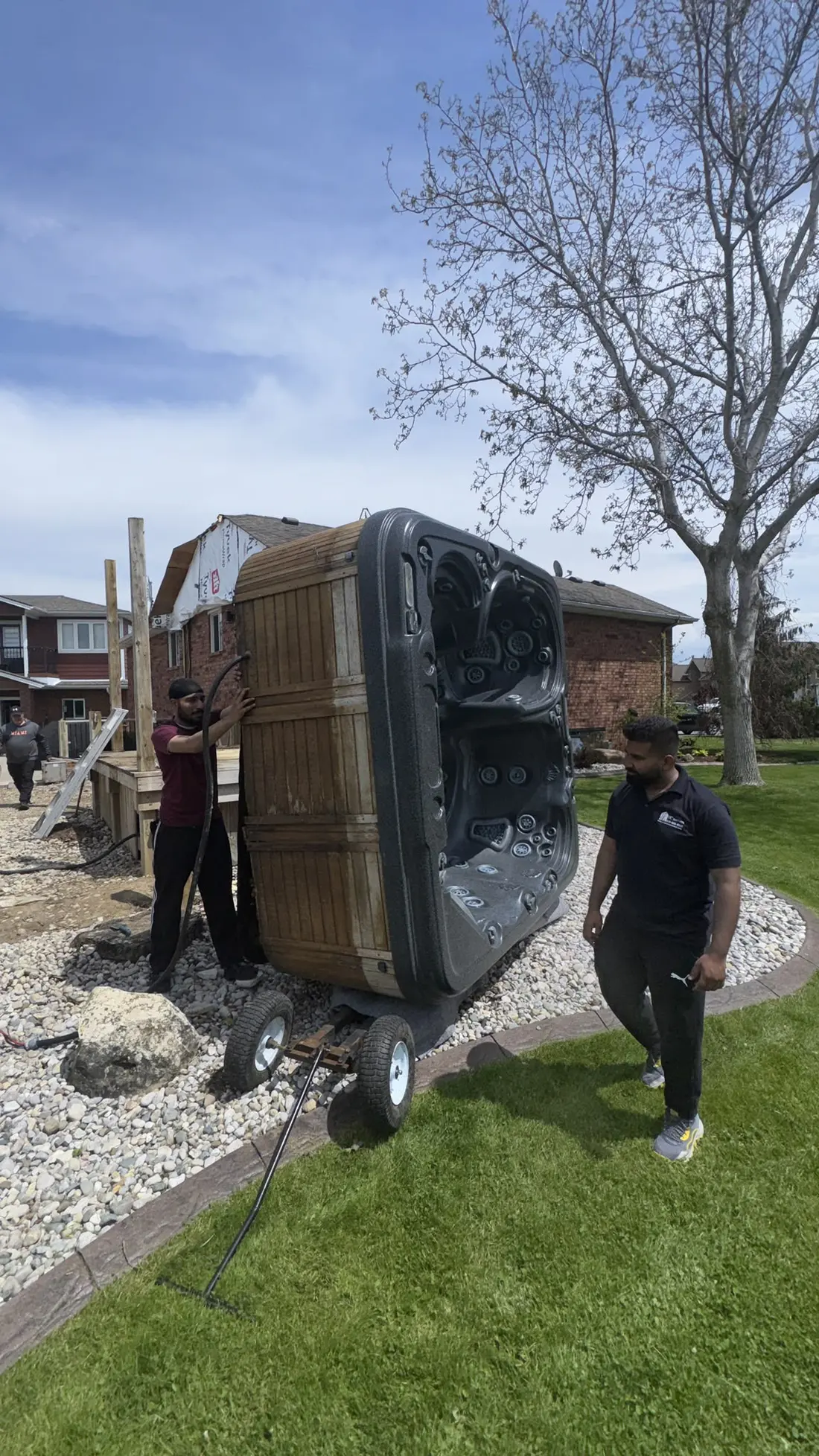
A Hot Tub Moving Cost Guide for Windsor Homeowners
Short answer: hot tub moving cost in Windsor depends on the exact model and dry weight, origin and destination access, distance, stairs or slopes, equipment and crew, disconnection responsibility, site preparation and final placement. A curb-to-curb transport price is not equivalent to a move that includes route planning, property protection and placement. EC Movers asks customers to request a quote, so the defensible way to budget is to provide model details and route photos, then compare complete written scopes.
The cost decision in six steps
- Find the manufacturer, model, dimensions and published dry weight.
- Separate electrical, plumbing, preparation, moving and setup responsibilities.
- Measure every gate, turn, step, slope and overhead restriction.
- Prepare the destination base and access before move day.
- Request the same scope from each qualified mover.
- Compare equipment, exclusions, coverage and price-change conditions.
In this guide
- What changes hot tub moving cost
- How to divide the work
- How access changes the quote
- How to compare moving estimates
- Common planning mistakes
- Frequently asked questions
The eight factors that change a Windsor quote
1. Exact model, dimensions and dry weight
A spa is a large shell, frame, cabinet, pumps, controls, insulation and connected equipment. The listed dry weight does not include residual water, loose accessories or separate components. Seat count is not a reliable substitute for the manufacturer record.
Locate the model label and current owner’s or installation manual. Record length, width, height, dry weight, approved handling instructions, removable panels, cover lifter and service restrictions. If the label is missing, contact the manufacturer or dealer with photographs and serial information rather than guessing.
2. Origin access
A tub beside a wide driveway is a different project from one built into a deck, behind a narrow gate or down steps. The crew needs a continuous route from the unit to a safe loading position. Tight turns, soft lawns, fences, retaining walls and roof lines can affect equipment, staffing and time.
3. Destination access and placement
The receiving route can be harder than the pickup. Confirm whether the quoted service ends at the curb, driveway, backyard or final prepared base. A precise placement between structures can require more route control than unloading into an open area.
4. Distance and travel conditions
Local travel within Windsor-Essex and longer relocations use different truck time, fuel, scheduling and protection. Provide full addresses and any access windows, parking restrictions, condo rules or border considerations. Do not assume a city-to-city mileage estimate covers handling at both ends.
5. Equipment and crew
The handling method should match the verified load and route. Spa dollies, sleds, lifting equipment, protection materials and additional crew can change cost. A crane or specialized lift may be considered when a ground route is not practical, but that is a separate professional scope involving access, setup and safety planning.
6. Drain, disconnect and preparation
Moving companies should not automatically be assumed to perform electrical work. Ontario’s Electrical Safety Authority says pools, spas and hot tubs have specific electrical requirements and advises contacting a Licensed Electrical Contractor before installation. Confirm who isolates and reconnects power, who drains and dries the exact model, and who removes panels and accessories.
7. Base and installation readiness
The destination should be level, stable, appropriately designed for the loaded spa and accessible for service and drainage. Electrical planning, clearances and property rules need review before delivery. If the base or electrical work is incomplete, waiting time, extra handling or a second visit may result.
8. Weather, ground and schedule risk
Rain, ice, snow and saturated ground can change traction and equipment access. Agree on who makes a go-or-no-go decision, how rescheduling works and what conditions could affect the price. A firm route during a site visit may not remain usable after heavy rain.
Divide the project by responsibility
| Work item | Possible responsible party | What to confirm |
|---|---|---|
| Electrical isolation and reconnection | Licensed Electrical Contractor where required | Written scope, permits or notifications and timing |
| Drain and model preparation | Owner, dealer or spa technician | Manual-based drain, purge and freeze protection |
| Panels, cover and accessories | Owner, technician or mover | Who removes, packs and reinstalls each item |
| Rigging, loading and transport | Hot-tub-capable mover | Equipment, crew, route and property protection |
| Base and access construction | Appropriate contractor or designer | Load, level, drainage and permit responsibility |
| Placement and startup | Mover plus qualified trades or spa technician | Exact handoff point, connection and commissioning |
A single quote may include several items, but inclusion must be explicit. Ask for the names and current credentials of any trade whose regulated work is part of the proposal. This guide does not verify a licence, insurance policy or legal authorization for a particular provider.
Build a route survey before requesting price
Measure the tub in the orientation proposed for each route segment. Then document:
- gate and doorway clear width and height;
- corners and diagonal clearance;
- steps, landings, deck edges and slopes;
- surface type, softness and drainage;
- fences, railings and removable obstacles;
- roof lines, branches, service cables and overhead utilities;
- distance to a legal, safe truck position;
- space for rated equipment and workers;
- shared-access or neighbouring-property permission.
A route that clears the narrowest gate may still fail at the turn immediately afterward. Provide a video walking from the tub to the truck position and another from the destination truck position to the base. Do not treat an overhead utility line as a movable obstacle; consult the utility and qualified professionals.
Prepare the tub without damaging it
Follow the manufacturer’s drain procedure and confirm where discharge is permitted. Isolate power through the approved process before work near electrical equipment. Residual water can remain in plumbing and equipment even when the shell looks empty, so ask a spa technician how the exact model should be purged and protected from freezing.
Photograph the shell, cabinet, panels, cover, equipment area and existing damage. Label authorized removable components and fasteners without modifying factory wiring. Record what travels with the mover and what travels separately.
How to request and compare quotes
Send every mover the same evidence: model and manual, dry weight, origin and destination, complete route photographs, steps and slopes, desired date, parking constraints, known damage, preparation responsibilities and final placement expectation. Ontario's consumer guidance for hiring a mover recommends written estimates and contracts that clearly identify the services and itemized prices; use that same discipline for a specialty move.
| Quote field | What should be written | Why it matters |
|---|---|---|
| Move boundaries | Pickup point and final placement point | Separates transport from full placement |
| Equipment and crew | Planned method, rated equipment and staffing | Connects price to the route and load |
| Preparation | Drain, disconnect, panels and accessories | Prevents responsibility gaps |
| Property protection | Floors, paving, lawns, gates and tub condition | Clarifies care and documentation |
| Extras | Travel, stairs, waiting, crane, permits and tax | Makes totals comparable |
| Change conditions | Unusable route, extra weight or incomplete site | Explains when price can change |
| Coverage and terms | Damage process, exclusions and cancellation | Shows how risk is allocated |
Questions for the mover
- Have you moved this model or a documented equivalent?
- What handling method and rated equipment will you use?
- Who conducts the pre-move route review?
- What must be removed or prepared before arrival?
- What happens if the measured route is unusable?
- Does the scope include final placement or only transport?
- Who documents existing and delivery condition?
- How are weather and soft ground handled?
- What proof of current coverage can you provide?
- Who is the move-day decision maker?
Move-day handoff and arrival
Keep children, pets and bystanders outside the work zone. Confirm power isolation and completed preparation. Walk the route again because vehicles, gates, weather and ground conditions change. If the load, route or equipment differs from the plan, stop and reassess.
At destination, inspect and photograph the tub before connection. Confirm it sits as the manufacturer requires and service panels remain accessible. Electrical and other utility work should be completed by the responsible qualified trade. Follow the manual for filling, leak checks, startup and water care; do not energize an empty or uninspected unit.
When a low estimate is not the same service
A low transport figure may exclude disconnection, route protection, stairs, a difficult destination, accessories, final positioning, waiting and tax. That does not automatically make it a bad offer, but it may not solve the complete job. Normalize scope before judging value.
EC Movers’ live hot tub page presents professional moving service in Windsor, while the company’s booking process asks customers for project details. Current first-party statements about flat rates, insurance or inclusions should be reconfirmed in the final written proposal rather than expanded here.
Common hot tub moving cost mistakes
- Using filled weight, dry weight and an estimate interchangeably.
- Measuring the gate but not the turn after it.
- Assuming the mover disconnects or reconnects power.
- Draining the shell but ignoring residual plumbing water.
- Booking before the destination base and access are ready.
- Comparing curb delivery with complete final placement.
- Leaving cover lifters, steps or panels loose.
- Failing to disclose stairs, slopes, soft ground or overhead hazards.
- Relying on verbal insurance or price statements.
- Skipping pre-move and delivery condition photographs.
Hot tub moving cost questions
Can I get a quote from photos?
Photos and video can support a quote, but complex access may require a site survey. Ask what assumptions the estimate uses.
Does the quote include electrical disconnection?
Do not assume so. Separate regulated electrical work from moving and confirm the responsible qualified party in writing.
How much does a hot tub weigh?
It varies by exact model and configuration. Use the manufacturer’s dry weight and account for accessories and possible residual water.
Can a hot tub be moved on its side?
Only if the manufacturer and mover approve the orientation and support method for that model. Improper support can damage the cabinet or components.
Will a crane make the move more expensive?
Specialized lifting adds a separate scope, access plan and professional responsibility. It may be considered when a ground route is not practical.
What is the best way to avoid a surprise charge?
Provide complete model and route evidence, define final placement, list preparation responsibilities, and approve changes in writing before extra work.
Ready to move?
Get your free quote from EC Movers today.