
7 Hot Tub Removal Safety Tips Worth Checking First
Seven hot tub removal safety checks for Windsor-Essex homeowners, covering utilities, routes, equipment, property protection, transport, and professional help.
7 Hot Tub Removal Safety Tips Worth Checking First
Safe hot tub removal involves more than getting the tub out of a backyard. You must consider utility connections, the tub’s condition, the access route, equipment, surface protection, and whether the job involves relocation, storage, or disposal. Heavy tubs and restricted access can create serious injury and property-damage risks, so professional help may be the safer option.
Quick summary
- Do not begin while electrical, gas, plumbing, or other connections are live or uncertain.
- Inspect doors, stairs, fences, slopes, decking, landscaping, and overhead obstacles.
- Use enough trained help and suitable equipment for the specific tub and route.
- Protect floors, decks, walls, thresholds, gates, and landscaping before moving anything.
- Confirm the transport, placement, storage, or disposal plan before removal day.
1. Isolate utilities before touching the tub
A hot tub may connect to electrical, plumbing, gas, or other services. Identify every connection and ensure the relevant utilities have been safely isolated before anyone lifts, slides, tips, repositions, or dismantles the tub.
Do not guess about an unfamiliar connection or handle live wiring. Electrical, gas, and other utility work may require an appropriately qualified professional. Water remaining in the tub or lines can also add weight and create slippery conditions, so drainage and disconnection should be planned safely.
Stop if you find live wires, damaged cables, gas equipment, an unknown connection, unexpected water, or another condition you cannot confidently make safe.
2. Inspect the tub and the entire removal route
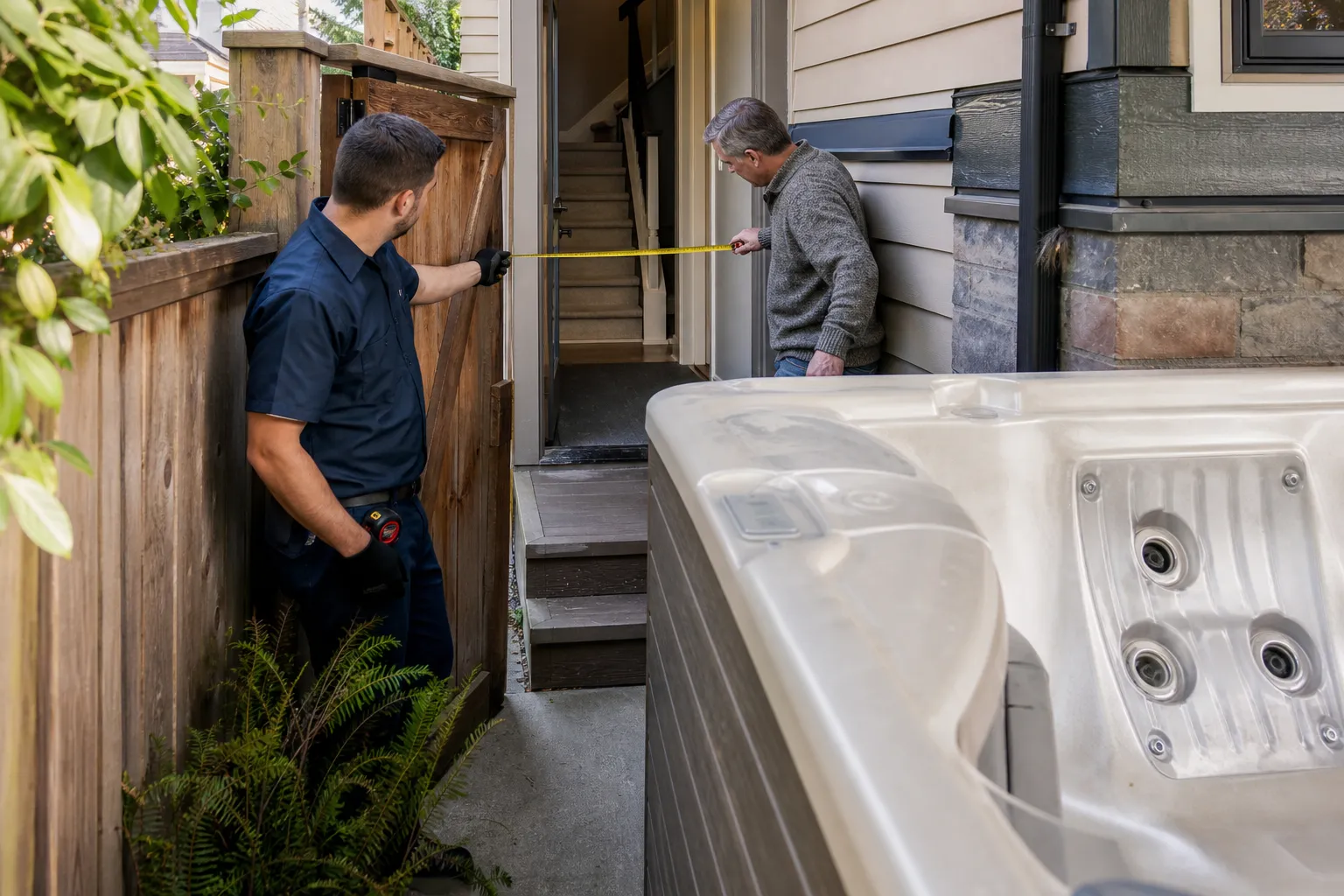
Walk the route before choosing a crew, equipment, or movement method. Follow the intended path from the tub to the vehicle, checking gates, fences, doors, stairs, tight turns, slopes, overhead obstructions, deck edges, landscaping, and ground conditions.
Measure relevant clearances and compare them with the tub, protective materials, and equipment. Account for corners and transitions, not only straight sections. A route that looks wide enough at a gate may become impossible at a doorway or stair landing.
Look for unstable decking, soft ground, steep slopes, low branches, overhead wires, blocked visibility, and surfaces that cannot support the planned movement. Stop and reassess if the route requires a risky lift or unstable footing.
3. Match the plan to the people and equipment available
A hot tub is not a sensible one-person lifting job. Required manpower depends on the tub, route, condition, and movement method. Everyone involved should understand their position, agreed commands, and stop-work signals.
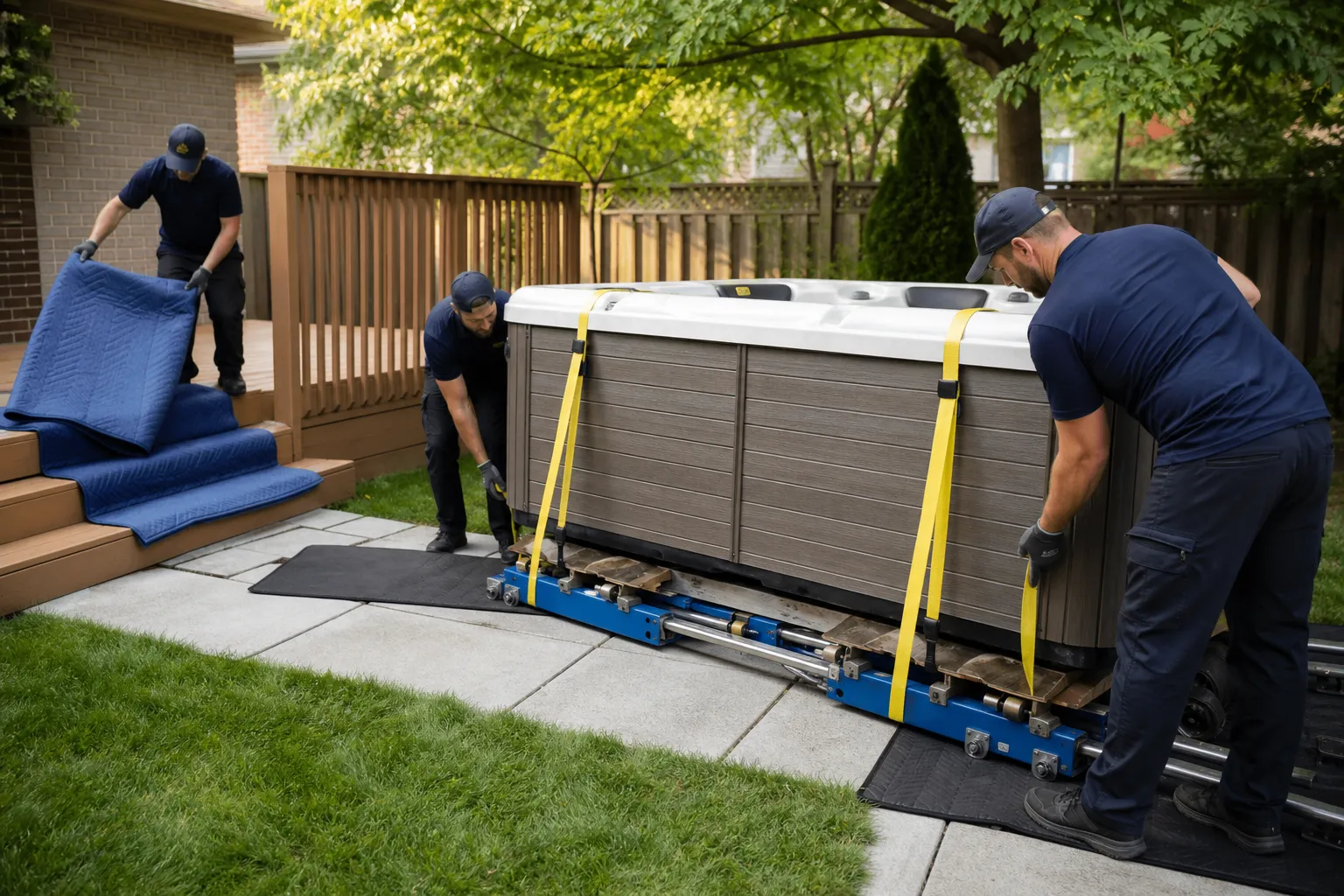
Purpose-built moving equipment can provide more control than improvised boards, ropes, jacks, or household tools. Equipment must also suit slopes, turns, thresholds, stairs, and the loading area. More people do not compensate for unsuitable equipment or poor coordination.
Do not proceed with inadequate equipment, insufficient trained help, unstable footing, poor visibility, or unclear communication.
4. Protect decks, floors, walls, landscaping, and doorways
Property protection is part of the safety plan, not merely a cosmetic precaution. Before moving the tub, protect floors, decks, thresholds, corners, walls, gates, landscaping, and any surface that may bear rolling, sliding, or lifting equipment.
- Clear planters, tools, toys, and other trip hazards.
- Use suitable protection for flooring, deck boards, door frames, corners, and thresholds.
- Check that gates and doors open fully without creating pinch points.
- Keep people, pets, and unnecessary vehicles away from the route.
- Confirm protective materials will stay in place as equipment moves.
Pause if the proposed path could damage a deck, wall, floor, gate, garden, or other feature. Redesigning the route before movement is safer than correcting damage afterward.
5. Decide whether the tub should move intact or be disassembled
Moving a hot tub intact may reduce disassembly and reassembly work, but it requires a route and equipment that can accommodate the complete unit. Partial or complete disassembly may help with restricted access, but it adds component handling, labelling, protection, and reassembly considerations.
The safer choice depends on the model, condition, access route, destination, and available equipment. Damaged panels, fragile components, tight access, uncertain construction, or complicated reassembly can make an improvised teardown hazardous.
Do not cut into the cabinet or remove components without understanding what they support or protect. For preparation advice, review how to prepare for hot tub movers in Windsor. A specialty mover can assess whether intact movement or disassembly is more appropriate.
6. Control every stage of the move and loading path
Once the tub starts moving, control matters more than speed. Assign one person to direct the movement, agree on simple commands, and make sure everyone can hear or see the signals. Move slowly through doors, slopes, stairs, corners, and surface changes.
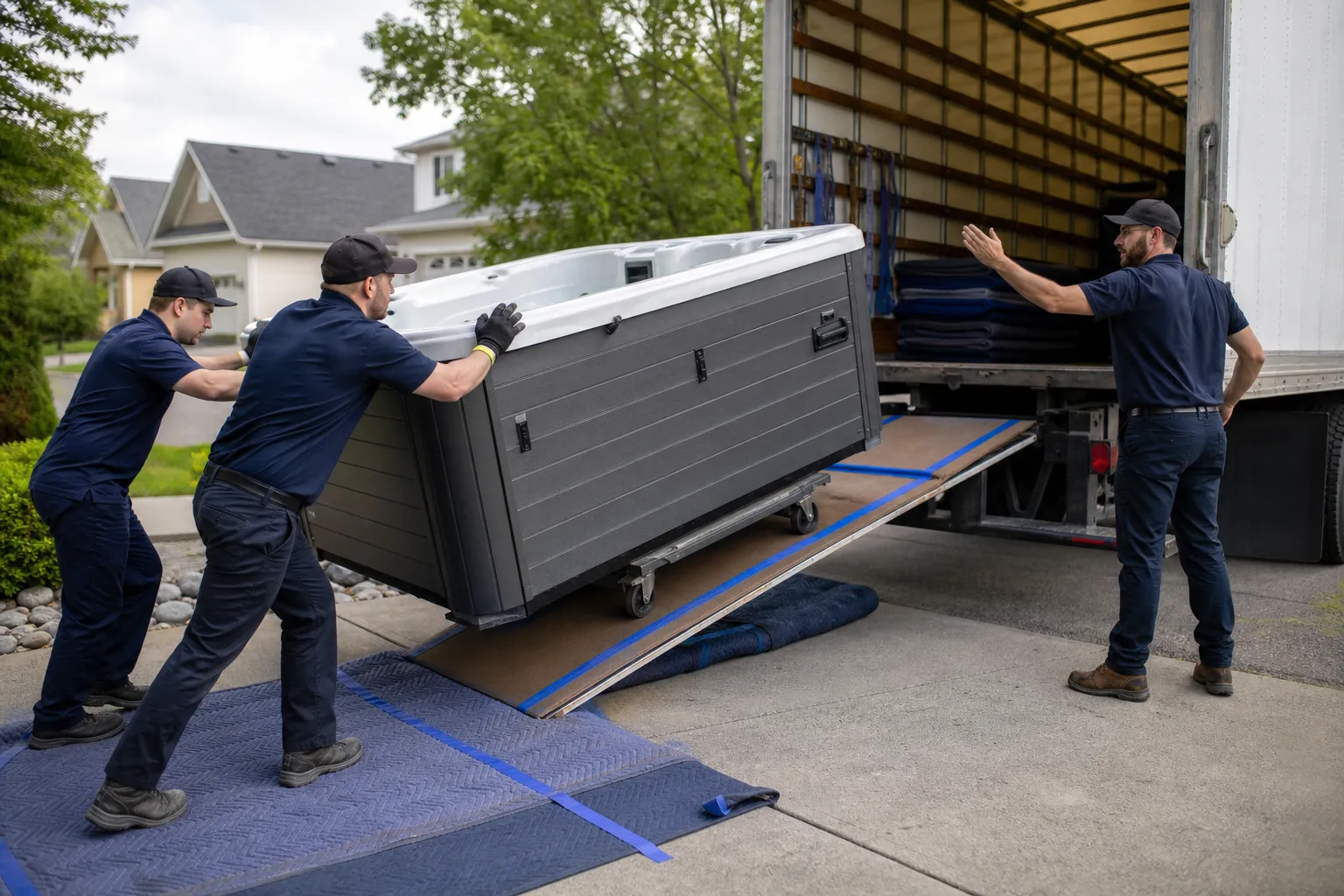
Keep the route clear and maintain stable contact between the tub, equipment, and supporting surfaces. Plan the loading transition before the tub leaves its original position. Check the position and stability of any ramp, vehicle, or lifting method before relying on it.
Stop if the weight shifts, equipment becomes unstable, visibility is blocked, an overhead hazard appears, or the team loses control. Regroup and change the plan instead of using force or speed.
7. Confirm transport, placement, or disposal before removal day
Removal may mean relocation for continued use, transport for storage, or disposal. Relocation requires a ready destination and placement plan. Disposal requires separate confirmation of who will accept the tub and how it must be prepared.
Confirm vehicle access, loading requirements, destination clearances, surface conditions, and placement instructions. If the tub is being stored or relocated, ensure the receiving area is ready for both the tub and equipment.
Do not assume a mover, landfill, recycler, or property manager accepts hot tubs. Check directly with the relevant provider or authority, since disposal and recycling arrangements may vary.
When is professional hot tub moving the safer choice?
Professional help is worth considering when utilities are live or uncertain, the route is narrow or steep, decking is unstable, overhead obstructions are present, the tub is damaged, or suitable equipment and trained help are unavailable. It is also sensible for long carries, difficult transitions, relocation to another property, or coordinated loading and transport.
If you cannot explain how the tub will be safely disconnected, supported, moved around every obstacle, loaded, and placed at its destination, the plan is not ready. EC Movers Ltd serves Windsor and Essex County and offers specialty hot tub moving. Its business information describes fully insured, WSIB-certified operations with logistics planning, loading, transportation, unloading, and setup capabilities.
Frequently asked questions
Can I disconnect a hot tub’s electrical supply myself?
Do not work on live or unknown connections. Use an appropriately qualified professional where electrical, gas, plumbing, or other specialized disconnection work is involved. If anything remains uncertain, stop.
Is it safer to move a hot tub intact or disassemble it first?
Neither option is always safer. The right choice depends on the model, condition, route, equipment, destination, and ability to protect and reassemble components. Intact movement needs more clearance, while disassembly adds handling risks.
How can I protect my property during hot tub removal?
Inspect the route, remove trip hazards, protect floors and decks, cover vulnerable corners and thresholds, and keep gates and doors clear. If the route cannot support controlled movement without damage, pause and redesign it.
When should I hire hot tub movers instead of attempting removal myself?
Consider professional movers when utilities are uncertain, access is narrow or steep, the tub is damaged, the route includes stairs or difficult turns, or you lack suitable equipment and trained help. Professional assistance is also sensible when loading, transport, unloading, or placement must be coordinated.
Conclusion: Make the safety decision before moving the tub
The safest plan begins before anyone lifts the tub. Isolate utilities, inspect the route, match the job to trained people and equipment, protect every surface, choose the movement method, control each transition, and confirm the destination or disposal plan.
If any part remains uncertain, stopping is responsible. For hot tub moving in Windsor, Essex County, and surrounding areas, contact EC Movers Ltd to request a quote and discuss the loading, transportation, unloading, or setup support your move requires.
Ready to move?
Get your free quote from EC Movers today.