How to move large furniture safely
Step-by-step plan to measure, plan, protect and move large furniture safely. Includes tools, rental tips, disassembly rules, and clear stop points to hire pros.
How to move large furniture safely
If you need a reliable, step-by-step plan for how to move large furniture safely, follow this five-part approach: Measure, Plan, Protect, Move, Check. Each section below gives practical actions, tools to use or rent, and explicit stop points when the risk is greater than a DIY solution. Use this guide to protect your back, your belongings and your home.
1. Measure first: confirm dimensions, weight and route
Before you touch the piece, measure the furniture and the route. Record height, width, depth and, if necessary, the diagonal measurement, plus an approximate weight. Compare those numbers to every tight point: doorways, stair widths, landing depths, elevator interiors and the truck opening. Small differences matter and often determine whether an item will pass through without disassembly.
Authoritative moving guides stress measuring as a first step because it prevents surprises on moving day. For practical examples of what to measure, see ConsumerAffairs and Home Depot guidance. For long-distance moves, measure early so you can decide whether to disassemble or ship the piece differently, as explained by MTS Moving.
- Furniture: height, width, depth, diagonal and estimated weight.
- Route: doorway widths, stair width and step depth, ceiling height, elevator interior dimensions, hallway turns and vehicle cargo opening.
- Clearance options: can you remove a door, baseboard or furniture leg to gain a few inches.
2. Plan the move and gather tools
Plan the route, the number of helpers and the exact sequence of lifts. Then gather the tools that reduce effort and risk. Moving experts recommend a 4-wheel furniture dolly, appliance dolly, furniture sliders, moving straps, moving blankets, shrink wrap, ratchet straps, gloves and a basic tool kit for disassembly. Using tools is more important than raw strength.
Where to rent or buy equipment: national outlets and hardware stores commonly rent dollies and moving gear. U-Haul lists helpful moving tools and rental options, and Home Depot carries or rents many items you will need. Canadian moving guides also note that a rented appliance dolly and sliders can dramatically reduce injury risk and make tricky lifts feasible.
- Essential: 4-wheel furniture dolly, appliance dolly with straps, furniture sliders, moving straps, moving blankets, shrink wrap.
- Hand tools: measuring tape, marker, screwdriver set, wrench, utility knife, labelled bags for hardware.
- Personal protection: leather or nitrile gloves and closed-toe shoes with good grip.
3. Disassemble and protect: reduce size, protect surfaces and label hardware
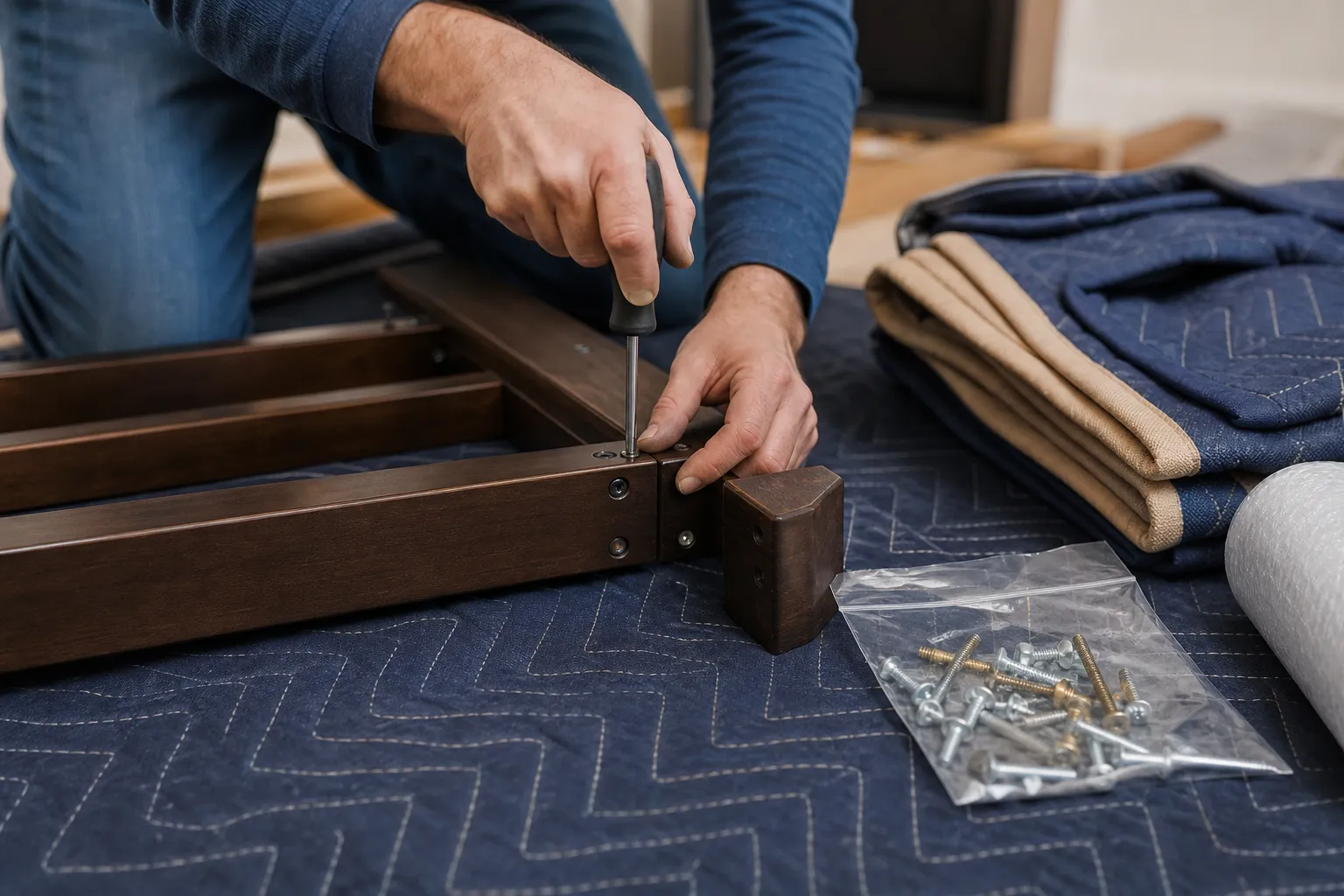
Disassembly often converts an impossible lift into a straightforward one. Remove legs, detachable shelves, cushions and doors when possible. Protect surfaces by wrapping wood and upholstered sections in moving blankets, then apply shrink wrap to keep blankets in place. For fragile finishes, use foam or cardboard corners before wrapping.
Label all small hardware in clear bags and tape the bags to the part they belong to. This saves time at reassembly and prevents lost pieces. Decide whether partial disassembly, like removing legs, is enough, or if full breakdown is required. If a piece must be cut or permanently altered to fit, that is a stop point to reconsider a professional move.
Protective packing tips
- Wrap contact surfaces with moving blankets and secure with stretch wrap.
- Use corner protectors for dressers and tables to prevent dings.
- Label each wrapped item with room destination and orientation (this side up).
4. Safe lifting and moving techniques
Technique and coordination reduce injury. Always plan the lift, clear the path and agree on commands such as "one, two, three, lift" or "step". Bend at the knees, keep the load close to your body and avoid twisting. If the load feels unstable, set it down and reassess. Multiple moving guides emphasise that lifting safely is about posture and control, not brute force.
There are three common techniques you will use depending on the item and surface: two-person carry, dolly loading and strapping, and appliance dolly use. MoveBuddha and Absolute Movers offer detailed steps for these techniques and stress that an appliance dolly is better for very tall or heavy items that must stay upright.
Two-person carry
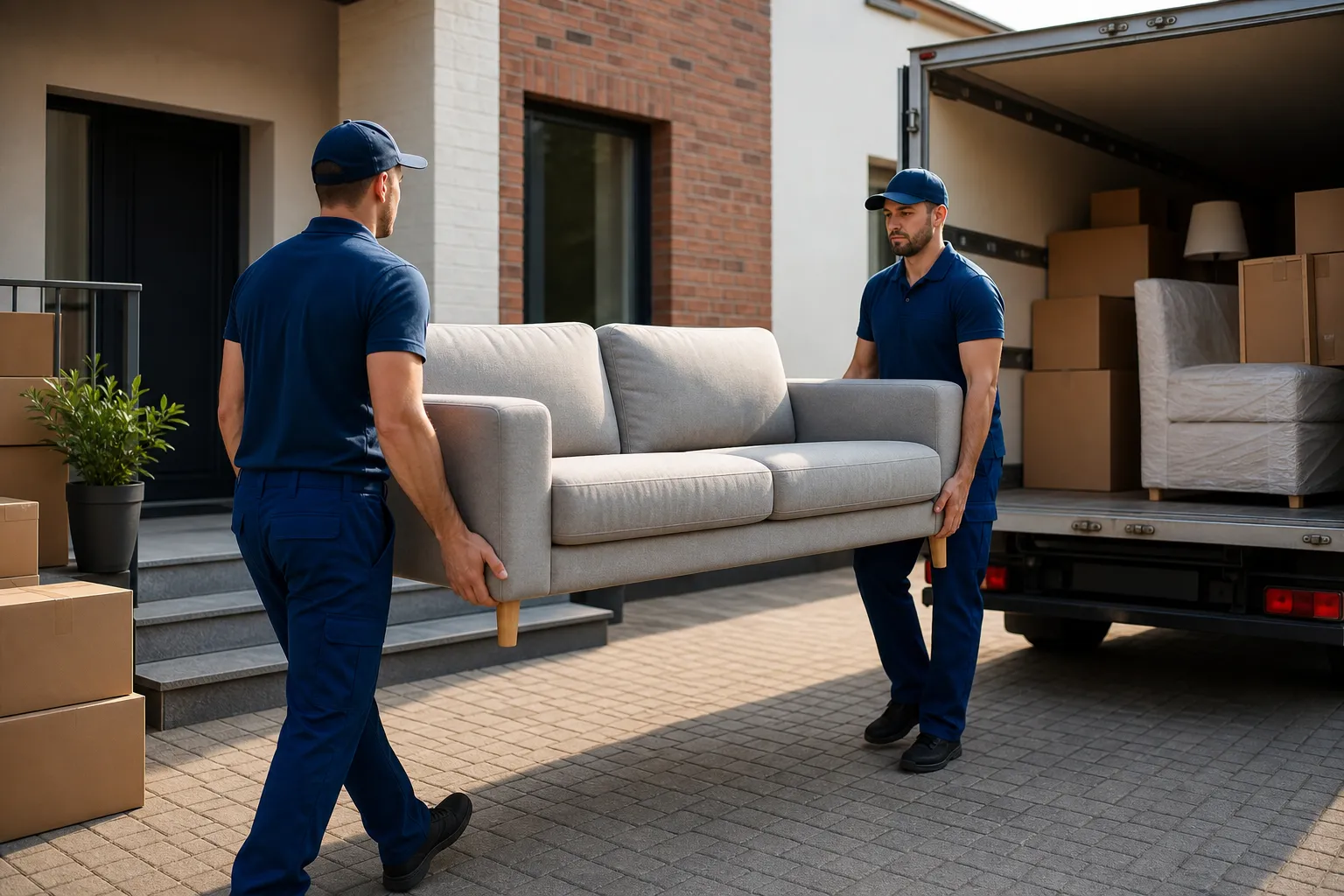
- Face each other, lift together at the same time with knees bent, keep the load level and communicate each step.
- Keep the object close to your torsos and take small steps. If going up stairs, the stronger person should be at the top guiding the load up while the person below supports and lifts upward.
Dolly and strapping
- Slide the piece onto a 4-wheel dolly using sliders or tilt with moving straps to roll it into position.
- Once on the dolly, secure the piece with straps and move slowly. Dollies are ideal for flat, level surfaces but are difficult on stairs.
Appliance dolly for tall heavy items
- Use an appliance dolly with straps for tall wardrobes, cabinets or safes. Keep the item upright and secure to the dolly. This method is recommended for tall or heavy objects to prevent tipping.
- If stairs are involved, an appliance dolly may require extra helpers and professional experience. Follow equipment safety guidance and stop if the load is unstable.
5. Navigating stairs, tight corners and elevators
Stairs and tight corners are the most common failure points. For stairs, the person at the top should generally lead and walk backwards down so they can see the steps, calling each move. Use one step at a time and coordinate each lift. U-Haul recommends the "L" method for tight corners: pivot the object on one corner and rotate it around the turn rather than forcing a straight passage.
If a piece will barely clear a corner, consider removing doors, baseboard trim or the furniture legs to gain inches. If an elevator is available, measure its interior and door width first. ConsumerAffairs and Home Depot both emphasise measuring and planning for stairways and turns to avoid damage.
Stop and call a pro if any of the following are true: the stair run is narrow for two people, the weight is unknown and feels excessive, the building has strict elevator or fire-code rules, or the item is a high-value specialty piece such as a piano or hot tub. For pianos, see why you should never move a piano yourself windsor movers for a detailed explanation.
6. Protect floors, doors and load the truck like a pro
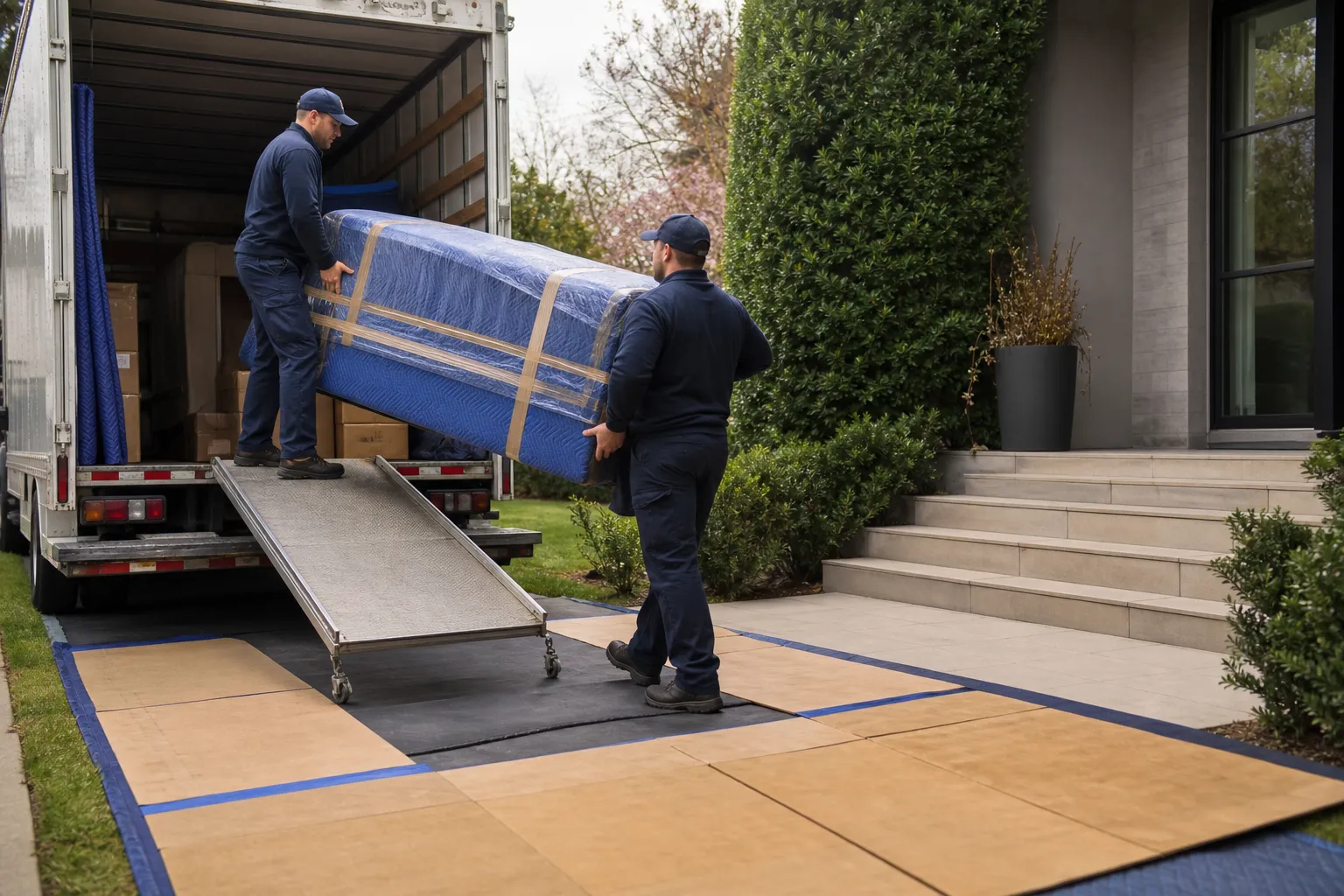
Before bringing items to the truck, protect floors and walls with rosin paper, cardboard or moving blankets. Use furniture sliders on hardwood or tile to reduce friction and avoid gouges. When loading the truck, load heavy items first and place them against the truck wall, distribute weight evenly and strap items to anchor points to prevent shifting. U-Haul and Great Canadian Van Lines give clear loading orders and strapping methods to keep loads stable.
Examples of load order:
- Heaviest and sturdiest items first, such as appliances, bed frames and dressers.
- Boxes stacked in stable columns with fragile boxes on top.
- Secure all tall items with ratchet straps to truck rings.
7. Stop points and when to hire professional movers
Know when the job is beyond safe DIY limits. Hire professional movers when any of these stop rules apply: the item weight is unknown and appears heavy, the item is a specialty object (piano, hot tub, safe, pool table), stairs or narrow landings make controlled lifting risky, long-distance transport is required, or the value of the piece makes damage unacceptable. Great Canadian Van Lines and MTS Moving both recommend hiring trained crews in these situations.
What pros provide: trained crews, proper equipment, insurance and accountability. EC Movers Ltd advertises flat-rate pricing, fully insured operations and WSIB-certified crews, which can be important for higher risk moves.
Questions to ask a mover when you call for a quote:
- Are you insured and WSIB certified for my province, and what does that cover?
- Do you have experience with this type of item and its path, such as stairs or elevators?
- What equipment will you use and is it included in the quote?
- Is pricing flat-rate with no hidden fees, and how quickly can you provide a written quote?
8. Quick printable checklist and decision flow for same-day moves
Use this one-page checklist to confirm readiness. If any question triggers a stop, call a professional mover.
- Measure: furniture height, width, depth and diagonal. Measure doorways, stair width, elevator interior and truck opening.
- Decide: will it fit without disassembly? Yes or no. If no, disassemble or call a pro.
- Tools: dolly, appliance dolly, sliders, moving blankets, straps, gloves, tape, labelled hardware bags.
- Disassemble: remove legs, shelves and drawers; pack hardware in labelled bags and tape to furniture.
- Protect: wrap with blankets and shrink wrap; pad floors and walls along the route.
- Lift plan: assign roles, establish calls, keep load close, avoid twisting and take small steps.
- Truck loading: heavy items first, strap tall items, fill voids with soft items.
- Final check: confirm insurance or coverage for the trip; lock and secure the truck.
Local note: Windsor and Essex County movers and rental outlets commonly used for equipment and short-notice help include U-Haul branches and national hardware stores that rent moving equipment. If you prefer a professional quote with flat-rate pricing and fast response, EC Movers Ltd offers free quotes and serves Windsor and the surrounding area.
Frequently asked questions
What weight is too heavy for a safe DIY move?
If you cannot lift the object while maintaining a straight back and controlled posture, or if two people cannot safely coordinate the lift on stairs, it is too heavy. Unknown or very heavy items, safes and large pianos are common examples that require professionals. Moving guides recommend stopping whenever you feel unstable or if the load requires awkward twisting or unsupported lifts.
Do I need insurance if I move large furniture myself or with rented equipment?
Personal insurance policies vary. If you hire a moving company, check their liability coverage and WSIB certification. EC Movers Ltd lists fully insured operations and WSIB certification on their website, which provides an added layer of protection when professionals handle heavy items. For DIY moves, ask the equipment rental company about damage waivers and verify your homeowner or tenant insurance for transit coverage before you start.
Can I move a piano or a hot tub without professional movers?
Generally no. Both items are heavy, awkward and can cause serious property damage or personal injury. For pianos, the risks are high for the instrument and for people. EC Movers has a dedicated article explaining why you should never move a piano yourself for more detail. Hire trained crews who bring the right gear and experience for these specialty moves.
What equipment should I rent for a one-item heavy move and where can I rent it in Windsor?
For a single heavy item consider an appliance dolly, a 4-wheel furniture dolly, sliders and moving straps. Rent from national outlets or local branches of rental companies and hardware stores. U-Haul and Home Depot are common rental sources and provide dollies, straps and protective materials. Check availability early and reserve for moving day.
What questions should I ask before hiring a moving company for large or specialty items?
Ask about insurance and WSIB coverage, equipment they will use, experience with your specific item, whether quotes are flat-rate with no hidden fees, and how quickly they can provide a written estimate. If you are in Windsor-Essex and want a fast, flat-rate quote, EC Movers Ltd advertises free quotes and fast responses on their website.
Ready to stop worrying and get professional help? For a reliable flat-rate quote, insured crews and specialty expertise in Windsor, contact EC Movers Ltd.
Ready to move?
Get your free quote from EC Movers today.