
How to move without breaking things
Follow a safety-first, room-by-room plan to pack, protect and transport fragile and heavy items without damage, with clear stop points when to hire pros.
How to move without breaking things
Quick safety checklist and how to use this guide
Use this short safety-first checklist on moving day, then follow the step-by-step sections that expand each item. Stop immediately and call professional help if any instruction requires tools, equipment or strength you do not have.
- Sort and reduce your load before you pack.
- Use correct supplies: sturdy boxes, bubble wrap, packing paper, strong tape and moving blankets.
- Wrap fragile items individually, fill voids, and label boxes by room and content.
- Protect floors and corners, disassemble furniture where possible, and bag hardware in labelled packs.
- Load by weight with heavy items first, secure tall or fragile pieces, and check tie-downs before transport.
- Document condition with photos and keep an inventory for any damage claims.
This guide is written for homeowners, renters and small businesses who want a practical, safety-first plan. It includes explicit stop points where you should hire professionals instead of continuing DIY. EC Movers Ltd offers local and specialty moving support in Windsor and Essex County if you need help beyond these steps; see the contact section at the end.
Step 1: sort, declutter and choose what to move
Reducing what you move lowers the chance of damage. Start at least two weeks before your move and sort room by room into four piles: keep, donate, recycle, sell. For fragile and heavy items apply these decision rules:
- Keep only what you use or value, especially fragile items that need special crates or packing.
- Donate or sell anything that is chipped, warped or already fragile; one less weak item reduces risk to the rest of your shipment.
- If an item requires special permits, cranes, or more than two people to lift, mark it for professional handling.
Packing is where most moving damage happens, not move day. Use professional packing methods rather than stuffing boxes; see expert packing advice for why careful packing prevents most breakage and how to plan box sizes and loads correctly.
How to pack for a move explains why proper packing and box loading reduce breakage risk and why room-by-room sorting matters.
Step 2: pack fragile items the right way
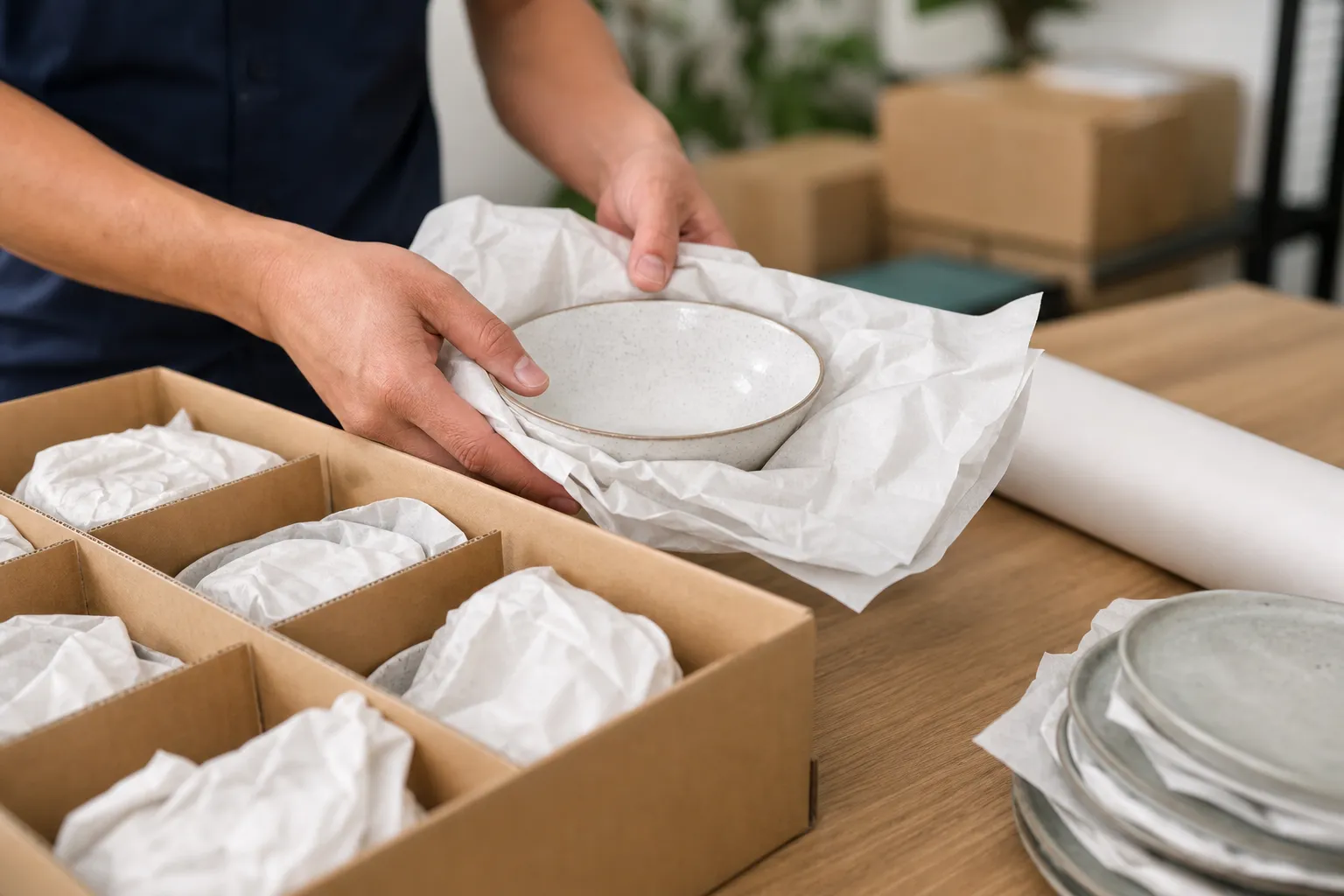
Fragile packing is an ordered routine: gather supplies, wrap the item, cushion inside the box, and label. The same core actions apply to glassware, electronics and artwork, but there are item-specific details below.
If you prefer a professional to pack high-value or sentimental pieces, EC Movers provides packing and storage services and can supply experienced packers.
Expert fragile packing techniques outline layering, cushioning and orientation methods you should adopt for most breakables.
Glassware, dishes and small breakables
- Use smaller boxes for glassware so weight stays manageable and items do not crush under their own mass.
- Wrap each piece in packing paper or bubble wrap. For plates, stand them on edge in the box using dividers or rolled paper between each plate; do not stack heavy plates flat without strong separation because stacked plates can break under their own weight.
- Fill air gaps with crumpled paper or foam so nothing shifts. Avoid overpacking; overfilled boxes split under pressure.
- Label boxes "FRAGILE" and note the upright orientation. Place fragile boxes on top of heavier boxes in the truck.
March Moving highlights that standard household packing is often insufficient for high-value fragile items and offers packing patterns that reduce pressure points on plates and glassware.
Electronics, TVs and artwork
- Use original packaging when available. If not, wrap electronics in anti-static material and add at least two inches of padding on all sides inside the box.
- For flat-screen TVs, pack upright in a purpose-built TV box and label the correct orientation. Do not lay screens flat under other items.
- For framed artwork, protect corners with cardboard corner guards, wrap the face in glassine or paper, and add stiff backing to prevent bending.
- Remove batteries and back up data for electronics before packing.
Loading Crews provides step-by-step packing recommendations for electronics and framed pieces; following their guidance lowers the likelihood of screen cracks and frame damage.
Mirrors and large glass surfaces
- Use corner protectors and wrap the entire surface in moving blankets or heavy bubble wrap, then secure with tape that does not touch the glass surface directly.
- Consider a wooden crate for large mirrors or glass panels. If the mirror is large, warped or antique, stop and hire pros who can crate and handle it safely.
If you are unsure about crating or rigging, read professional guidance before attempting to transport large glass pieces yourself.
Step 3: protect and move furniture and heavy items
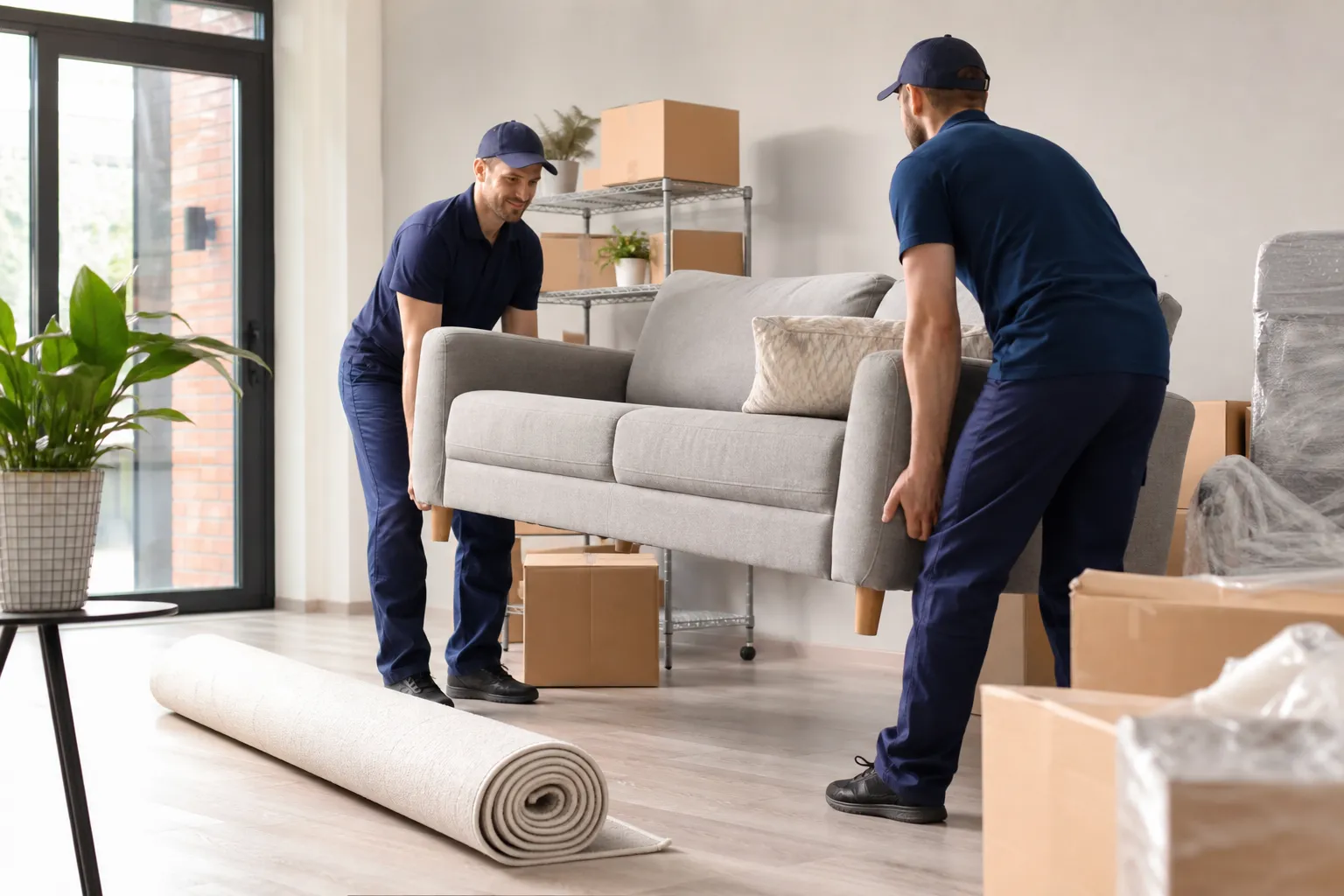
Furniture damage and floor or wall scuffs are common but avoidable. Disassemble what you can, pad contact points, and use moving straps and a dolly. When in doubt, stop and get professional help—heavy lifts can cause injury and severe damage.
Disassembly, wrapping and reassembly
- Remove legs from tables, take doors off cabinets, and loosen bolts where recommended by the manufacturer. Keep hardware in labelled bags taped to the item.
- Wrap wood and finished surfaces in moving blankets or furniture pads and secure with stretch wrap to avoid tape touching the finish.
- Use floor protection like cardboard or rosin paper in high-traffic paths to prevent scuffs during carries.
Loading Crews offers a detailed checklist for disassembly and packing of furniture that prevents joint stress and finish damage.
Simple lever and dolly techniques
- Use a furniture dolly for heavy, stable items and slide skid boards or moving sliders for short moves over floors.
- Two-person lifts with knees bent, load close to the body, and communicate each step to avoid sudden shifts.
- If an item requires more than two people to lift comfortably, or you must navigate stairs, narrow halls or tight turns, stop and book professional movers.
If you do not own a truck, moving a few miles without one is still possible with careful planning, disassembly and correct loading; for guidance see the PODS resource about moving without a truck.
Moving pianos, pool tables and hot tubs: why pros matter
Large specialty items require rigging knowledge, special equipment and often permits. The risk of structural damage, harm to property, or personal injury is high when attempting these moves without professionals. For Windsor-specific guidance on piano risk, read our article on why you should never move a piano yourself windsor movers.
EC Movers Ltd lists specialty moving for pianos, hot tubs and pool tables among its services and offers insured crews and equipment for these items, which is the safer option than DIY for most homeowners.
Step 4: load and secure the truck like a pro
Loading is a sequence: heavy and stable items first, then medium weight, fragile last. Secure everything so it cannot shift in transit.
- Place heavy furniture and appliances against the truck wall to form a stable base.
- Stack lighter boxes on top and use straps or ratchet tie-downs to prevent forward and lateral movement.
- Protect mattress and upholstery with clean moving blankets and avoid placing boxes directly on them.
- Perform a final walk-around to check straps, doors and the load plan before departure.
Follow loading patterns recommended by experienced movers to reduce vibration and shear forces on fragile items; incorrect stacking and unsecured boxes are common causes of in-transit breakage.
Step 5: transit care and unpacking strategies that prevent damage
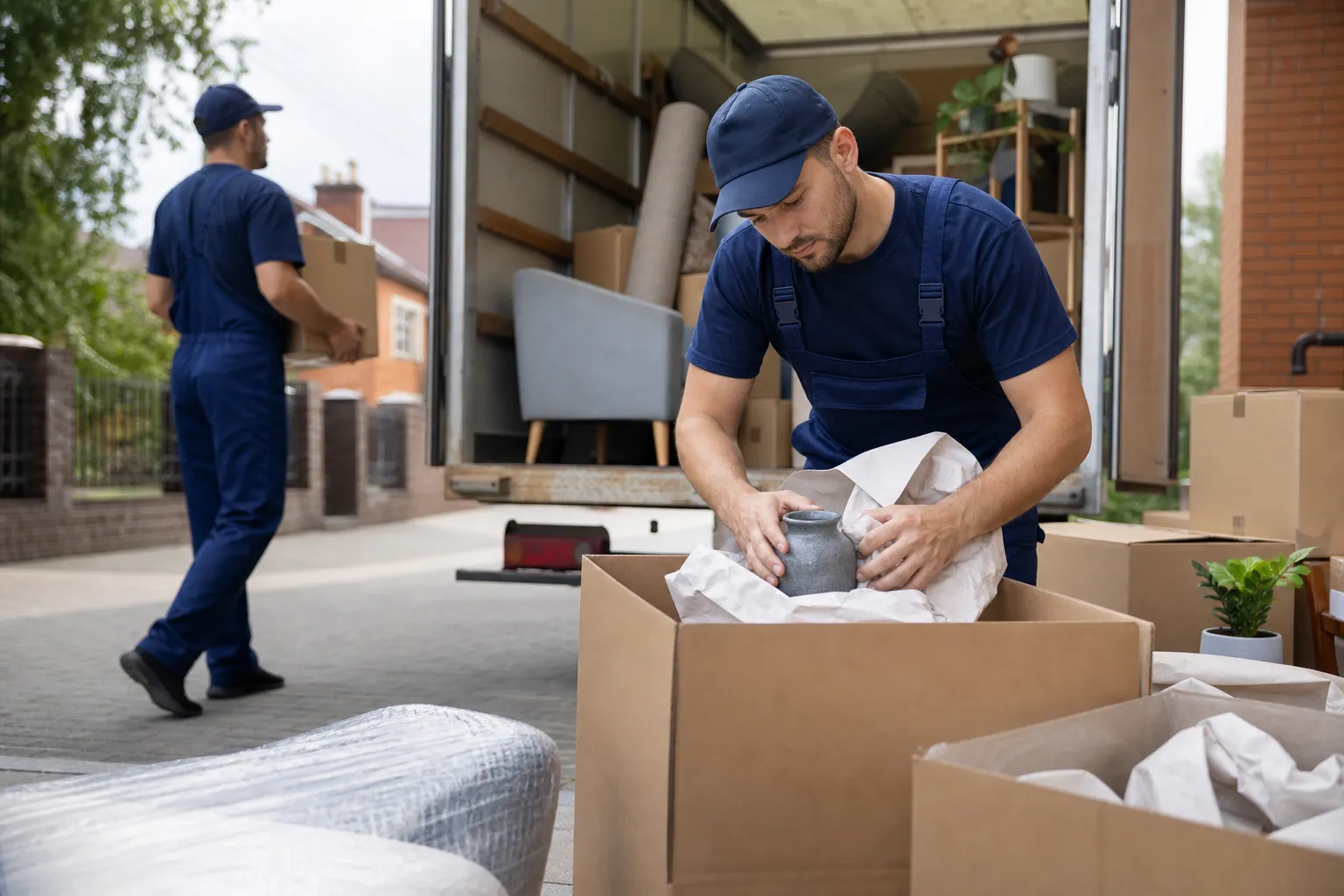
During transit, make periodic checks at stops if possible. Unpack in a logical order that reduces rehandling: essentials first, then fragile boxes, then furniture.
- Document any visible damage with photos and keep them with your inventory notes.
- Unpack fragile boxes on a soft surface and inspect contents before discarding packing material.
- If damage is discovered, record the time and condition and contact your mover immediately to begin a claims process.
Careful unpacking avoids secondary damage such as scratches or tears from rushed handling. Maintain your inventory and photos for any insurance or mover accountability discussions.
When to stop DIY and hire professional movers in Windsor and Essex County
Call professionals if any of these apply to you: the job needs specialized rigging, the item needs more than two people to lift safely, access is constrained (narrow stairwells, low-hanging trees, no street parking), or the item is unusually heavy or high value.
EC Movers Ltd offers flat-rate quotes, WSIB-certified crews, full insurance coverage and 24/7 availability for urgent or specialty moves. Learn more about services and request a quote on the EC Movers site.
For piano-specific risks and the correct professional approach, read our piano safety post linked above.
Printable moving-day checklist and fragile packing cheat sheet
Use this single-page checklist on moving day. Keep it on your phone or print it and tape it to the wall in the packing area.
- Morning before movers arrive: clear walkways, protect floors, confirm parking and elevator access.
- Fragile packing: each item wrapped, voids filled, boxes labelled and sealed, "FRAGILE" visible.
- Furniture: hardware in labelled bags, protective pads on all pieces, disassembled where possible.
- Loading: heavy items first, straps on every tall stack, fragile boxes placed last and tied down.
- Transit: final strap check, photos of loaded truck, contact numbers for moving company accessible.
- Unpacking: fragile boxes opened on soft surface, damage photographed and reported immediately.
Frequently asked questions
How should I pack dishes and glassware to avoid breakage during a move?
Wrap each item individually, stand plates on edge with dividers rather than stacking them flat, fill voids to prevent movement, use smaller boxes, and label "FRAGILE". Expert packing guides explain these layering and orientation methods in detail for different glass types.
Is it safe to move a piano, hot tub or pool table myself or should I hire professional movers?
Specialty items usually require professional equipment and insured crews because of weight, rigging needs and risk of damage to property. EC Movers lists specialty moving services and can advise when a professional rig is needed for safe transport.
What steps should I take if an item is damaged during a move and who pays for repairs?
Document the damage immediately with photos, keep the original packaging where possible, and contact the moving company to start a claims process. Coverage depends on the mover's insurance and the terms agreed in your contract; EC Movers cites full insurance and WSIB certification as part of its service offering.
What does WSIB certification and full insurance mean for my moving liability in Windsor
WSIB certification indicates the mover operates under provincial workplace safety rules and carries employer coverage for workplace injuries. Full moving insurance covers customer goods according to the policy's terms and limits. Confirm coverage details and claims procedures with your mover before the move.
Can I move without a truck and still protect heavy furniture from damage?
Yes, a short move without a truck can be done if you plan disassembly, use dollies and sliders, and load strategically. For longer or more complex moves, a professional truck and crew reduce risk and physical strain. See guidance on moving without a truck for practical planning steps.
Key takeaway: most breakage is preventable with correct packing, measured lifting, and the right equipment. When a move requires specialized rigging or more hands than you can safely provide, hire experienced, insured movers.
Need help or a flat-rate quote in Windsor and Essex County? Contact EC Movers Ltd for packing, specialty moves and 24/7 support.
Ready to move?
Get your free quote from EC Movers today.