
How to pack a moving truck safely and efficiently
Step-by-step plan to pack a moving truck safely: choose the right size, gather supplies, load heavy items first, strap loads, and protect fragile items.
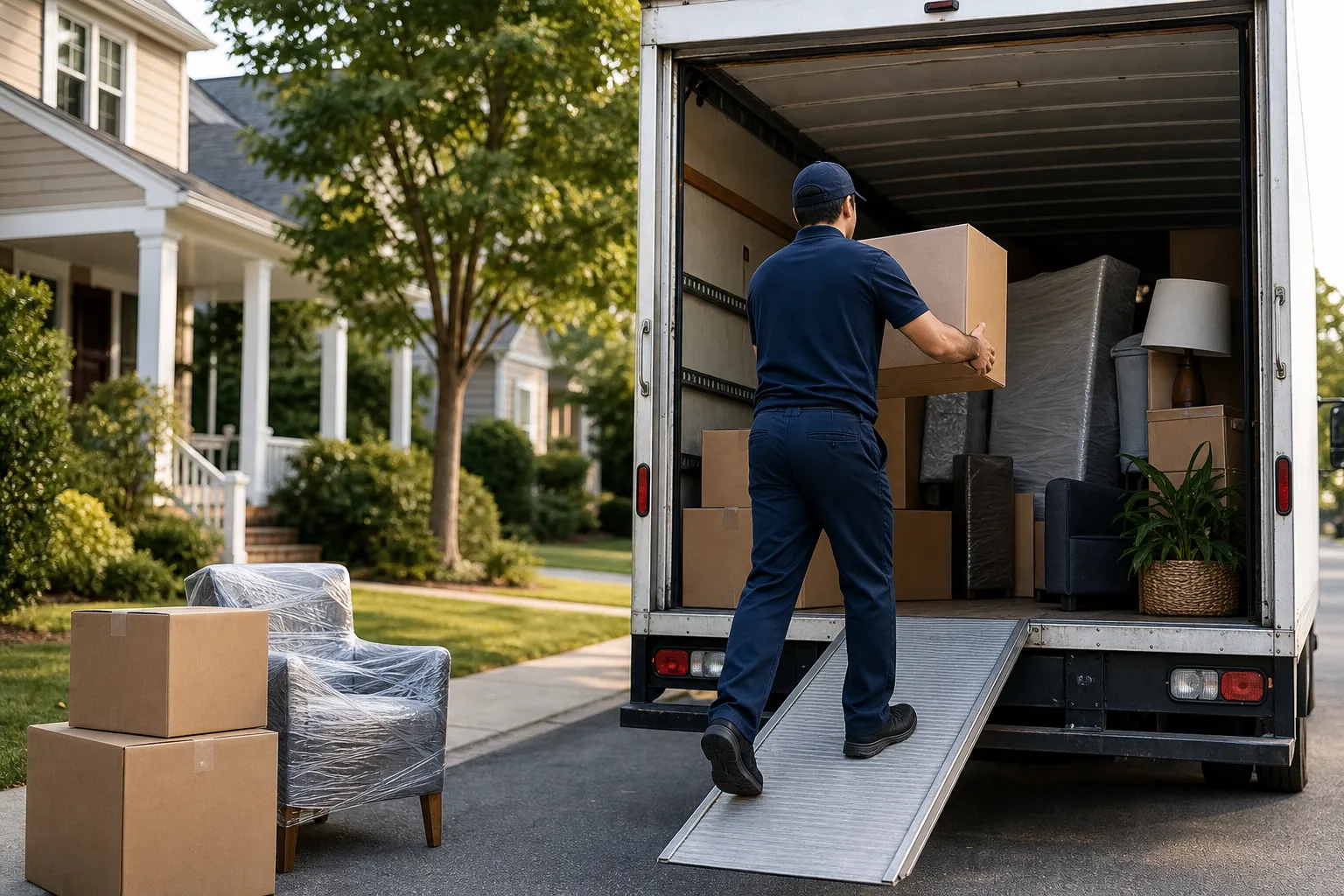
How to pack a moving truck safely and efficiently
Loading a moving truck is a physical puzzle that becomes simple when you follow a clear order. This guide gives a safety-first sequence you can follow on moving day, a printable materials checklist, and practical decision rules for specialty or long-distance moves. Where the guidance relies on industry best practice we name the source so you can check details before you load.
Before you load: pick the right truck and gather supplies
Determine the right truck size and payload
Estimate the cubic volume of your household and choose a truck that matches your inventory and handles the payload safely. If you under-rent you will need extra trips; if you overfill you risk overloading the axle. Confirm the vehicle payload and ensure the truck has a ramp or lift gate for heavy items. Measure large items before you reserve.
Check vehicle access and parking
Confirm the truck can get close to both properties, that there is room to open the rear door, and that any apartment building permits for temporary parking are arranged. A clear, short carrying distance saves time and reduces lifting risk.
Materials and tools checklist
- Moving blankets and furniture pads
- Ratchet straps and moving straps for furniture
- Load bars or cargo bars and anchor straps
- Furniture dolly and appliance dolly with straps
- Appliance skid plates for washers and dryers
- Moving boxes rated for transport, wardrobe boxes, mattress bags
- Bubble wrap and packing paper for fragile items
- Heavy duty tape, box cutter, permanent marker
- Work gloves, first aid kit, bungee cords
Gather these items before you begin loading. Industry packing guides recommend the same essentials so you can secure loads and reduce damage risk.
Step 1: plan the load and inventory by room
Inventory, prioritization and labelling
Walk every room, decide what moves and what does not, and tag boxes with room names and a short contents note. Consider a colour code for quick sorting at the destination. A simple inventory and consistent labels speed unloading and reduce rehandling.
Stage a clear loading zone
Create a staging area near the truck door with pathways cleared and teams assigned roles such as carry, stack, and secure. Keep a small toolkit and the marker nearby so boxes and odd items are labelled as they are loaded.
Step 2: load heavy items first and build a stable base
Understand truck zones
Think in three zones: front near the cab, centre, and rear. Place the heaviest items low and forward near the cab to keep the trailer stable while driving. Front-weight placement reduces sway and creates a solid base for stacking lighter items later.
Position appliances and large furniture
Appliances should be tied down and placed on their backs only when manufacturer guidance allows it. Use appliance straps and skid plates to secure washers and dryers, and position heavy couches, dressers, and cabinets against the truck wall with moving blankets between surfaces. Securing large items first stops shifting and protects smaller boxes.
Mattresses and box placement
Mattresses and box springs can lie flat against the truck wall or stand on edge along a side to save floor space. Use mattress bags to protect from dirt and moisture. Place heavy, low boxes near appliances and furniture legs, not on top of fragile pieces.
Step 3: stack smart — boxes by weight, tiers and gap filling
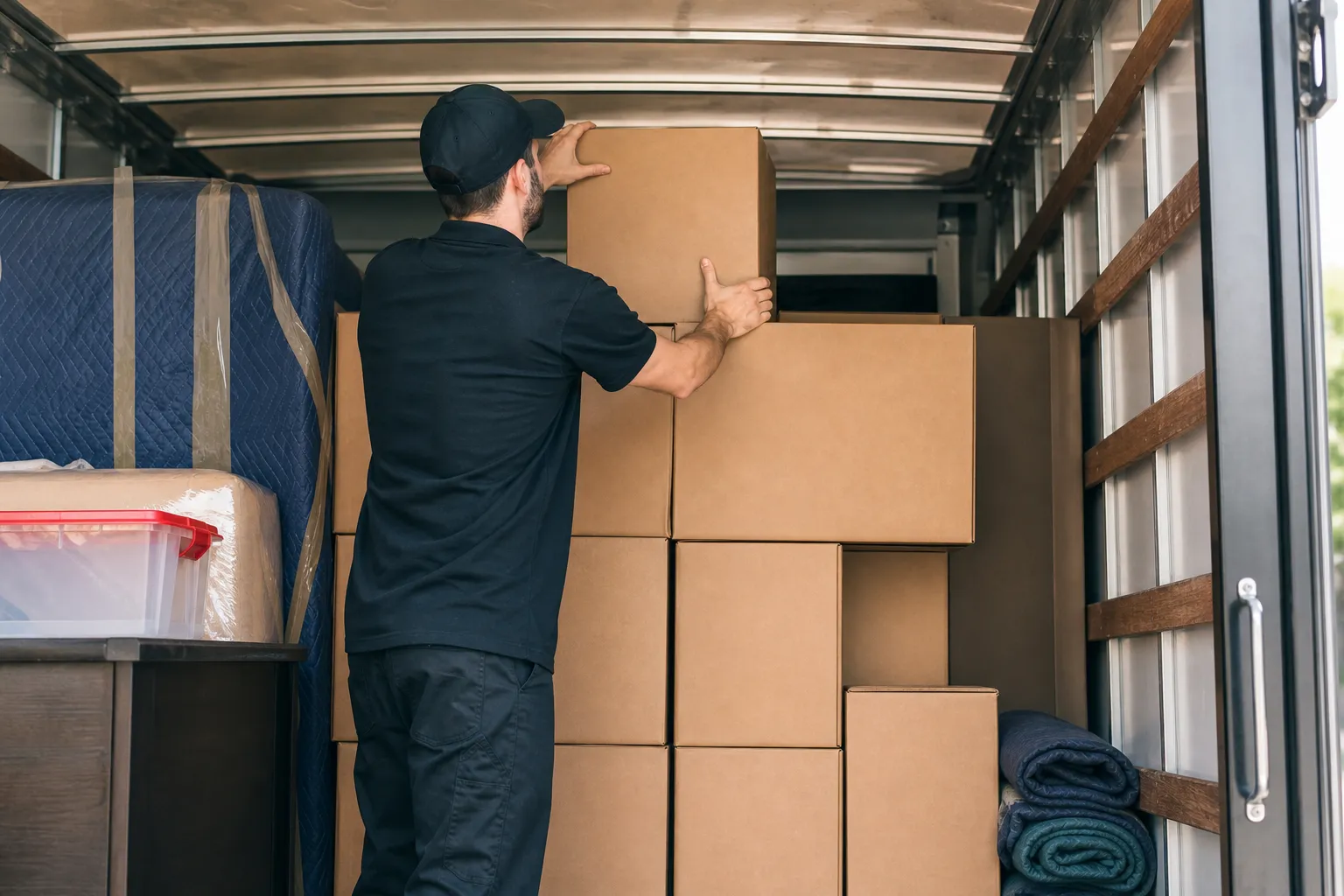
Stack by weight not by size
Load heavy boxes on the bottom, medium in the middle, and light on top. Stack in tiers from floor to ceiling where items remain stable, and secure each row with straps to prevent toppling during turns. Do not place very heavy items on top of lighter boxed goods.
Fill voids with soft items
Use pillows, linens, rolled rugs, and soft goods to fill gaps. Filling voids reduces movement, and moving blankets wrapped around grouped items add friction and protection. Small loose items should be bagged and placed in furniture drawers if secure.
Protect fragile stacks
Wrap electronics, artwork and mirrors in moving blankets and keep them upright between secure blocks. Where possible, position framed pieces against the truck wall with a padded barrier behind and in front.
Step 4: secure everything — straps, anchors and final checks
Strap placement patterns
Use ratchet straps across large furniture and multi-point anchor straps for long stacks of boxes. Run straps horizontally and diagonally across key items to prevent both forward and lateral movement. Attach straps to the truck anchor points or E-track, never to fabric or loose parts of furniture.
Anchor points and load bars
Use load bars between the truck walls to take pressure off the straps and stop pallets of boxes moving forward. Check that the anchor points you select are rated for load securing and that straps are not frayed or damaged.
Quick pre-drive checklist
- Walk the interior and test that nothing shifts when pushed
- Verify straps are tight and tied off so they cannot loosen in traffic
- Close the truck door slowly and check for bulging items
- Confirm axle load is within the vehicle limit and adjust if necessary
Handling fragile and specialty items: pianos, pool tables and hot tubs
Fragile packing rules
Wrap electronics, artwork and mirrors carefully, use rigid corner protectors for framed pieces, and never put heavy boxes on fragile items. For glass and flat screens use vertical placement and additional padding. Professional-grade padding and multi-point securing are recommended for high-value items.
Disassembly and dedicated protection
Disassemble legs, shelves and detachable parts where possible and pack fasteners in labelled bags. Protect upholstery with shrink wrap after adding a soft blanket barrier. Deliberate disassembly reduces bulk and prevents incidental damage.
When to call specialists
Large pianos, pool tables and hot tubs have specific rigging and moving requirements. If an item is heavy, awkward, bolted in place, or must pass stairs or narrow doorways, DIY risk is high. EC Movers Ltd offers WSIB-certified, insured specialty moving for pianos, hot tubs and pool tables across Windsor and Essex County and can manage rigging, disassembly, transport and setup. For local professional help see EC Movers Ltd full packing and moving service.
What not to pack and essential items to carry with you
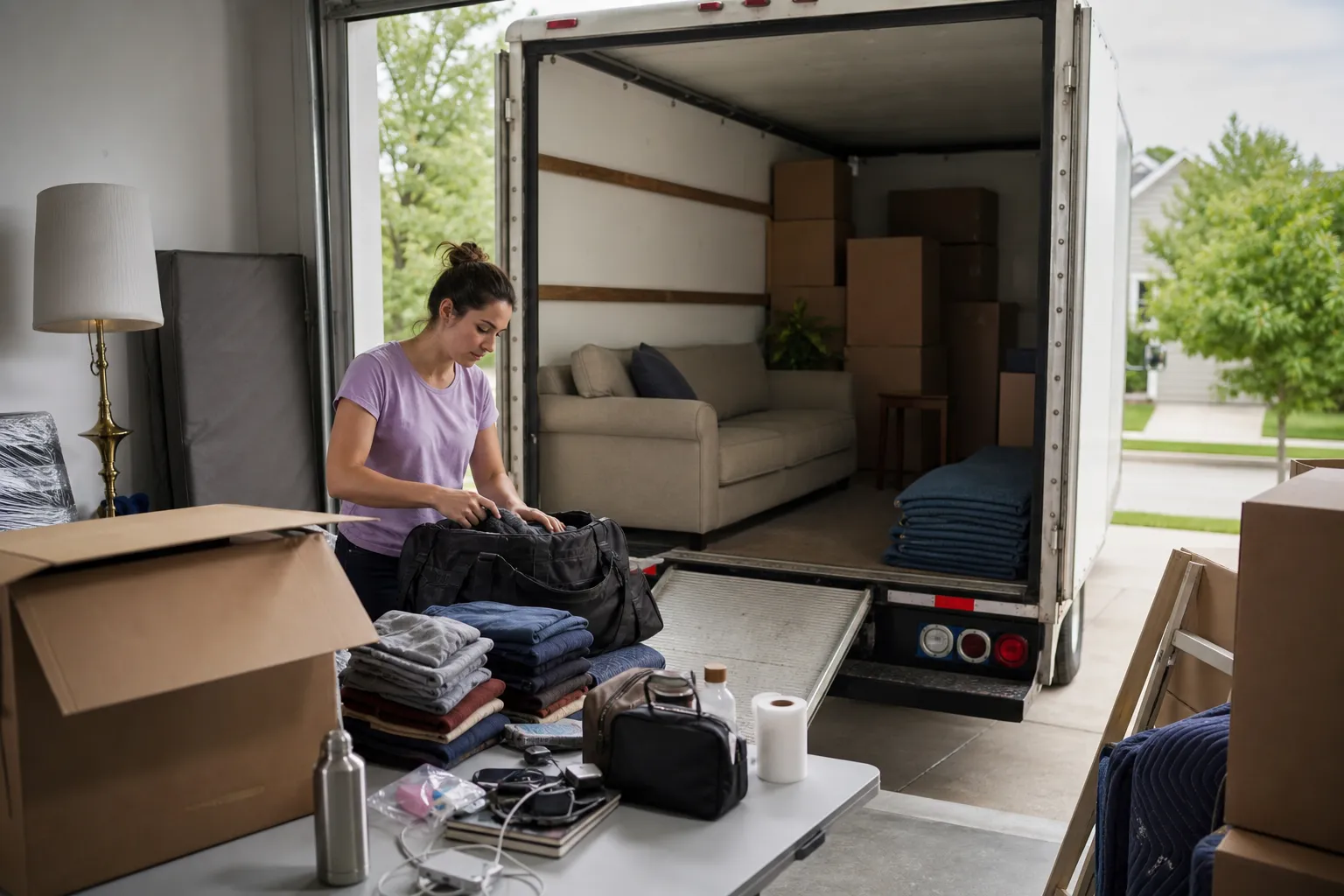
Do not pack hazardous materials like propane tanks, gasoline, paints, corrosive cleaners, or aerosol cans in a moving truck. Do not place perishable foods, important documents, medications, passports, cash, or small valuables in the trailer for long-distance trips. Keep an essentials bag with medicines, chargers, documents, snacks and a change of clothes.
Common mistakes, time-saving techniques and safety reminders
Frequent errors and fixes
- Underestimating space. Solution: measure furniture and estimate boxes before you book, or reserve a slightly larger truck.
- Poor labelling. Solution: use room names and top-level contents, and tape a loading order number on each box row for faster unloading.
- Overstacking without securement. Solution: stop stacking when items become unstable, then strap and build a new row.
Three time savers for same-day moves
- Stage and bag small parts and hardware by piece and room before you carry them to the truck.
- Assign clear roles to helpers and run a short safety briefing before starting.
- Load essentials last so they are the first items you can reach at the destination.
Decide now: DIY loading checklist versus when to hire pros
If your move includes multiple heavy specialty items, stairs, tight corners, a long distance, or you lack equipment and helpers, hire professionals. EC Movers Ltd provides flat-rate quotes, insured crews and 24/7 support for scheduled and specialty moves across Windsor-Essex and can manage full packing through to setup when DIY is impractical. For service details see EC Movers Ltd full packing and moving service.
Printable checklist: quick reference for moving day
- Truck size and payload confirmed
- Materials gathered: blankets, straps, dollies, boxes, mattress bags
- Inventory complete with room labels and loading order
- Heavy items loaded first near the cab
- Boxes stacked by weight, gaps filled with soft goods
- All items strapped and anchored, load bars in place where applicable
- Essentials bag kept with driver or lead mover
- Final interior walk and strap tension check before departure
Frequently asked questions
How do I decide what size moving truck I need
Measure large furniture, count boxes by size, and compare to rental provider size guides. When in doubt add 10 to 20 percent extra space for padding and ease of loading, or consult a moving company estimate for an on-site assessment.
What is the best order to load a moving truck to prevent shifting
Load heavy, bulky items first against the truck wall near the cab, then stack boxes by weight in tiers, fill gaps with soft goods, and secure each row with straps. Use load bars and anchor points to stop forward movement.
How should I secure large appliances and mattresses in the truck
Use appliance straps and skid plates, position appliances against the wall, and strap them to rated anchor points. Mattresses should be in bags and placed flat or upright in a protected position, with moving blankets as buffers.
Can I safely move a piano or pool table by myself
Small upright pianos may be moved by experienced teams with proper equipment, but large grand pianos and pool tables often require professional rigging. For insured, WSIB-certified specialty moving in the Windsor-Essex area contact professionals who have the necessary equipment and experience.
What items should never go in a moving truck and what to keep with me
Never pack hazardous materials, perishables for long trips, or valuables and essential documents in the trailer. Keep medications, passports, cash, electronics and an overnight bag with you in the vehicle.
For local assistance, specialty-item moves, or a flat-rate quote you can trust, call EC Movers Ltd at (519) 566-8933 or request their full packing and moving service online. EC Movers Ltd is insured and WSIB certified and handles specialty items across Windsor and Essex County.
Ready to move?
Get your free quote from EC Movers today.