7 Loading and Unloading Tips for a Safer Move in Windsor
Follow seven loading and unloading tips to protect belongings, organize moving day, and decide when professional movers in Windsor make sense.
7 Loading and Unloading Tips for a Safer Move in Windsor
Loading and unloading go more smoothly when you treat them as a planned sequence rather than a race. Clear routes, protected belongings, sensible truck organization, and good communication can reduce confusion and unnecessary re-handling during a household move.
Whether you are moving within Windsor-Essex or travelling farther across Canada, the same decisions matter. These seven loading and unloading tips cover preparation, protection, heavy items, truck layout, load security, unloading coordination, and when professional help may be the better choice.
Quick summary
- Clear routes and create loading and unloading zones before anything moves.
- Protect floors, doorways, furniture, and fragile belongings in advance.
- Plan heavy and awkward items around stairs, corners, and narrow openings.
- Organize the truck by weight, stability, access, and unloading order.
- Consider professional help for specialty items, complex access, extensive packing, limited assistance, or long-distance moves.
1. Prepare the route and work areas before anything moves
Walk through both properties before moving anything. Look for stairs, tight turns, narrow doorways, elevators, outdoor paths, uneven surfaces, and areas where furniture could catch on a wall or railing. Clear boxes, cords, tools, and other obstacles from the route.
Create a loading area near the exit and an unloading area near the entrance. At the destination, decide where boxes can wait without blocking doors, hallways, stairs, or essential rooms.
Pre-move route checklist
- Remove clutter from hallways, stairs, and doorways.
- Assess tight turns for large furniture and appliances.
- Identify floors and surfaces needing extra protection.
- Keep pets, children, and personal items away from work areas.
- Confirm elevator, parking, and building access directly with the relevant contact.
This preparation is useful for houses, apartments, offices, and student moves. It also identifies access problems before they become move-day surprises.
2. Protect belongings, floors, and doorways before loading

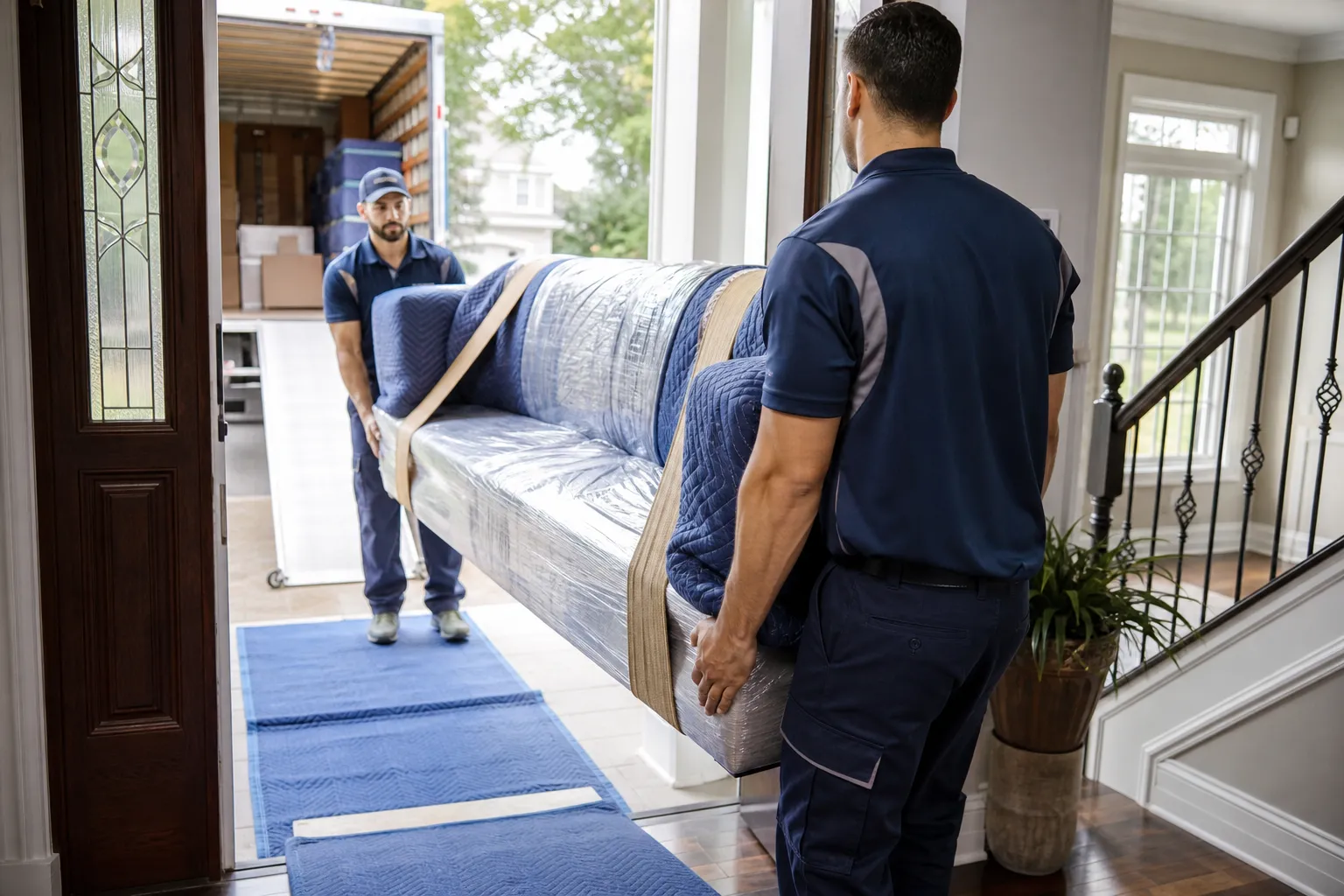
Put protection in place before the first large item reaches the doorway. Group fragile belongings, label boxes clearly, and use suitable wrapping or padding for items that could scratch, break, or be affected by pressure.
Protect high-contact areas as well as the belongings themselves. Door frames, floors, stair edges, corners, and narrow passages can all be exposed while furniture is moved. Keep protective materials close to the areas where they will be used.
Separate ordinary household items from belongings requiring specialized handling. Pianos, hot tubs, and pool tables can involve unusual weight, shape, balance, or access requirements. Treat each as a separate planning question rather than adding it to a general furniture pile.
Use labels that identify the destination room, handling notes, and whether the box should be unloaded early. Written instructions are more reliable than memory when several people are working at once.
3. Plan for heavy and awkward items instead of improvising
Before moving heavy furniture, consider how it will be gripped, whether it can be tilted safely, where its weight may shift, and how it will pass through corners or doorways. A tall, wide, or unevenly balanced item may need a different approach from a compact box.
Stairs and tight turns deserve particular attention. Decide who will communicate the movement, where people can pause, and how the item should be positioned before carrying begins.
Disassembly may make furniture easier to handle, but only take items apart when you can track the hardware and reassemble them properly. Place screws, brackets, and small components in a labelled container attached to the relevant item.
Stop and reassess if the route, item, or available help does not give you confidence. Professional equipment, additional people, or specialty experience may be more appropriate than improvisation.
4. Load the truck by weight, access, and unloading order
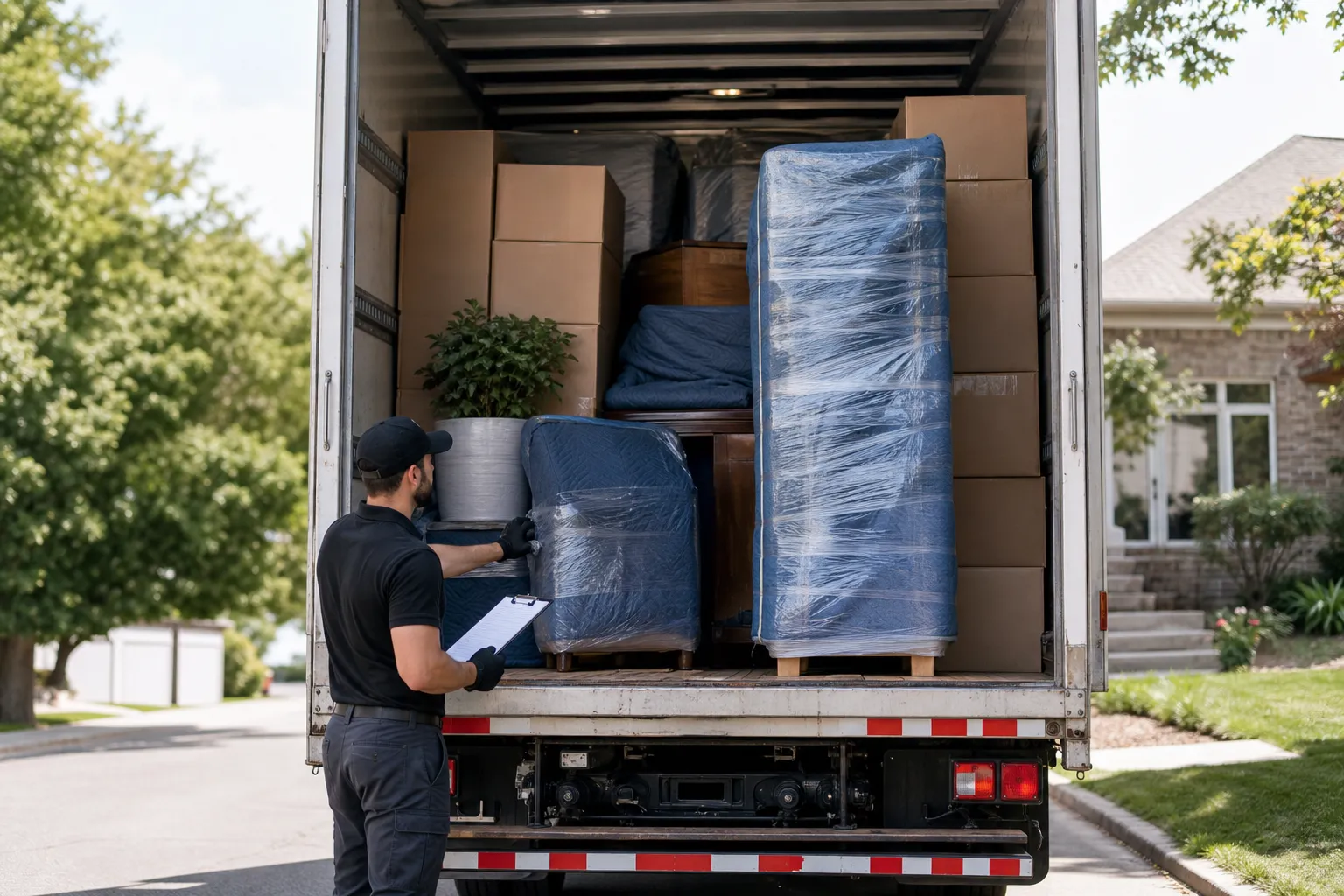
A truck is easier to unload when its contents are organized deliberately. In general, heavier and more stable belongings should be positioned low and arranged to support a stable load. Lighter and more vulnerable items need protection from pressure and contact.
Consider access as well as weight. Items needed first at the destination should not be buried behind belongings that will remain in the truck longer. Keep essential boxes, basic tools, and first-night items clearly identified and reachable.
Use a simple loading plan
- Make a room-by-room inventory before loading.
- Mark fragile, heavy, and soon-needed boxes.
- Keep similar items together where practical.
- Record which items are loaded and where they are positioned.
- Adjust the arrangement to suit the truck, belongings, access, and weather.
No single arrangement suits every move. The layout should account for stability, protection, and the order in which rooms will be set up.
5. Check and secure the load before transport
Pause for a final inspection before the truck moves. Look for items that could shift, exposed edges needing padding, fragile boxes under pressure, and gaps where belongings may move during transport. Check that the doors can close without pressing against furniture or boxes.
Review the load from more than one position. An item that appears stable from the rear may have an unsupported side or a loose object behind it. Make sure protective materials remain in place and access to the doors is clear.
Compare the load with your inventory and resolve missing items before departure. A careful inspection cannot remove every moving risk, but it can identify obvious problems while they are still easy to correct.
6. Set up unloading zones before the first box arrives
Assign destination rooms or zones before unloading starts and use labels that match them. Give the person directing the move a copy of the plan so boxes do not collect in hallways while people decide where they belong.
Protect the new property and keep a clear route from the truck to each room. Leave space for large furniture to be positioned without blocking the remaining path. If furniture will be assembled or placed immediately, decide where that work will happen before boxes fill the area.
Unloading-day checklist
- Identify the destination room for each box and furniture item.
- Keep hallways, stairs, and doorways clear.
- Direct fragile, heavy, and first-night items clearly.
- Confirm large-item placement before carrying it inside.
- Keep an inventory as items leave the truck.
Unloading is more than taking items off the truck. It includes placing belongings where they belong, assembling agreed furniture, and creating enough order to use the new space. EC Movers provides loading, transportation, unloading, furniture assembly, and new-space setup.
7. Know when professional help is the better option
Self-loading and unloading can make sense when the move is manageable, the route is straightforward, and you have enough capable help. Professional support is worth considering when the move includes heavy or awkward items, stairs, difficult access, extensive packing, limited assistance, storage needs, specialty belongings, or a long-distance route.
Consider the whole task rather than only the truck. You may need help packing, protecting furniture, carrying items through difficult access points, unloading by room, or setting up the new space. A detailed quote can help you compare the cost and effort of doing each part yourself.
When comparing moving companies in Windsor, ask what the quote includes, how belongings are protected, whether the operation is insured, and whether the company can handle your specific items and access conditions.
EC Movers Ltd serves Windsor and Essex County with local and long-distance moving services across Canada. Its stated services include full-service packing and unpacking, packing-material consultation, short-term storage coordination, and specialty moving for pianos, hot tubs, and pool tables. The company states that its operations are fully insured and WSIB certified.
Frequently asked questions
Should heavy furniture be loaded first when moving?
Heavy and stable belongings are generally planned for the lower part of the load, but the exact order depends on the truck layout and unloading plan. Place them where they support a stable arrangement without pressing against fragile items or blocking access.
What should I prepare before movers arrive?
Clear hallways, stairs, and doorways, identify fragile or specialty items, label boxes by destination room, and keep important instructions available. Keep pets, children, and personal valuables away from active work areas.
What should I do during unloading?
Direct each item to its intended room, keep a basic inventory, and prevent boxes from accumulating in the main route. Flag fragile or awkward items before they are carried in, and identify furniture placement early.
When is hiring professional movers worthwhile?
Professional help may be worthwhile for heavy or specialty items, stairs, narrow access, limited assistance, extensive packing, storage needs, or a long-distance move. It can also simplify coordination when you want one provider to manage loading, transport, unloading, assembly, and setup.
Make loading and unloading part of the move plan
The strongest loading and unloading plan connects every stage: prepare the route, protect the property and belongings, plan difficult items, organize the truck, inspect the load, and coordinate the destination before unloading begins.
Before moving day, assess access, belongings, available help, packing requirements, and travel distance. If the move includes specialty items or complex handling, request a quote that clearly explains the services and protection included.
For local, residential, commercial, long-distance, packing, or specialty moving services in Windsor and surrounding communities, contact EC Movers Ltd for a quote.
Ready to move?
Get your free quote from EC Movers today.