
Moving Day Checklist: How to Organize the Hours Before, During, and After Your Move
Use this moving day checklist to prepare access, valuables, loading, delivery, and final walkthroughs for a smoother local or long-distance move in Ontario.

A smooth moving day is less about packing one more box and more about coordinating access, people, belongings, protection, paperwork, and timing. Before the crew arrives, know what you are carrying yourself, how the truck will reach the property, which items need special handling, and what must be checked before anyone leaves.
This move-day logistics checklist separates customer-owned tasks from mover and building-management tasks. Use it for a house, apartment, office, local move in Windsor-Essex, or long-distance move across Canada.
Quick summary

- Confirm parking, loading access, elevator arrangements, stairs, door widths, and building rules before moving day.
- Keep valuables, personal documents, medication, keys, and essential electronics with you.
- Stage labelled boxes, clear pathways, protect floors, and prepare a first-night kit.
- Review the written scope, inventory, special-item instructions, arrival details, and liability terms before loading.
- At delivery, compare items with your inventory and record visible damage or missing belongings before the crew leaves.
The day before: make the move ready to start
The final preparation window should remove decisions from moving morning. Finish packing, separate belongings that will travel with you, and clear the route from each room to the loading area.
Complete these customer-owned tasks
- Finish packing ordinary household items and seal boxes securely.
- Label boxes with their destination room and a priority such as “open first,” “fragile,” or “storage.”
- Set aside jewellery, cash, personal documents, medication, keys, phones, chargers, and other valuables.
- Prepare a first-night kit with toiletries, clothing, basic dishes, snacks, water, cleaning supplies, and important household information.
- Charge phones and power banks, and save mover, building manager, landlord, and driver contact details.
- Confirm who is responsible for disconnecting appliances, electronics, or specialty equipment.
- Remove donations, rubbish, recycling, and anything that could be mistaken for part of the inventory.
A load map can help you organize a move by assigning room labels, priority zones, responsibilities, and the order in which items should leave. Keep it simple: note the rooms, large furniture, fragile items, and anything that must remain accessible.
Pre-arrival access checklist
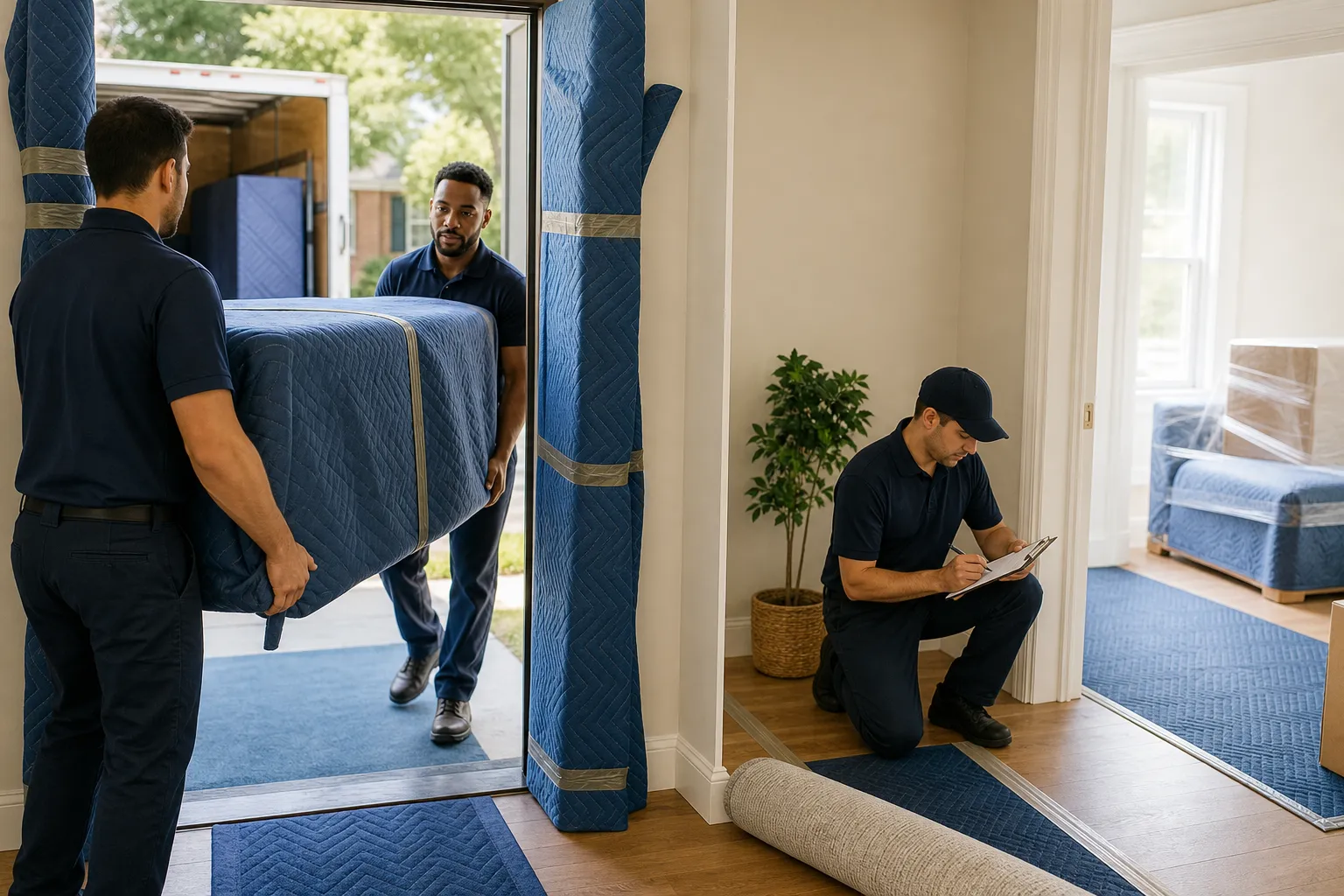
Access problems can delay loading even when every box is packed. Confirm the route from the truck to the door at both addresses, and do not assume a driveway, curb, elevator, or loading area is available without permission.
| Access point | What to confirm | Who usually confirms it |
|---|---|---|
| Parking and loading zone | Where the truck can stop, whether a permit or booking is needed, and the carrying distance | Customer and property manager |
| Elevator | Reservation time, service-elevator rules, padding, access codes, and move-hour restrictions | Customer or building manager |
| Stairs and long carries | Flights, narrow landings, shared corridors, and routes that cannot accommodate large furniture | Customer and moving crew |
| Doorways and turns | Door widths, hallway clearances, tight corners, gates, and furniture needing disassembly | Customer and moving crew |
| Floor and entry protection | Where runners, padding, corner protection, or other materials are needed | Customer and moving crew |
| Building rules | Quiet hours, move-in forms, loading windows, and concierge procedures | Customer and building manager |
Rules vary by building, neighbourhood, season, and property owner. Ask management or the relevant local authority about requirements rather than treating this as a universal permit guide. In Windsor and Essex County, include access restrictions and narrow or shared routes in the information you provide to the moving company.
At both properties, clear loose rugs, toys, garden tools, snow, and other trip hazards where practical. Ask movers to use runners or drop cloths at loading and delivery locations. The Government of Canada recommends having belongings ready and asking movers to protect floors and rugs.
Who handles what on moving day?
Many moving-day problems happen because a task has no clear owner. Use this division as a starting point, then confirm anything different in writing.
Your responsibilities
- Be ready when the crew arrives and keep personal valuables and documents with you.
- Provide access information, building contacts, parking instructions, keys, codes, and time restrictions.
- Identify fragile, high-value, unusually heavy, excluded, or immediately required items.
- Supervise pickup and delivery without directing every lifting movement.
- Keep your phone available and report changes promptly.
The moving crew’s responsibilities
- Review the agreed scope and identify questions before loading.
- Assess the route and use appropriate protection and handling practices.
- Load, transport, unload, and place belongings according to agreed instructions.
- Flag access problems, inventory differences, or handling concerns.
The building manager’s responsibilities
- Confirm elevator, loading-zone, parking, access, and move-hour procedures.
- Provide required forms, codes, keys, protective materials, or certificates.
- Explain restrictions affecting the route, timing, or shared spaces.
Ontario advises customers to be ready, carry valuable personal items themselves, supervise pickup and delivery, and note missing or damaged items before movers leave. Review the province’s guidance on hiring a mover for the consumer-focused version of these steps.
When the crew arrives: confirm the plan before loading
Start with a short walkthrough. Show the parking area, route through the property, rooms being moved, and anything requiring special attention.
Before loading, confirm the addresses, contacts, access instructions, inventory, added or removed items, disassembly and assembly requirements, fragile or oversized belongings, loading order, and communication process for delays or damage concerns.
Use a simple load-map method
- Assign a short label to each destination room.
- Place the label on two sides of every box.
- Identify first-night items and essential furniture.
- Tell the crew which pieces should be loaded last.
- Keep a copy of the inventory and note anything not going on the truck.
Do not block hallways with staged boxes. Leave walking paths, bathroom and exit access, and enough room for safe furniture handling.
Protection checkpoints for furniture and specialty items
Discuss specialty items before the crew arrives. Pianos, hot tubs, pool tables, large artwork, glass furniture, and unusually heavy pieces may require a different route, equipment, crew plan, or written handling arrangement.
Provide dimensions where available, the item’s location, stairs or tight turns, doorway measurements, surface conditions, and destination details. Do not dismantle a specialty item unless the agreed plan says you should. For a hot tub, confirm access, electrical disconnection responsibility, surrounding obstacles, and placement expectations.
Ask the mover to confirm the protection plan and applicable liability or valuation terms. Insurance, bonding, and WSIB certification are useful credentials, but they do not replace a written explanation of coverage or handling arrangements.
During transit: keep communication and documents accessible
Keep your phone charged and retain the estimate, inventory, booking confirmation, access details, and mover contact information. If pickup and delivery occur on separate dates, confirm the delivery contact, address, access window, and building arrangements before departure.
For a local move, you may travel separately and arrive ahead of the truck. For a long-distance move, ask how updates, delivery timing, address changes, and access problems will be communicated. Procedures vary, so rely on the written agreement.
At delivery: unload, inspect, and complete the final walkthrough
Direct boxes to labelled rooms and identify locations for large furniture before unloading. Keep the first-night kit accessible and prevent boxes from accumulating in hallways, stairwells, or doorways.
- Show the crew the protected route and any special flooring requirements.
- Direct labelled boxes and major furniture to their intended rooms.
- Check large furniture, fragile items, and specialty belongings as placed.
- Compare delivered items with your inventory.
- Look for visible damage, missing items, or parts left behind during disassembly.
- Record concerns clearly before the crew leaves.
- Complete a final sweep of the truck, old property, hallways, elevator, driveway, and destination entry.
Ontario recommends noting missing or damaged items before movers leave. Photograph concerns, keep relevant documents, and follow the mover’s written reporting process. Do not sign a document you do not understand.
Before moving day: verify the booking and written scope
A low price is not a useful comparison if one quote excludes packing, stairs, long carries, specialty items, protection, or additional stops. Compare the scope behind each price.
- What inventory, rooms, boxes, furniture, and services are included?
- Are packing, unpacking, disassembly, assembly, protection, storage, or setup separate?
- Were stairs, elevators, long carries, parking, and narrow doorways considered?
- Have pianos, hot tubs, pool tables, artwork, and other specialty items been assessed?
- What deposit, balance, arrival, delivery, cancellation, and rescheduling terms apply?
- What insurance, liability, or valuation terms apply?
- Who should you contact if inventory or access conditions change?
Final moving day checklist
Before arrival
- ☐ Packing is complete and boxes are sealed and labelled.
- ☐ Valuables, documents, medication, keys, and first-night items are separate.
- ☐ Parking, loading areas, elevators, building rules, and access codes are confirmed.
- ☐ Hallways, doorways, stairs, and routes are clear.
- ☐ Phones are charged and contacts are saved.
During loading
- ☐ The crew has the current inventory and access instructions.
- ☐ Specialty, fragile, oversized, and excluded items are identified.
- ☐ Floor and entry protection is in place where needed.
- ☐ Essential items remain identifiable.
- ☐ Changes or concerns are recorded and communicated.
At delivery and departure
- ☐ Boxes and furniture are directed to labelled rooms.
- ☐ Large, fragile, and specialty items are checked.
- ☐ Inventory is compared with delivered belongings.
- ☐ Damage or missing items are recorded before departure.
- ☐ The truck, old property, new property, elevator, hallways, and exterior areas receive a final sweep.
Frequently asked questions
What should I keep with me instead of loading onto the moving truck?
Keep jewellery, cash, personal documents, medication, keys, passports, essential electronics, and irreplaceable items with you. Pack a separate first-night kit.
Do I need to reserve an elevator or confirm parking before moving day?
Often, building rules make advance confirmation necessary, but requirements vary. Ask the property manager about elevators, loading zones, parking, access codes, quiet hours, padding, forms, and insurance documents.
What should I do if I notice missing or damaged items during delivery?
Raise the issue before the crew leaves, compare it with your inventory, record the item and condition, take photographs, and follow the mover’s written reporting procedure.
How early should I tell movers about a piano, hot tub, pool table, or other specialty item?
Tell them during the quote process, before booking whenever possible. Provide dimensions, location, stairs, doorways, turns, surface conditions, and destination details.
What should a moving quote include before I confirm the booking?
It should identify inventory, services, access conditions, protection needs, specialty items, inclusions, exclusions, deposit, timing, rescheduling terms, and liability or valuation details.
Conclusion: make moving day a coordinated handoff
The most useful moving day checklist assigns each task to the right person. You handle readiness, personal valuables, access information, supervision, and documentation. The moving crew handles agreed loading, transport, unloading, protection, and placement. Building management controls property-specific rules, elevators, loading areas, and shared access.
Confirm the written scope, clear the route, label the load, disclose specialty items early, and inspect delivery before the crew leaves. For a broader regional timeline covering packing, access planning, staging, protection, and final walkthroughs, use this Essex County moving checklist.
For residential, commercial, local, long-distance, piano, hot tub, pool table, packing, or storage-related moving support in Windsor and Essex County, contact EC Movers Ltd for a moving plan and quote based on your inventory and access requirements.
Ready to move?
Get your free quote from EC Movers today.