
Apartment Movers in Windsor: DIY or Full Service?
Hiring apartment movers in Windsor? Compare DIY, labour-only and full-service options, plan elevators and access, and request a clearer quote before you.
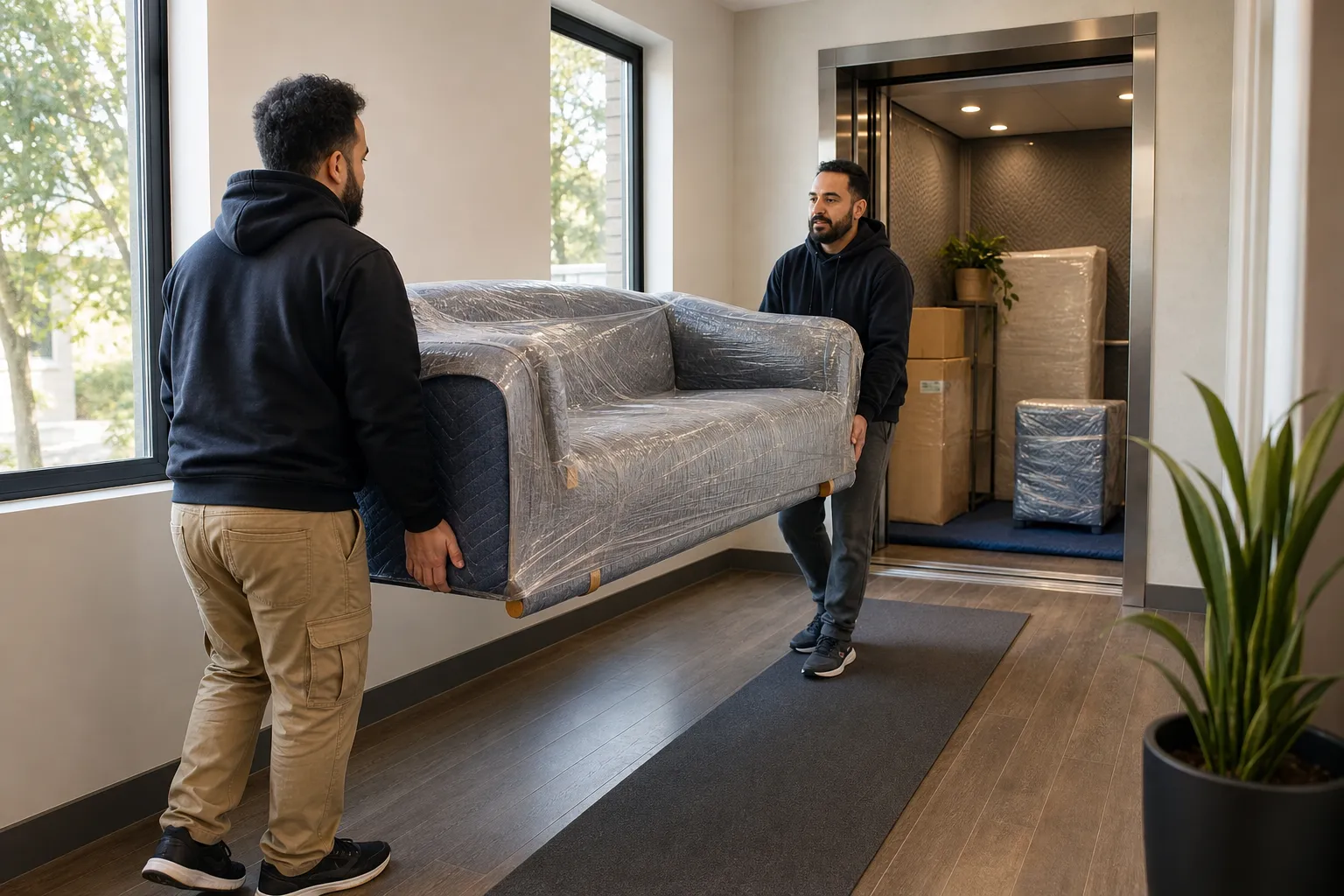
The best movers for apartments are the ones that plan your building access, inventory, carrying route, and service scope before moving day. Before requesting a quote, record both addresses, floor levels, elevator and loading rules, parking distance, stairs, furniture dimensions, packing needs, and any storage or specialty items. EC Movers Ltd provides residential moving for apartments and condos in Windsor and Essex County, with packing, loading, transport, unloading, and setup available.
Apartment movers should solve an access problem, not just transport boxes
An apartment move has more moving parts than a typical house move. The crew may need to work within an elevator booking, loading-dock window, restricted parking area, shared hallways, narrow turns, stairs, fobs, and building rules outside your control.
When comparing residential moving services, compare more than the hourly rate or truck size. Ask how the mover will handle access, protect common areas, manage waiting time, move bulky furniture, and finish the agreed setup. EC Movers Ltd serves apartments, condos, and homes in Windsor and Essex County with insured and WSIB-certified operations.
A useful quote describes the real route from the apartment to the truck and from the truck to the new home. If the quote assumes a lift directly outside the entrance but the truck must park 60 metres away, the labour plan is not based on the same job.
Choose the service level that fits your apartment move
The right choice depends on your inventory, time, access restrictions, physical ability, and tolerance for coordination. A one-bedroom apartment does not automatically require a particular number of movers because a lift-access building with light furniture is very different from a walk-up with a long carry.
| Option | Best fit | Advantages | Trade-offs |
|---|---|---|---|
| DIY or truck rental | Small inventory, flexible schedule, easy access, and helpers available | Maximum control | You arrange the vehicle, equipment, lifting, protection, fuel, parking, and damage responsibility |
| Labour-only help | You already have a truck or container | Reduces heavy work | You remain responsible for vehicle timing, load security, access, and handoff |
| Partial packing or moving help | You can pack smaller belongings but need help with furniture or fragile items | Balances budget and convenience | Responsibilities must be defined precisely |
| Full-service moving | Short building windows, complex access, limited time, or a move requiring setup | One coordinated scope can cover packing, protection, loading, transport, unloading, and placement | Every additional task must be defined in the quote |
Movers or a rental truck: which is cheaper?
For a two-bedroom move, a rental truck is not automatically cheaper. Compare the complete cost of the truck, fuel, protection options, equipment, helpers, parking, elevator delays, your own time, and the risk of damage or an incomplete load. A professional quote may include labour, equipment, furniture protection, transport, and placement that a truck rental does not.
How many movers do you need for a one-bedroom apartment?
There is no reliable crew-size rule based only on bedrooms. Inventory, furniture weight, stairs, elevator access, walking distance, parking, and the completion window determine the practical labour plan. Send photos, a room-by-room inventory, and access details so the mover can recommend the appropriate crew and truck arrangement.
What makes an apartment-moving quote go up or down?
Apartment-moving costs reflect the work and time required, not simply the number of rooms. Ask whether the quote is hourly, flat-rate, or another structure, and whether the same access assumptions apply to every estimate.
- Inventory: Furniture, boxes, appliances, fragile goods, and heavy items affect loading time.
- Access: Stairs, narrow hallways, tight turns, small elevators, long carries, and distant parking can slow the move.
- Building timing: Elevator waiting, loading-dock restrictions, delayed keys, or short windows can change the work plan.
- Service scope: Packing, unpacking, protection, furniture handling, placement, and any agreed assembly-related work add tasks.
- Storage: A gap between addresses creates additional pickup, handling, storage, and delivery decisions.
- Special items: Pianos, hot tubs, pool tables, safes, and difficult items require separate planning.
- Route: Local and long-distance moves use different assumptions. A long-distance move is a route-based service question, not simply a longer local apartment rate.
Minimum charges vary by mover and service type, so ask directly: “Is there a minimum booking, and what work does it include?” Also ask whether travel, elevator waiting, stairs, long carries, packing materials, furniture handling, storage, and specialty handling are included or priced separately.
Before hiring, review hidden fees to watch for movers so access restrictions and special handling appear in the written scope.
Complete this apartment access worksheet before requesting a quote
Building requirements vary, so confirm them with the property manager, superintendent, condo corporation, or landlord. Give the mover the same information for both addresses.
- Addresses: (origin address) and (destination address)
- Apartment details: floor, unit, entrance, and whether either location is a walk-up
- Elevator: type, approximate dimensions, door width, booking process, reservation window, and padding rules
- Stairs: flights, landings, narrow turns, handrails, and restrictions
- Furniture route: doorway widths, hallway width, tight corners, low ceilings, loading-bay doors, and items needing handling or possible disassembly
- Truck access: loading dock, curb space, parking distance, truck-size limits, loading-zone rules, and walking carry
- Building rules: permitted hours, deposits, certificates, insurance documents, fob access, and elevator fees
- Contacts: superintendent or property manager, key handoff instructions, and emergency contact
- Conditions: rain or snow exposure, uncovered paths, construction, gates, or seasonal concerns
Do not assume a sofa, wardrobe, bed frame, or appliance will fit because it entered the apartment previously. Measure the item and complete route, including elevator doors, hallway turns, stair landings, and the destination doorway.
Apartment moving process: from quote request to final setup
- Define the move. List what is moving, what is being donated, and what you will carry yourself.
- Request comparable quotes. Send each mover the same inventory, addresses, dates, access worksheet, packing needs, and special-item details.
- Confirm the written scope. Check pricing, labour, equipment, protection, packing, furniture handling, storage, and change terms. If you need furniture taken apart or put back together, list the specific items and ask the mover to confirm whether that work is included.
- Coordinate the building. Reserve elevators and loading areas, confirm hours, arrange keys or fobs, and share the window.
- Prepare the apartment. Finish packing, label boxes, separate essentials, clear walkways, and identify special handling.
- Protect shared spaces. Confirm protection for floors, doors, walls, elevator interiors, and vulnerable corners.
- Load by access and destination. Use the agreed route and load plan to avoid blocking the elevator or damaging fragile items.
- Unload and set up. Direct boxes to rooms, identify furniture placement, and confirm any agreed assembly-related work.
- Complete the walkthrough. Check rooms, closets, storage areas, the truck, and shared spaces.
If you have several weeks, use an 8-week checklist to stage decluttering, packing, reservations, labels, and first-night essentials. For a sooner move, complete the access worksheet first and confirm the building window and inventory before asking about current availability.
Prepare furniture and belongings for elevators, corridors, and shared spaces
Apartment preparation starts with the route, not the boxes. Measure large furniture against elevator, doorway, hallway, stair, and turn dimensions, then decide which pieces should be disassembled.
Furniture disassembly and reassembly
Furniture disassembly and reassembly should be treated as a separate scope item. Identify beds, tables, shelving, sectionals, desks, wardrobes, and items requiring doors, legs, rails, or frames to be removed, then ask the mover which specific items it will handle.
Keep hardware in labelled bags attached to the relevant item, photograph complex connections, and identify furniture that must remain assembled. Discuss unusual or structurally sensitive items before dismantling them.
Boxes, fragile items, and appliances
- Use smaller boxes for books, dishes, tools, and other dense items.
- Label two sides of each box with the room, contents, and priority.
- Wrap fragile items individually and fill empty space.
- Keep documents, medication, chargers, keys, valuables, and a change of clothes with you.
- Ask about appliance preparation before moving day.
- Protect electronics and moisture-sensitive belongings from rain, snow, condensation, and outdoor exposure.
Keep children, pets, and non-moving household members away from the active carrying route. Shared lobbies, elevator floors, walls, and doors need the same care as the apartment itself.
For regional guidance on building rules, curb access, labels, shared-space protection, and specialty items, use this Essex County moving checklist.
Send movers a quote brief they can actually use
Copy, complete, and send this brief to every mover you compare:
Hello, I need help moving from (origin address and apartment number) to (destination address and apartment number) on (move date or date range).
Origin: floor (number), elevator (yes/no), booking (details), stairs (details), loading area (details), parking distance (distance), and walking carry (details). Destination: floor (number), elevator (yes/no), booking (details), stairs (details), loading area (details), parking distance (distance), and walking carry (details).
Inventory: (furniture and approximate boxes by room). Disassembly or reassembly: (items). Packing: (none, selected rooms, fragile items, or full packing). Storage: (yes/no, dates, and approximate volume).
Special items: (piano, pool table, hot tub, safe, artwork, appliance, or other item). Access photos or measurements: (attached or available). Requested service boundary: (packing, loading, transport, unloading, room placement, unpacking, and any assembly-related work).
Please confirm pricing structure, minimum booking policy, protection, access assumptions, possible waiting or long-carry charges, current availability, and items you do not transport.
Apartment move-day timeline: what to confirm at each stage
The day before
- Confirm the elevator, loading area, parking, building contact, keys, fobs, and move window.
- Finish packing and label boxes. Keep the first-night kit separate.
- Clear hallways and doorways and identify fragile or high-priority items.
- Keep the quote, inventory, instructions, phone numbers, and payment details accessible.
When the crew arrives
Walk through the apartment and route together. Point out the elevator, stairs, loading path, items requiring handling or disassembly, fragile belongings, and intended furniture placement.
During loading and transport
Keep the elevator and loading area available for the agreed window. Report changes in access, inventory, keys, parking, or destination timing promptly.
At the new apartment
Confirm the destination route before unloading. Direct boxes by room, identify furniture placement, and check any agreed assembly-related work before the final walkthrough.
Before you close the move
Check closets, balconies, storage lockers, hallways, the elevator, and the truck. Record any concern promptly and follow the mover’s current documentation instructions.
Questions to ask an apartment mover before booking
- Is the quote hourly, flat-rate, or another structure?
- What inventory, access, parking, and timing assumptions does it use?
- Are stairs, elevator waiting, long carries, loading restrictions, and parking distance included?
- Does the scope include floor, door, wall, and elevator protection?
- Will the crew pack selected rooms, fragile items, or the whole apartment?
- Which furniture can the crew disassemble and reassemble?
- How are storage, specialty items, and appliances handled?
- What must I reserve or provide through the building?
- What insurance and protection terms apply?
- What happens if the elevator window changes or keys are delayed?
- Which items will the mover not transport?
- What current availability and arrival window apply?
What should movers not transport?
Transport exclusions vary, so ask for the current list before packing. Discuss hazardous materials, flammable liquids, compressed gas, perishables, plants, cash, jewellery, documents, medication, and items needing special handling. Keep irreplaceable valuables and essential documents with you unless the mover expressly agrees to handle them.
A practical next step for your Windsor apartment move
Complete the access worksheet, measure difficult furniture, and prepare the quote brief before comparing apartment movers. Ask EC Movers Ltd whether it serves your specific community and confirm current availability, service scope, and quote terms for your building.
When you are ready to discuss the route and level of help, contact EC Movers Ltd about apartment and condo moving services that match your inventory, access conditions, and move-day requirements.
Ready to move?
Get your free quote from EC Movers today.