Moving Crew Training Standards in Ontario: What Customers Should Check
Learn what moving crew training standards mean in Ontario, which safety practices matter, and what Windsor customers should ask before hiring movers.
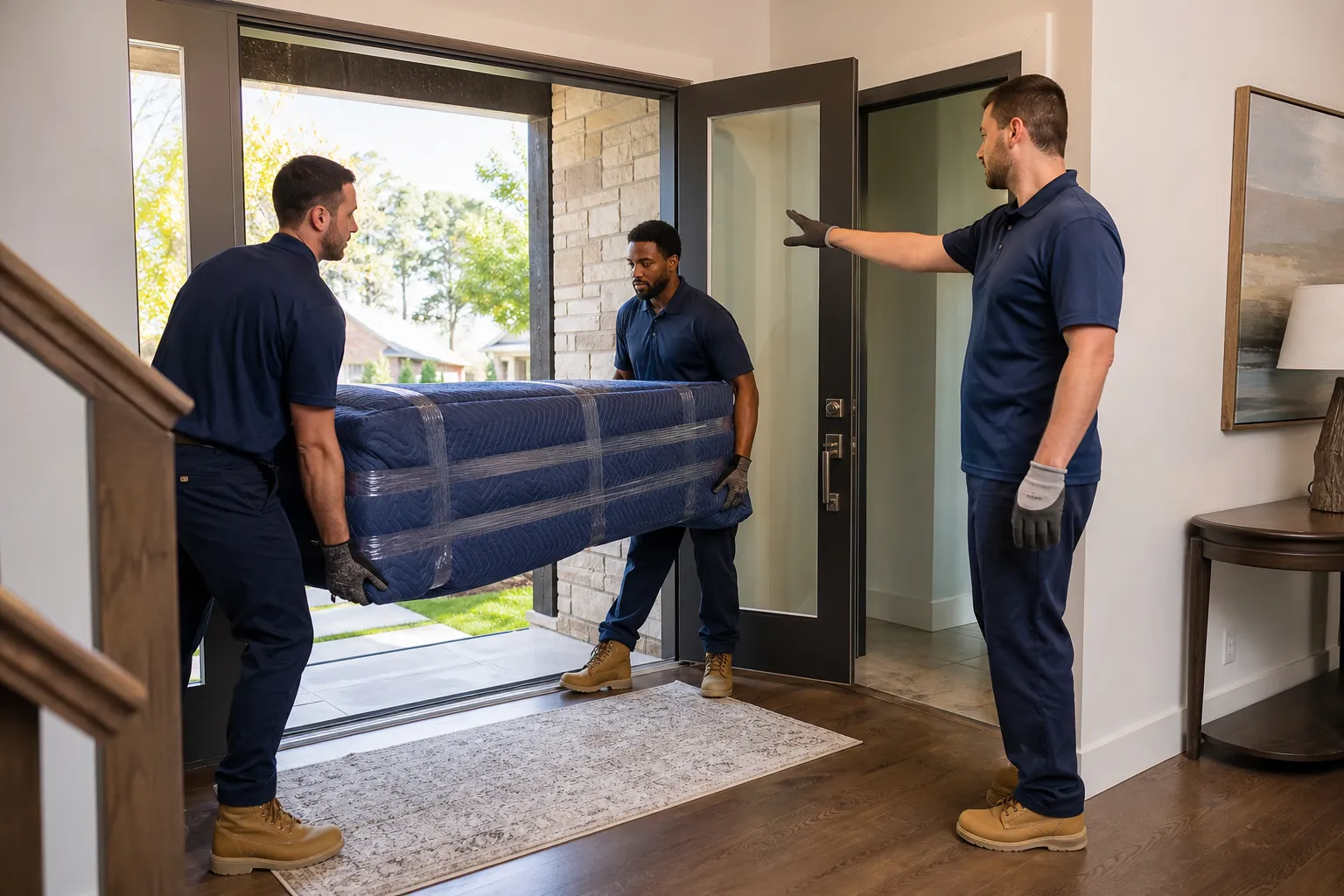
“Moving crew training standards” is not the name of one Ontario licence, exam, or mover-specific certificate. For customers, the more useful question is whether a moving company combines required health and safety awareness training with job-specific instruction and demonstrated competence on the move.
That distinction matters because insurance or WSIB status does not prove every lifting, equipment, or specialty-item skill. Before booking, ask how the crew handles materials, protects property, communicates during difficult lifts, and plans for pianos, hot tubs, or pool tables.
Quick summary
- Ontario requires workers and supervisors to complete basic occupational health and safety awareness training under Regulation 297/13.
- Moving companies should also provide instruction for material handling, ergonomics, protective equipment, emergency procedures, and job-specific hazards.
- Ask about crew supervision, equipment, floor and furniture protection, access planning, and specialty-item handling.
- Insurance and WSIB status support accountability, but do not prove every relevant training qualification.
- Request a written scope covering inventory, access conditions, protection, coverage, and special handling.
What “moving crew training standards” means in Ontario
In Ontario, this phrase describes a framework rather than a single regulated credential. The baseline is mandatory health and safety awareness training for workers and supervisors. Ontario’s health and safety training information outlines the relevant requirements under Regulation 297/13.
That baseline is only one part of competent moving work. Customers should also consider whether the employer explains workplace hazards, whether the crew knows how to use its equipment, and whether team members can apply those procedures in a real home, office, apartment, or specialty-item move.
The three layers to evaluate

1. Basic health and safety awareness training
Ontario requires workers and supervisors to complete basic occupational health and safety awareness training. It helps people understand workplace rights, responsibilities, hazards, and reporting, but it is not a complete curriculum for every task involved in moving a household or business.
Awareness training does not automatically demonstrate that a worker can safely move a grand piano through a narrow stairwell or coordinate a large office relocation. It establishes a legal and safety foundation, not proof of every practical moving competency. Ontario’s guide to awareness training requirements explains the distinction between the general requirement and workplace responsibilities.
2. Job-specific instruction for moving work
Moving involves changing loads, confined spaces, stairs, ramps, elevators, weather, traffic, and interaction with customers or building staff. Ontario guidance identifies job-related subjects that can include new procedures, material-handling practices, protective equipment, emergency procedures, and ergonomics. Ontario’s small-business safety guidance provides examples of these practical training areas.
Job-specific instruction should translate those broad topics into procedures the crew can use. That may include assessing a stairway before lifting, coordinating a team carry, using a dolly on a slope, protecting a finished floor, and deciding what to do if an item cannot safely pass through an opening.
3. Demonstrated competency on the job
Competency is what the crew can consistently do under real conditions. Customers can look for clear communication, sensible load staging, controlled lifting, appropriate equipment use, protection for floors and doorways, and a willingness to stop and reassess when conditions change.
This does not mean conducting a skills test. Ask specific questions and assess whether the answers form a coherent plan. A competent crew should be able to explain who leads a difficult lift, how the load will be protected, what equipment is needed, and how the team will communicate.
Moving crew training areas: what to verify
The following table turns general training language into questions for comparing movers. These are practical buyer checks, not additional Ontario certificates.
| Training area | Why it matters | Question to ask |
|---|---|---|
| Material handling | Furniture and boxes can shift, tip, or create pinch points while being lifted, loaded, or unloaded. | How do you assess weight, balance, stairs, long carries, and the required crew size? |
| Ergonomics | Repeated lifting, awkward postures, and twisting can increase strain and reduce control. | What procedures do you use for team lifts, mechanical aids, and awkward loads? |
| Equipment use | Dollies, ramps, straps, and lifts must match the load and be used correctly. | What equipment will this move require, and who will use it? |
| Protective equipment | Personal protective equipment supports safer handling, while pads and runners protect property. | What protective equipment and property protection will the crew bring? |
| Emergency procedures | Injuries, blocked access, severe weather, or unstable loads may require a pause. | What happens if a safety issue prevents the planned move from continuing? |
| Communication and supervision | Clear signals and a designated lead reduce confusion during stairs, tight turns, and loading. | Who supervises the crew, and how are difficult lifts communicated? |
| Specialty handling | Pianos, hot tubs, and pool tables have unusual weight, balance, access, and protection requirements. | Who assesses the item, what equipment is used, and what limitations apply? |
Why specialty items need additional questions
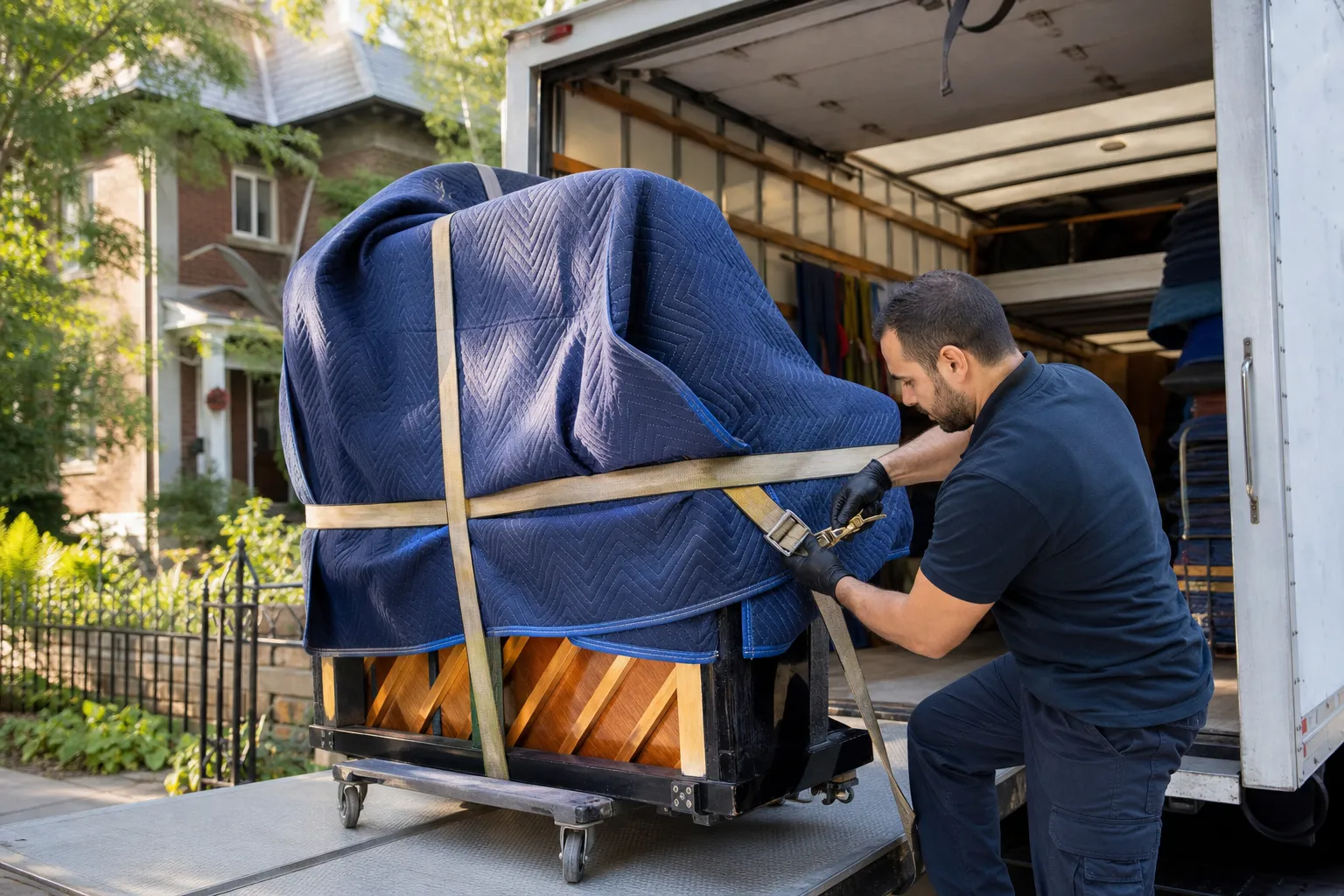
Specialty items should not be treated as ordinary furniture. A piano may require careful control around stairs and changes in elevation. A hot tub can involve draining, disconnecting, awkward access, and a large footprint. A pool table may require disassembly, slate protection, reassembly, and levelling.
A service listing tells you that a company offers a type of move, but it does not prove a particular crew member’s training or explain how your item will be handled. Ask about dimensions and weight, the route from door to truck, equipment, crew size, protection methods, reassembly, and what happens if access differs from the information provided.
How to assess a mover before booking
Start with the scope. Give the mover an accurate inventory, identify stairs and elevators, mention long carries or parking restrictions, and disclose fragile or unusually heavy items. A quote based on incomplete information may not reflect the crew, equipment, time, or protection plan the move needs.
Then ask about crew expertise, the protection plan, and specialty handling. The answers should explain who will do the work, how belongings and property will be protected, what equipment is included, and how changes will be managed.
Insurance and WSIB status are useful checks when you want accountability and clarity about workplace coverage. However, neither proves that a crew has completed every relevant moving, equipment, or specialty-item course. Treat them as part of your assessment, alongside procedures, supervision, experience, and written scope.
For a practical buyer’s checklist, look for insured, WSIB-certified movers who can explain consistent safety procedures and appropriate protection gear. Those credentials should support, not replace, task-specific competence.
Pre-booking checklist for Windsor and Ontario customers
- Inventory: List rooms, large furniture, fragile goods, appliances, and specialty items.
- Access: Describe stairs, elevators, narrow doors, long carries, parking, loading zones, and building rules.
- Crew: Ask who supervises the move and coordinates difficult lifts or changes.
- Handling: Confirm the plan for heavy, awkward, fragile, or high-value belongings.
- Equipment: Ask which dollies, ramps, straps, pads, runners, wrap, and other equipment are included.
- Protection: Confirm how floors, walls, doorways, banisters, furniture, and common areas will be protected.
- Specialty items: Ask who assesses a piano, hot tub, or pool table and what preparation is required.
- Coverage: Request insurance and valuation or liability terms, including exclusions, in writing.
- WSIB: Ask the company to confirm its current status without treating it as proof of every qualification.
- Scope and price: Ensure the quote states what is included, what could change, and how extra work is approved.
- Contingencies: Ask what happens if an item cannot safely pass through the planned route or weather affects the move.
Match the questions to your type of move
For a house or apartment move, focus on access, floor protection, stairs, elevators, furniture disassembly, and room-by-room placement. Condo and apartment customers should also confirm loading areas, elevator rules, booking windows, and protection requirements for shared spaces.
For a commercial or office relocation, ask how the crew will label equipment, stage the load, protect workstations, and coordinate downtime. The plan should identify a point of contact and explain how schedule changes will be managed.
For a long-distance move, confirm loading, transport, unloading, communication, and delivery arrangements. For a specialty move, spend less time comparing generic claims and more time discussing the exact item, route, equipment, protection, and coverage.
When broader workplace training supports safer moving work
A moving company may combine required awareness training with role-specific instruction, equipment guidance, supervision, and workplace practices reviewed over time. When evaluating broader workplace training programmes, consider whether they address the actual risks of the work rather than relying on a generic completion label. This guide to choosing corporate training in Canada may help employers think through programme fit, although it is not an Ontario moving requirement or official regulatory source.
Workplace violence and harassment training should also reflect the job and its risks. Ontario guidance says employers must tailor the type and amount of instruction to specific workplace circumstances. Ontario’s workplace violence and harassment guidance explains why role and workplace conditions matter.
Frequently asked questions
Is there a specific Ontario certification called moving crew training standards?
No. The phrase does not identify one Ontario mover-specific certification or standardized regulated programme. Assess the legal awareness baseline, job-specific instruction, and demonstrated competency together.
Does WSIB certification prove that a moving crew is fully trained?
No. WSIB status is an important accountability and workplace coverage consideration, but it does not prove that every worker has completed every relevant course or can perform every specialty task.
What should I ask movers about lifting and material handling?
Ask how the crew assesses weight, balance, stairs, long carries, tight turns, and the number of people required. Also ask how team members communicate and what happens if the planned route is unsafe.
What training questions matter when moving a piano, hot tub, or pool table?
Ask who assesses the item, what equipment and protection will be used, how access will be checked, whether disconnection or disassembly is required, and what reinstallation or levelling is included.
How can I compare two moving companies’ safety practices fairly?
Give both companies the same inventory and access information, then compare their written scope, protection plan, equipment, supervision, coverage, specialty-item process, and contingency arrangements.
Conclusion: choose evidence over labels
The best interpretation of moving crew training standards is a combination of Ontario’s required health and safety awareness training, instruction tailored to moving hazards, and practical competence demonstrated through clear procedures. Insurance and WSIB status are useful checks, but they should support, not replace, questions about equipment, protection, supervision, and specialty handling.
Before booking, provide an accurate inventory and access description, request a written scope, and ask the mover to explain how the crew will manage the risks specific to your move. Windsor and Essex County customers can discuss those requirements and request a quote from EC Movers Ltd, which provides residential, commercial, long-distance, and specialty moving services.
Ready to move?
Get your free quote from EC Movers today.