
Moving House With Pets in Windsor: A Safe, Practical Plan
Plan a safer move with pets in Windsor: arrange transport, protect animals on moving day, and help dogs, cats, and small pets settle in calmly at home.
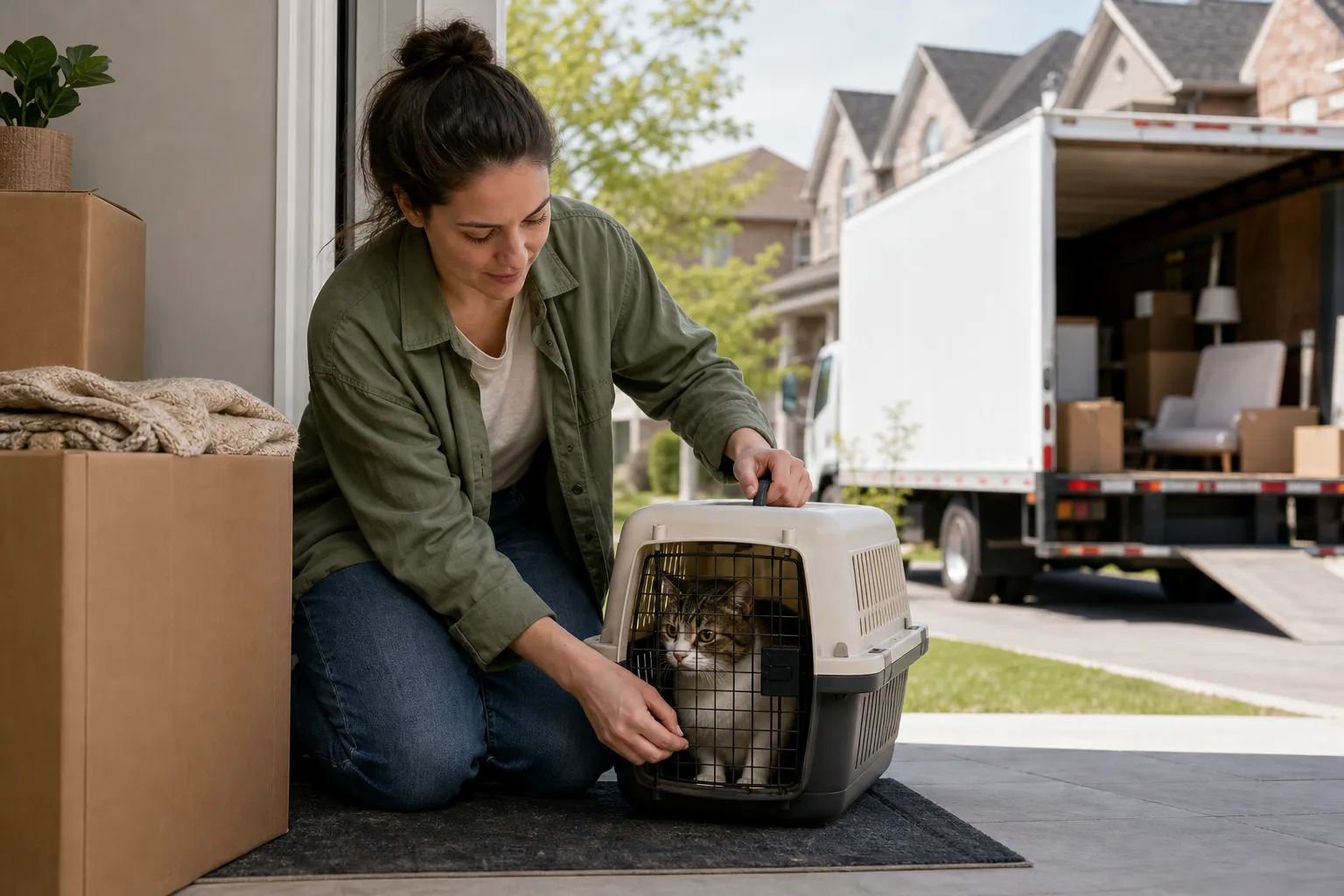
When moving house with pets in Windsor, the safest approach is to keep your animal separate from loading and unloading activity and arrange its transport independently. Do not assume a moving company will carry, supervise, feed, medicate, or restrain a live pet in a moving truck. Confirm your pet’s travel plan with the person or provider responsible for the animal, then coordinate the household move around it.
This plan works for local moves in Windsor and Essex County as well as longer relocations across Canada. It covers preparation, packing, access planning, moving day, and the first 72 hours in your new home.
Quick summary
- Arrange separate pet transport with you, a trusted caregiver, or a dedicated pet-transport provider.
- Prepare identification, veterinary records, medication, food, water, a carrier or harness, and familiar bedding.
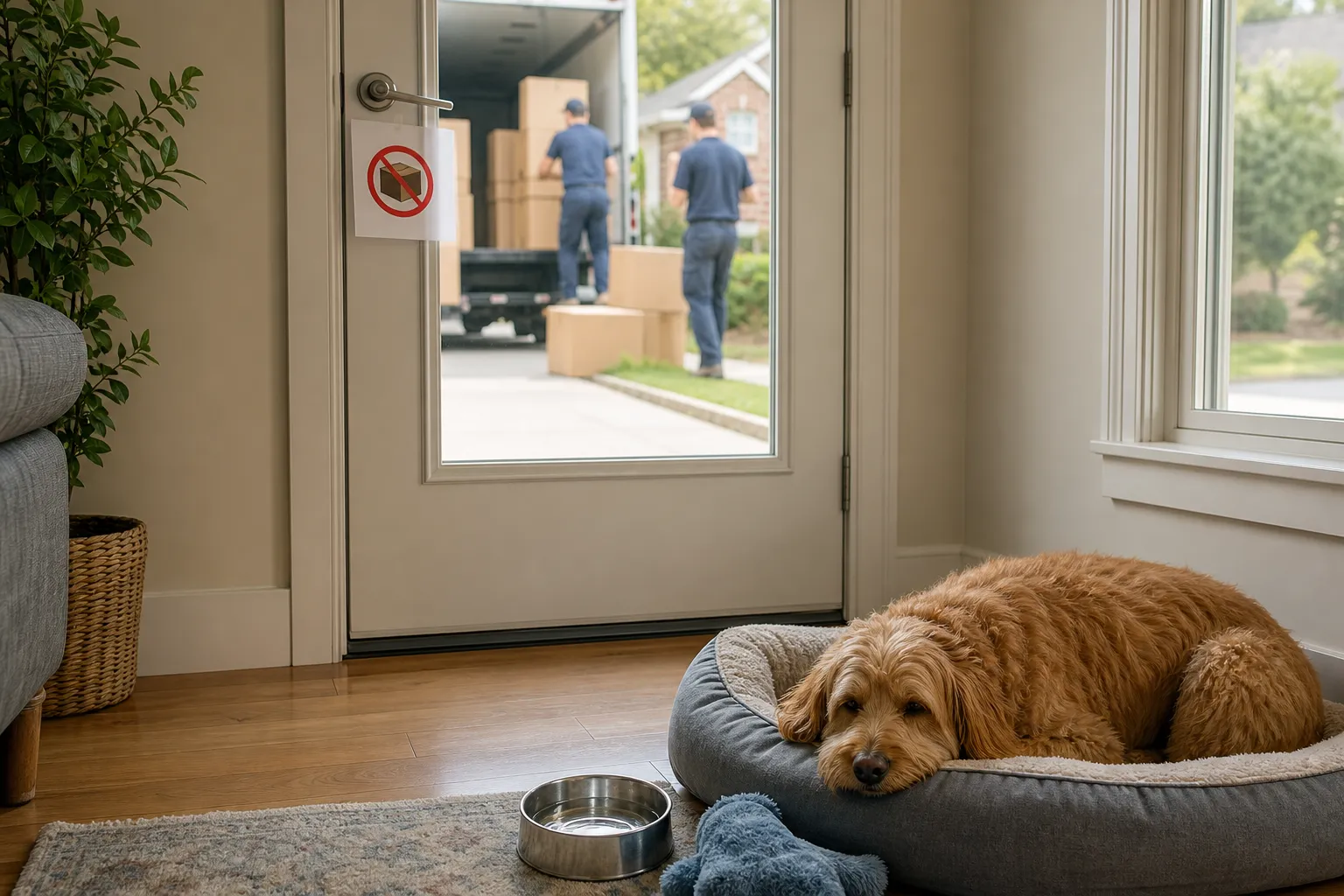
- Place your pet in a closed, quiet room or with a caregiver before movers arrive, and keep it away from open doors and loading areas.
- Tell the moving crew about parking, elevators, stairs, access restrictions, and the pet-safe room, but do not rely on movers for pet care.
- At the new home, begin with one quiet room and expand access gradually after checking doors, gates, and escape risks.
Decide how your pet will travel
Choose the transport arrangement before booking moving-day timings. Practical options include travelling with your pet, asking a trusted caregiver to look after and transport it, or arranging a dedicated pet-transport service. The right choice depends on the animal’s temperament, journey length, vehicle, and who can provide proper supervision.
Moving companies should not be assumed to transport live animals in household-goods trucks. Ask any proposed pet-transport provider directly about carriers, harnesses, stops, temperature conditions, identification, medication instructions, and handover arrangements. Windsor’s official pet guidance emphasizes carriers, identification, medication, veterinary records, emergency planning, and avoiding unattended pets. Review the City of Windsor’s pet preparedness guidance and confirm which details apply to your situation.
Set a realistic budget for pet transport, boarding, supplies, and possible overnight care. Keeping relocation paperwork and household costs organized can also make planning easier; bookkeeping services in Windsor may help with that specific administrative task.
Several weeks before moving day
Build the pet plan into your main moving schedule rather than treating it as a last-minute detail. A broader residential moving Windsor plan can help coordinate packing, access, transport, unloading, and setup around feeding, exercise, medication, and rest periods.
Prepare the essentials
- Check that identification details, collars, tags, microchip information, and contact numbers are current.
- Keep veterinary records, prescriptions, medication instructions, and emergency contacts together in a waterproof folder or digital file.
- Use the carrier, crate, harness, or travel equipment well before moving day so it is familiar.
- Set aside familiar bedding, toys, food bowls, litter or toileting supplies, cleaning products, and enough food and water for the journey and first night.
- Confirm pet rules, elevator bookings, parking arrangements, access times, and restrictions at both addresses.
When booking household movers, provide practical access information such as stairs, elevators, narrow entrances, parking, loading zones, and the preferred arrival window. EC Movers’ stated process includes confirming crew size, truck, access, parking, and packing or specialty-handling requirements.
Prepare differently for dogs, cats, and small animals
| Pet | Preparation focus | Moving-day priority |
|---|---|---|
| Dog | Use a secure leash or harness, maintain exercise and meal routines, and prepare waste bags, water, and familiar bedding. | Keep the dog with a trusted caregiver or in a securely closed room away from doors, visitors, and vehicles. |
| Cat | Use a secure carrier, familiar blanket, food, water, litter, and cleaning supplies. | Prevent escape through open doors. A closed room with a visible warning is safer than allowing the cat to roam. |
| Small animal | Confirm suitable travel housing, bedding, food, water, and temperature requirements with the responsible caregiver or provider. | Keep the enclosure stable and away from loading traffic, drafts, excessive noise, and unattended vehicles. |
Pack without disrupting your pet unnecessarily
Pack room by room and leave familiar items in place until late in the process. Label boxes clearly, keep food and medication separate, and do not load pet essentials onto the truck before the animal reaches its destination.
If caring for your pet leaves little time to prepare, full or partial packing can reduce household disruption. EC Movers’ supplied service information describes room-labelled boxes, fragile-item packing, unpacking, reusable totes, and short- or long-term storage options. These services do not replace pet supervision, but they may shorten the period of moving activity.
The final 48 hours
Use an Essex County moving checklist to bring together pet care, packing milestones, access arrangements, and the final home walkthrough. Then complete these checks:
- Confirm who is transporting or caring for the pet, pickup and handover times, and the destination address.
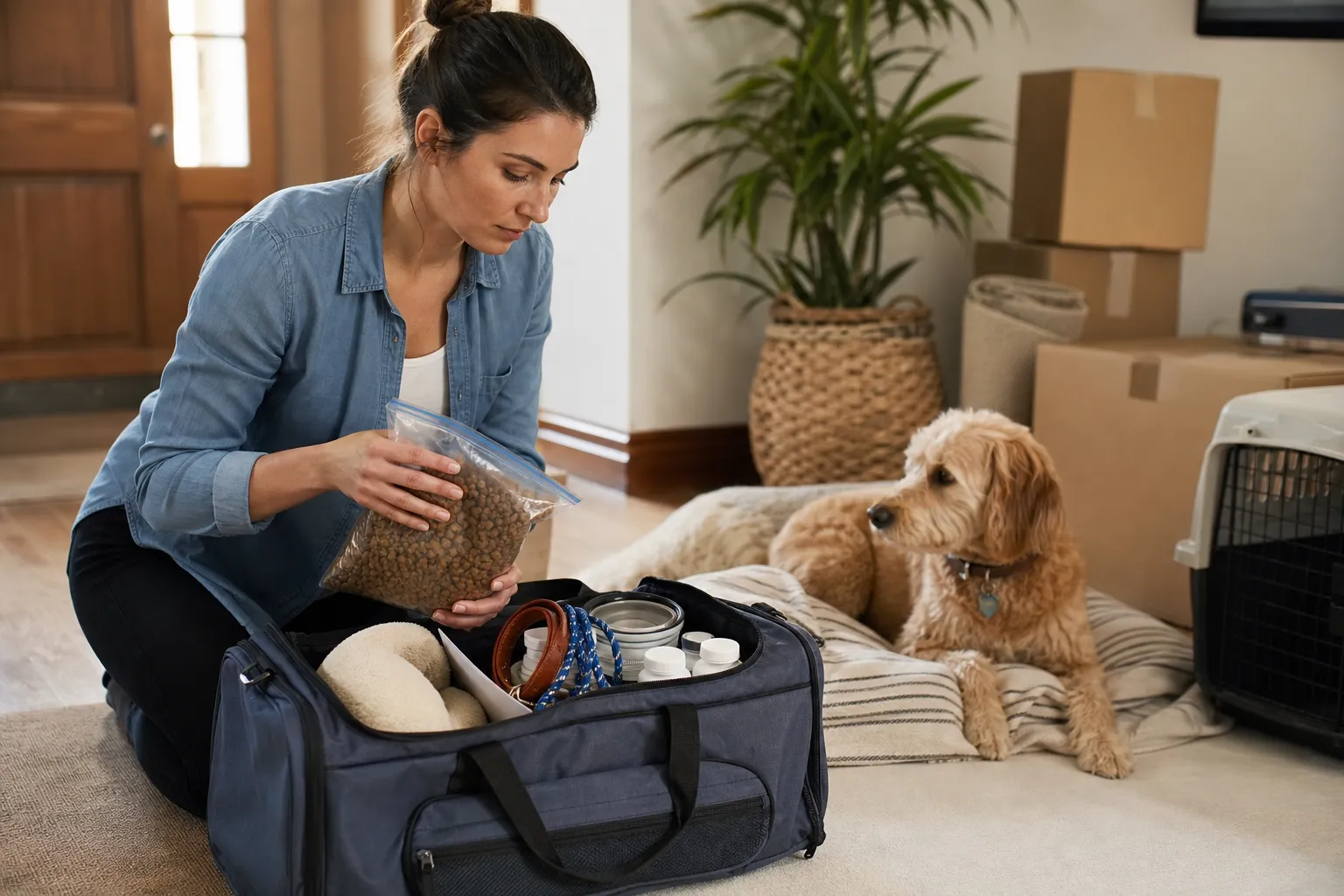
- Prepare a pet bag with food, water, bowls, medication, records, identification, a leash or harness, litter or toileting supplies, waste bags, cleaning materials, and familiar items.
- Choose a room with a securely closing door. Put the carrier, bedding, water, and a warning sign there before moving activity begins.
- Walk dogs at a suitable time before loading starts, while keeping them securely leashed.
- Confirm elevator bookings, parking, access codes, and loading areas with the building and moving crew.
- Check gates, windows, balcony doors, and exterior doors for escape risks.
Moving-day pet safety
Move the pet to its caregiver or safe room before movers arrive. A closed room away from the main entrance is preferable to a room workers must repeatedly enter. Place a clear note on the door stating that the pet is inside and must not be opened.
Keep the animal away from boxes, dollies, lifting equipment, open doors, loading areas, and moving vehicles. Do not leave it unattended in a car or truck. Movers handle household goods, not pet supervision, feeding, medication, or restraint, so assign those duties to one named person who is not also managing the crew.
Before leaving the old home, check the safe room, yard, closets, garage, and vehicles. At the new home, keep the animal secured until unloading is complete, exterior doors are closed, and its designated room is ready.
Settling your pet into the new home
Start with one quiet room containing familiar bedding, food, water, litter or toileting supplies, and a few familiar items. Keep the door closed while furniture and boxes are being placed elsewhere. This gives the animal a predictable base and reduces escape risk.
Check windows, doors, fences, balcony access, and unfamiliar gaps before expanding access. Maintain ordinary meal, exercise, sleep, and toileting routines as closely as possible. Let the pet explore gradually rather than opening the entire home immediately.
Coordinate the household move around your pet
A pet-friendly move is mostly a logistics exercise. Confirm the moving crew’s arrival time, truck position, elevator or stair access, parking, and the order in which rooms will be cleared. Keep the pet bag, records, medication, and first-night supplies with you rather than in a box that could be unloaded late.
For a local or long-distance move, a household moving provider can coordinate packing, loading, transportation, unloading, furniture placement, and setup. EC Movers Ltd’s supplied information describes residential moving for apartments, condos, and homes, local Windsor-Essex service, long-distance moves across Canada, storage coordination, and setup support. Confirm the exact scope, price, access plan, and timing before booking.
Pet moving checklists
Final move-day checklist
- Pet is with the designated caregiver or secured in a closed safe room.
- Carrier, harness, leash, identification, records, and medication are ready.
- Food, water, bowls, litter or toileting supplies, waste bags, and cleaning products are accessible.
- Familiar bedding and comfort items are packed separately.
- The safe-room door has a visible warning.
- Gates, windows, exterior doors, loading areas, and vehicles have been checked.
- Pet transport handover and destination arrangements are confirmed.
First-night checklist
- Prepare one quiet room before bringing the pet inside.
- Check doors, windows, balconies, fences, and other escape routes.
- Set out familiar bedding, food, water, litter or toileting supplies, and medication.
- Keep the pet away from unloading until main traffic has stopped.
- Maintain the usual routine as much as practical.
- Expand access gradually.
Frequently asked questions
Should movers transport my dog or cat during a household move?
Do not assume they will. Arrange transport with yourself, a trusted caregiver, or a dedicated pet-transport provider, and confirm requirements directly. Household movers should not be expected to supervise, feed, medicate, or restrain your pet.
Where should my pet stay while movers are loading and unloading?
Use a closed, quiet room away from the entrance and loading route, or arrange care elsewhere. The room should contain essentials and have a visible warning.
What should I pack in a pet moving bag for a Windsor move?
Pack food, water, bowls, medication, veterinary records, identification, a carrier or harness, leash, familiar bedding, comfort items, litter or toileting supplies, waste bags, and cleaning materials. Keep this bag with you.
Should my pet stay in one room after arriving at the new home?
Beginning with one quiet room makes the first stage easier to control. Check the home for escape risks and let your pet explore gradually once unloading and heavy traffic are finished.
How do I coordinate pet transport with a long-distance move from Windsor?
Confirm the route, handover time, destination address, records, medication instructions, rest requirements, and emergency contact before finalizing the household moving schedule. Leave enough time between arrival and unloading so the pet is not brought into an active loading area.
Make the move safer by separating the two jobs
The clearest plan is to treat pet transport and household moving as two connected but separate responsibilities. Arrange the animal’s journey independently, prepare its essentials and records, use a closed safe room during loading and unloading, and introduce the new home in stages.
Then coordinate packing, crew size, truck access, parking, elevators, unloading, storage, and setup. For a residential moving plan in Windsor or Essex County, contact EC Movers Ltd to discuss the household services and access requirements for your move. Keep pet transport arrangements with the person responsible for the animal.
Ready to move?
Get your free quote from EC Movers today.