
Moving Services and Storage: Compare the Full Scope
Plan moving services and storage in Windsor with a written scope for packing, handoffs, liability, storage responsibility, pricing, and final delivery.
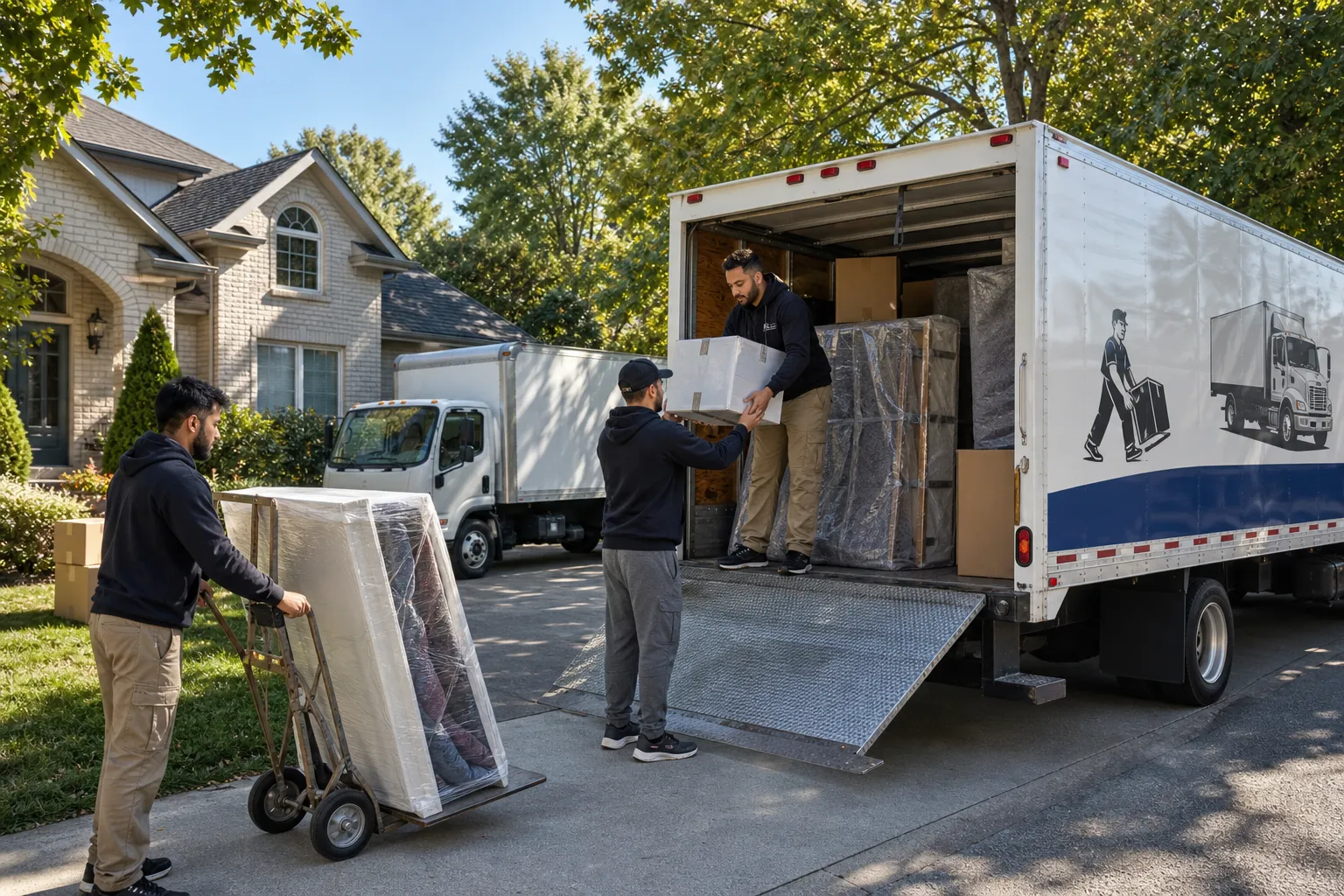
Moving services and storage work best when packing, pickup, transport, storage handling, and final delivery are written as one connected scope. Start with your dates, inventory, access conditions, storage duration, and responsibilities at each handoff, then ask the mover to confirm pricing, protection, liability, and exact inclusions in writing. Related reading: moving and storage service.
This approach is useful when your Windsor-Essex move involves a delayed possession date, renovation, downsizing, student transition, apartment change, or office relocation. The goal is not simply to find a truck and a storage space. It is to prevent gaps between the people packing your belongings, the crew collecting them, the storage arrangement, and the team delivering them later.
Moving services and storage need one connected scope
A storage handoff has more stages than a direct move: preparation, packing, collection, storage intake, release, delivery, and placement. Your written request should show who is responsible at every stage, what happens to each part of the inventory, and what the provider will charge for the complete arrangement.
EC Movers offers full or partial packing, quality packing materials, fragile-item handling, reusable tote rentals, climate-controlled storage, and crew pickup and delivery. Those services can be relevant when your move-out and move-in dates do not align, but the quote should still identify exactly which services apply to your belongings.
If you need moving without storage, state that clearly. Ask the provider to confirm whether the quote includes furniture wrapping, floor and door protection, disassembly, reassembly, placement, and any other work you expect. Do not treat those details as automatic inclusions.
Decide how much packing help you need
Self-packing gives you the most control over timing and personal sorting. Partial packing lets you handle ordinary items while a crew handles fragile, awkward, or time-consuming areas. Full packing is useful when the whole inventory needs a coordinated plan, but the written quote should define the rooms, items, materials, labelling, and follow-up work included.
Self-packing
If you pack yourself, group items by room and label every box on more than one side. Record boxes containing fragile items, identify anything going to storage, and keep a separate list of possessions that will travel with you.
Set aside documents, jewellery, medication, cash, irreplaceable valuables, and essential items for the first night. Liquids and hazardous materials should not be placed in the moving load without specific instructions.
Partial packing
Partial packing is practical when you have time for books, clothing, and ordinary household goods but want help with kitchens, artwork, glassware, electronics, heirlooms, or rooms with many small pieces. State exactly which rooms and item categories the crew will pack.
The kitchen is often the hardest room to pack because it combines fragile dishes, irregular shapes, sharp objects, liquids, appliances, and many small items. Storage rooms, workshops, and home offices can be equally difficult when contents are dense, mixed, or poorly labelled.
Full packing
Full packing means the crew handles the packing plan across the agreed inventory instead of leaving you to finish unspecified rooms. Before booking, ask whether the quoted service includes boxes, paper, wrap, reusable totes, room labelling, padding, fragile-item handling, unpacking, and removal of packing materials.
Professional packing can save you from handling every item yourself, but it does not remove the need for decisions. Before the crew arrives, identify what is not moving, what must stay with you, what needs special discussion, and what should be delivered first.
Your written scope should name the rooms, packing responsibilities, storage destination, and delivery priorities. This prevents a general request for “packing and storage” from becoming an incomplete plan.
Map every handoff from your home to final delivery
A storage move becomes easier to manage when every handoff has an owner. The local moving process should connect preparation, packing, protection, transport, storage coordination, and final room setup instead of treating each stage as a separate booking.
- Prepare and identify: confirm the inventory, separate personal essentials, and mark items that are going directly to the destination or into storage.
- Pack and label: pack according to the agreed service level and label boxes by room, contents, handling needs, and destination where relevant.
- Protect and load: confirm how furniture, floors, door frames, and fragile items will be protected before loading.
- Collect for storage: record which belongings enter storage, who receives them, and whether condition or inventory records are created at pickup.
- Release for delivery: confirm who authorizes release, how much notice is needed, and whether the delivery date depends on availability or access.
- Unload and place: identify the destination rooms, stairs, elevators, parking arrangements, and any furniture requiring reassembly.
- Unpack and clear materials: confirm whether unpacking and removal of boxes or packing materials are included or remain your responsibility.
If your request is only a straightforward local move, the existing process explains the broader sequence from quote to final room setup. This article's focus is the extra written coordination needed when belongings pass through storage between addresses.
Copyable moving-and-storage quote brief
Give every provider the same handoff information. A comparable brief reduces missing assumptions and makes it easier to identify whether a quote covers transportation only, packing and storage, or the complete journey through final delivery.
- Origin: (full address), property type, floor, elevator or stairs, parking and loading restrictions.
- Destination: (full address), property type, floor, elevator or stairs, parking, loading route, and move-in restrictions.
- Dates: preferred packing date, pickup date, move-out date, storage start date, expected storage end date, and delivery date or delivery window.
- Inventory: rooms, large furniture, appliances, boxes, fragile items, artwork, electronics, tools, outdoor belongings, and anything unusually heavy or delicate.
- Furniture work: items requiring disassembly, reassembly, wrapping, placement, or special protection.
- Packing level: self-packing, selected rooms, fragile items only, or full packing. State who supplies materials.
- Storage plan: what enters storage, expected duration, climate-control requirement, pickup responsibility, release authorization, and final delivery responsibility.
- Access details: narrow doors, tight turns, long carries, elevators, loading docks, rural driveways, gates, stairs, and building booking rules.
- Exclusions: items you will carry yourself, hazardous materials, valuables requiring separate arrangements, and anything not included in the inventory.
- Pricing questions: whether the work is hourly or flat-rate, what changes the price, and how additional work or changed dates are handled.
Local moving work may be billed hourly, while long-distance, specialty, or carefully planned moves may receive a flat-rate quote. The useful comparison is the scope behind the figure: the same inventory, access conditions, packing level, storage duration, delivery responsibility, and exclusions should be used with every provider.
Ontario advises consumers to obtain at least three written estimates, ask about insurance and responsibility for loss or damage, visit any facility where belongings will be stored, and clarify whether packing is included. Read the province's guidance on hiring a mover before accepting an estimate.
Confirm protection, liability and storage responsibility
Padding and labelling protect belongings physically, but they are not the same as insurance or valuation protection. Ask who records the condition of items, who is responsible during loading and unloading, what happens when boxes are packed by the customer, and what protection applies while belongings are in storage.
Ask these questions in writing:
- Are furniture, doors, floors, and fragile items protected during pickup and delivery?
- Are stored items padded, labelled, and recorded by inventory or condition?
- Who is responsible if damage is discovered at the storage handoff?
- Does the coverage apply during transport, storage, and final delivery?
- Are customer-packed boxes treated differently from boxes packed by the crew?
- Is replacement-value protection available, and what exclusions or limits apply?
- What documentation is required if an item is lost or damaged?
Canada's Office of Consumer Affairs states that, without replacement-value protection, generally applicable mover liability can be $0.60 per pound, or $1.32 per kilogram, per item. That figure is not a substitute for confirming your actual contract, exclusions, valuation choice, and storage coverage. Review the official moving advice on liability and protection and ask the provider to explain the terms that apply to your belongings.
Worked example: a two-week gap between homes
Hypothetical example: A Windsor household leaves a three-bedroom home on June 14, but cannot take possession of the new home until June 28. The household wants the kitchen and living areas packed, has several large pieces requiring disassembly, and needs everything delivered after the two-week gap.
A vague request would be: “We need movers and storage for two weeks.” That does not tell the provider how much needs packing, whether anything travels with the family, what access looks like, or who is responsible for releasing the belongings for delivery.
A usable request would say: “Pack the kitchen, living room, and fragile office items on June 12. Pick up the remaining household inventory from (origin address) on June 14. Store all listed belongings until June 28. The origin has (number) stairs and (parking details). The destination has (elevator, stairs, loading, and parking details). Deliver on or after June 28, place furniture in the named rooms, reassemble the listed pieces, and confirm whether unpacking and material removal are included.”
The final written scope should also identify items that will not enter storage, the expected storage duration, the release process, the pricing model, protection and liability terms, and what happens if the possession date changes. The example is illustrative, not a promise of availability, price, or a particular storage arrangement.
Questions to settle before you book
Before booking, ask the provider to confirm current availability for every stage, the exact storage duration available, the packing level, pickup and delivery responsibilities, and the final written price or pricing method. Storage duration, capacity, access rules, and current terms should be confirmed directly because they can vary by booking.
- Can one provider coordinate packing, pickup, storage, release, delivery, and unpacking?
- What dates and time windows are currently available?
- Is storage climate-controlled, and what exactly does that description cover?
- Who can authorize release from storage, and how much notice is required?
- What are the packing, labelling, padding, and fragile-item inclusions?
- What happens to specialty items such as pianos, hot tubs, pool tables, artwork, or large appliances?
- Is the quote hourly, flat-rate, or a combination, and what changes it?
- Are deposits, cancellations, date changes, waiting time, materials, and extra handling explained?
- What liability and insurance terms apply during transport and storage?
- Will the inventory and condition of stored belongings be recorded?
- Who places furniture, reassembles items, unpacks boxes, and removes materials?
EC Movers states that it serves Windsor and Essex County and offers residential, commercial, long-distance, specialty, packing, and storage services. Ask EC Movers to confirm that your address, dates, storage duration, and requested combination of services fit its current schedule and written scope.
FAQ: practical questions about packing and storage
What is the hardest room to pack when moving?
The kitchen is often the hardest room because it contains fragile dishes, sharp objects, liquids, appliances, irregular shapes, and many small items. A partial packing request can assign the kitchen and other fragile areas to the crew while you pack clothing, books, and ordinary household goods.
How much does it cost to pack a 2,000-square-foot house?
The cost depends on the number and type of belongings, the number of rooms, the packing level, fragile-item requirements, materials, access, storage, and the timing of the work. Ask for a current written quote based on a room-by-room inventory, and clarify whether unpacking, material removal, storage, and delivery are included.
Where can Windsor renters find packing and storage for a home move?
Windsor renters can ask a moving provider that offers both packing and storage to coordinate collection from the current home, storage during the lease gap, and delivery to the next address. Confirm the pickup date, storage duration, building access, release process, coverage, and final delivery responsibilities before booking.
Can students combine packing, moving and storage in Windsor?
Yes, students can request a combined packing, moving, and storage plan if the provider accepts the inventory and dates. A student should state the residence type, elevator or stair access, boxes and furniture involved, storage start and end dates, and which essentials will travel separately.
What should I ask about belongings held in storage?
Ask how belongings are padded and labelled, whether an inventory or condition record is created, who controls release, what notice is required for delivery, what access is available, and what liability or insurance applies during storage. Ask for every answer in the written agreement, including any exclusions for customer-packed boxes or particular items.
A complete moving-and-storage brief lets you compare real service scopes instead of incomplete headlines. Send EC Movers Ltd your dates, inventory, access details, packing level, and storage requirements, then ask the company to confirm current availability, storage duration, pricing, coverage, and exact inclusions through its full packing and moving service.
Ready to move?
Get your free quote from EC Movers today.