
Packing Materials Compared: What to Use for Every Type of Move
Compare moving boxes, reusable totes, wraps, cushioning, and labels by use, then choose the right supplies or packing support for your Windsor move with less waste.
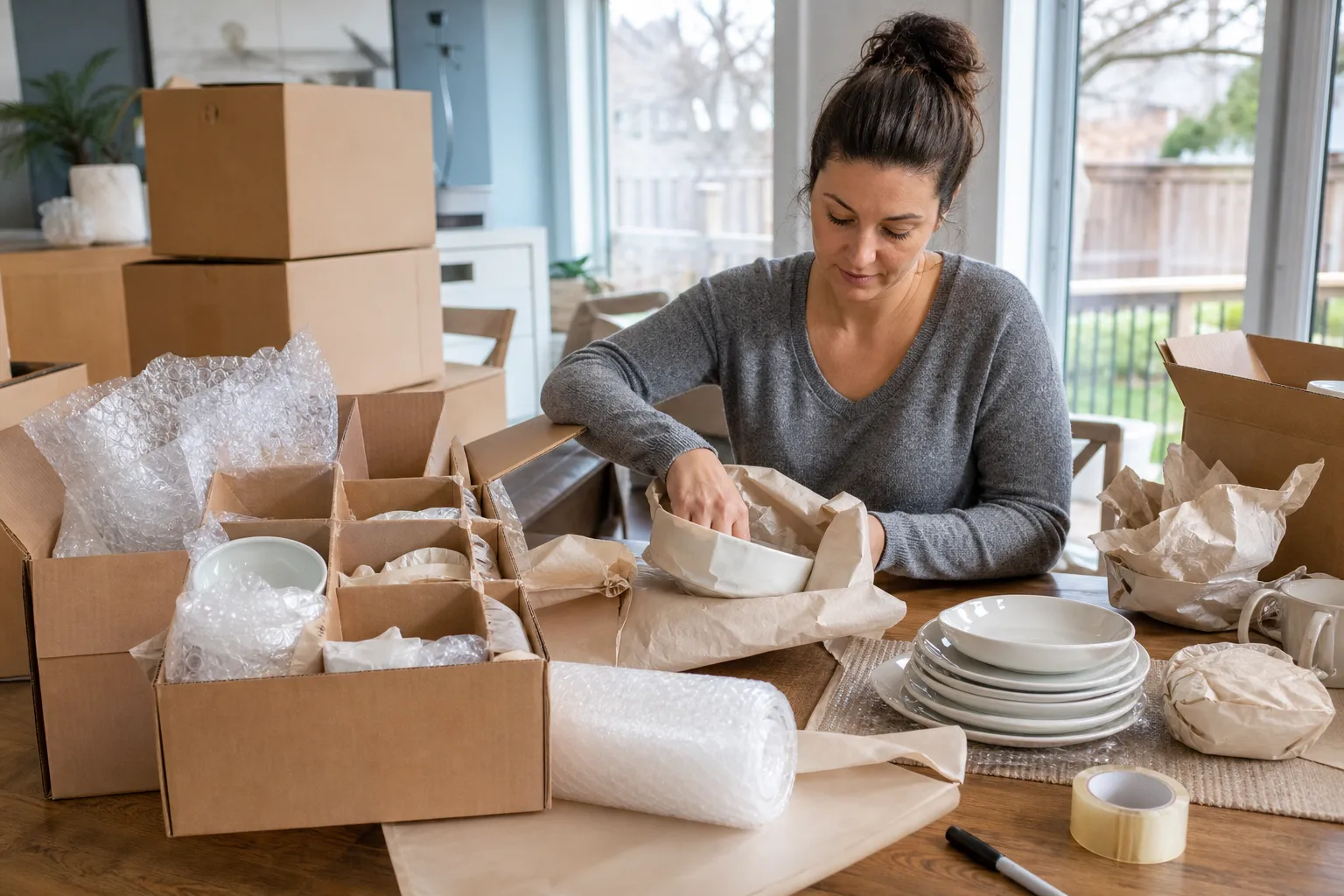
The right packing material depends on what you are protecting, not simply which supply has the lowest price per piece. Weight, fragility, size, surface finish, moisture exposure, and handling risk all affect whether you need a carton, tote, paper cushioning, bubble wrap, furniture pads, or specialty protection.
This packing materials comparison explains what common supplies do well, where they have limitations, and how to match them to books, clothing, dishes, electronics, artwork, furniture, and awkward belongings. It also helps you decide whether to pack everything yourself, hire help for selected items, or arrange professional packing.
Quick summary
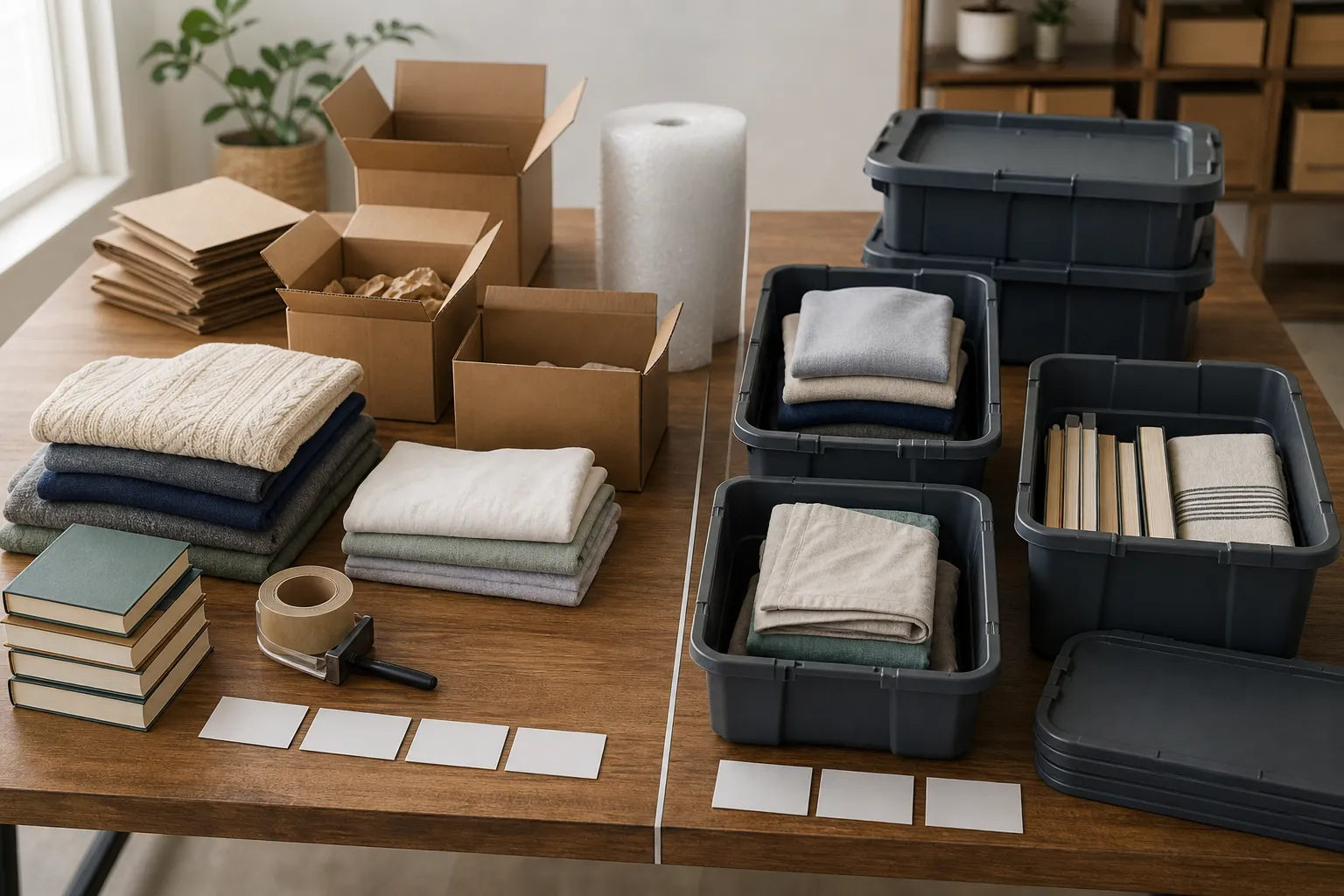
- Use small, sturdy boxes for dense items such as books and tools, and larger boxes for light, bulky items such as bedding.
- Use paper, bubble wrap, foam, or dividers according to the item's surface and fragility. Cushioning does not replace a rigid container.
- Cardboard boxes are flexible and easy to label, while reusable totes offer durability and reuse. A mixed approach often works best.
- Estimate supplies from your actual inventory, fragile-item volume, and preparation time rather than a fixed universal quantity.
- Before booking packing help, confirm the rooms covered, supplied materials, fragile-item handling, unpacking, storage, and pricing in writing.
Packing materials compared by purpose
Effective packing combines five functions: structure, cushioning, containment, sealing, and direction. A box provides structure, paper or foam fills movement space, wrapping separates items, tape keeps the carton closed, and labels show where contents belong.
For a practical overview of packing materials for moving, compare each supply by the item it protects rather than treating one material as suitable for everything.
| Material | Best suited to | Strengths | Limitations |
|---|---|---|---|
| Small and medium boxes | Books, tools, pantry items, and general goods | Easy to stack, label, and organize | Can become too heavy when overfilled |
| Large boxes | Bedding, cushions, and light bulky items | Holds volume efficiently | Unsuitable for dense contents |
| Double-wall or dish cartons | Glassware and china | Rigid structure and room for dividers | Still requires separation and void filling |
| Reusable plastic totes | Clothing, linens, documents, and storage | Durable, reusable, and convenient | Less adaptable for unusual shapes |
| Packing paper | Wrapping dishes and filling voids | Versatile separation and cushioning | Provides no rigid protection alone |
| Bubble wrap and foam | Glass, electronics, and decor | Adds shock absorption and separation | Needs a suitable carton around it |
| Furniture pads and stretch wrap | Furniture finishes, drawers, and doors | Protects surfaces and holds coverings in place | Pad delicate or unfinished wood first |
| Tape and labels | Sealing cartons and directing delivery | Supports secure closure and sorting | Cannot fix weak cartons or poor weight distribution |
Moving boxes or reusable totes: which should you choose?

Cardboard boxes are flexible when you need different sizes, want to label cartons directly, or are fitting irregular household contents into a conventional loading plan. They suit sorting by room when you do not expect to reuse every container.
Reusable plastic totes work well when durability, repeated use, or quick access matters. They can suit clothing, linens, documents, and storage items, but their shape may be less adaptable for fragile or unusually sized belongings. A tote still needs cushioning and careful weight control.
You do not have to choose one material for the entire move. A mixed approach can use cardboard for books and kitchenware, totes for clothing or storage, and stronger cartons for fragile goods.
Match materials to the belongings being packed
Books, tools, and dense items
Use smaller cartons so dense belongings remain manageable and the base is less likely to strain. Fill empty spaces so contents do not shift, and stop before the carton becomes difficult to lift safely.
Clothing, bedding, and linens
Large cartons or wardrobe boxes can work well for light textiles. Wardrobe boxes keep hanging clothes organized, while totes can suit linens or items that will be accessed during storage.
Dishes, glassware, and decor
Use a rigid carton, packing paper, and appropriate separation. Wrap individual pieces, place plates on edge, and fill voids so items do not rattle. Dividers or foam pouches can add separation, but the carton still needs a stable base.
Identify fragile items and agree on who is expected to pack them. Canada's Office of Consumer Affairs advises consumers to identify fragile items the mover is expected to pack and supervise their packing. Review the Canadian moving advice before deciding which delicate belongings you will pack yourself.
Electronics, artwork, and mirrors
Use cushioning to separate surfaces and corners, then place the item in a suitably rigid container. Foam, bubble wrap, corner protection, and specialty cartons may help with flat or fragile pieces. Keep them separate from dense items that could shift into them.
Furniture and awkward belongings
Furniture pads protect finishes during carrying and transport, while stretch wrap can hold drawers, doors, or pad layers in place. Pad unfinished or oiled surfaces before applying plastic wrap. Large, unusually shaped, or high-value belongings may need a specific handling plan rather than a standard carton.
Choose box sizes and control weight
Box size should follow both weight and volume. Small boxes are generally more practical for heavy belongings, while large boxes suit bulky items that remain light. Distribute weight, use suitable void fill, and avoid compressing delicate items simply to use less packaging.
How to estimate the materials you need
Begin with a room-by-room inventory rather than guessing from the number of rooms. A lightly furnished apartment, a book-filled house, and a kitchen with substantial glassware require different combinations of cartons and cushioning.
- List each room and its main categories of belongings.
- Separate dense, light bulky, fragile, oversized, valuable, and awkward items.
- Note which boxes or supplies you already own.
- Estimate cushioning, tape, labels, pads, and specialty protection by category.
- Revise the estimate after decluttering and keep a small reserve of common materials.
- Label items for storage, early access, or separate delivery.
Use a packing materials calculator to create a more realistic estimate. Useful inputs include rooms, belongings, fragile-item volume, preparation time, existing supplies, and storage plans.
When standard packing materials are not enough
Specialty cartons, extra cushioning, corner protectors, wardrobe boxes, or professional preparation may be worthwhile for mirrors, artwork, electronics, delicate finishes, and other items that are difficult to stabilize. Specialty protection is not automatically necessary, but it can make sense when an item has an unusual shape or limited tolerance for impact.
Pianos, hot tubs, and pool tables require more than ordinary household packing supplies because their size, weight, construction, or setup needs affect handling. Tell the mover about these items before receiving a quote.
Self-packing, partial packing, or professional packing?
Self-packing gives you control over supplies, labels, and preparation order. It suits a manageable inventory when you have enough time to sort, obtain materials, protect fragile goods, and finish before moving day.
Partial packing is a middle option. You can pack routine belongings while arranging help for fragile items, selected rooms, furniture preparation, or late-stage work.
Full-service packing is broader. Depending on the written scope, a crew may pack most of the household, label cartons, prepare furniture, and continue with loading and delivery. Materials, unpacking, removal of used supplies, and storage should never be assumed. This comparison of self-packing, partial packing, and full-service packing can help you decide how much preparation to manage.
Ontario advises consumers to ask whether a moving company provides packing services as well as moving belongings. Also ask what remains your responsibility.
What to confirm before booking packing help
- Which rooms, categories, or items are included?
- Are boxes, paper, bubble wrap, tape, pads, wardrobe boxes, dividers, or totes supplied?
- Who packs fragile items, and how will they be protected?
- Are furniture disassembly, reassembly, floor protection, and door protection included?
- Does the service include unpacking or removal of used materials?
- Can packed items be stored, and how will storage belongings be labelled?
- Is the price flat-rate, hourly, or a combination?
- Have stairs, elevators, parking, access, and building rules been considered?
- What responsibility applies to belongings you pack yourself?
Ask for these details in a written estimate. EC Movers Ltd offers full and partial packing, materials consultation, boxes, bubble wrap, furniture blankets, wardrobe boxes, and reusable totes, but the materials and scope for your move should still be confirmed before booking.
Packing materials buyer's checklist
- Choose box sizes according to weight and volume.
- Set aside stronger cartons or dividers for fragile goods.
- Plan paper, bubble wrap, foam, or corner protection for surfaces needing separation.
- Use furniture pads and suitable wrap for furniture.
- Keep tape, markers, and labels together.
- Mark the destination room, contents, handling notes, and unpack-first priority.
- Identify artwork, mirrors, electronics, and specialty items.
- Review quantities after decluttering.
- Decide what can be reused, recycled, returned, or stored.
- Get packing scope, supplied materials, storage, unpacking, access, and price in writing.
Frequently asked questions
Are reusable plastic totes better than cardboard boxes?
Neither is universally better. Totes offer durability and reuse, while cardboard offers flexibility in sizes and labelling. Many moves benefit from both.
Who is responsible for packing fragile items?
Responsibility depends on the agreed scope and what you pack yourself. Identify fragile belongings, ask who will pack them, and confirm the answer in writing.
Do movers provide boxes and other packing materials?
Some movers supply materials as part of a packing service, while others charge separately or offer them as an option. Ask specifically what is included in your estimate.
Can movers pack selected rooms or fragile belongings?
Partial packing can often be arranged when the scope is clear. Confirm the rooms, materials, minimum service conditions, and price before scheduling.
Conclusion: choose protection first, then decide who packs
Match small boxes to dense items, larger cartons to light bulky goods, cushioning to fragile surfaces, pads and wrap to furniture, and labels to the way you want the new space organized. Cardboard and reusable totes can work together, while specialty protection is best reserved for items requiring extra planning.
Estimate supplies from your actual inventory and decide how much preparation you want to manage. If you are moving in Windsor or Essex County, EC Movers Ltd can provide packing materials guidance, full or partial packing support, storage coordination, and a quote for the agreed scope of your move.
Ready to move?
Get your free quote from EC Movers today.