
What Questions Should You Ask About Piano Moving Insurance?
Learn what to ask about piano moving insurance, coverage limits, documentation, claims, and mover responsibilities before booking in Windsor and Essex County.
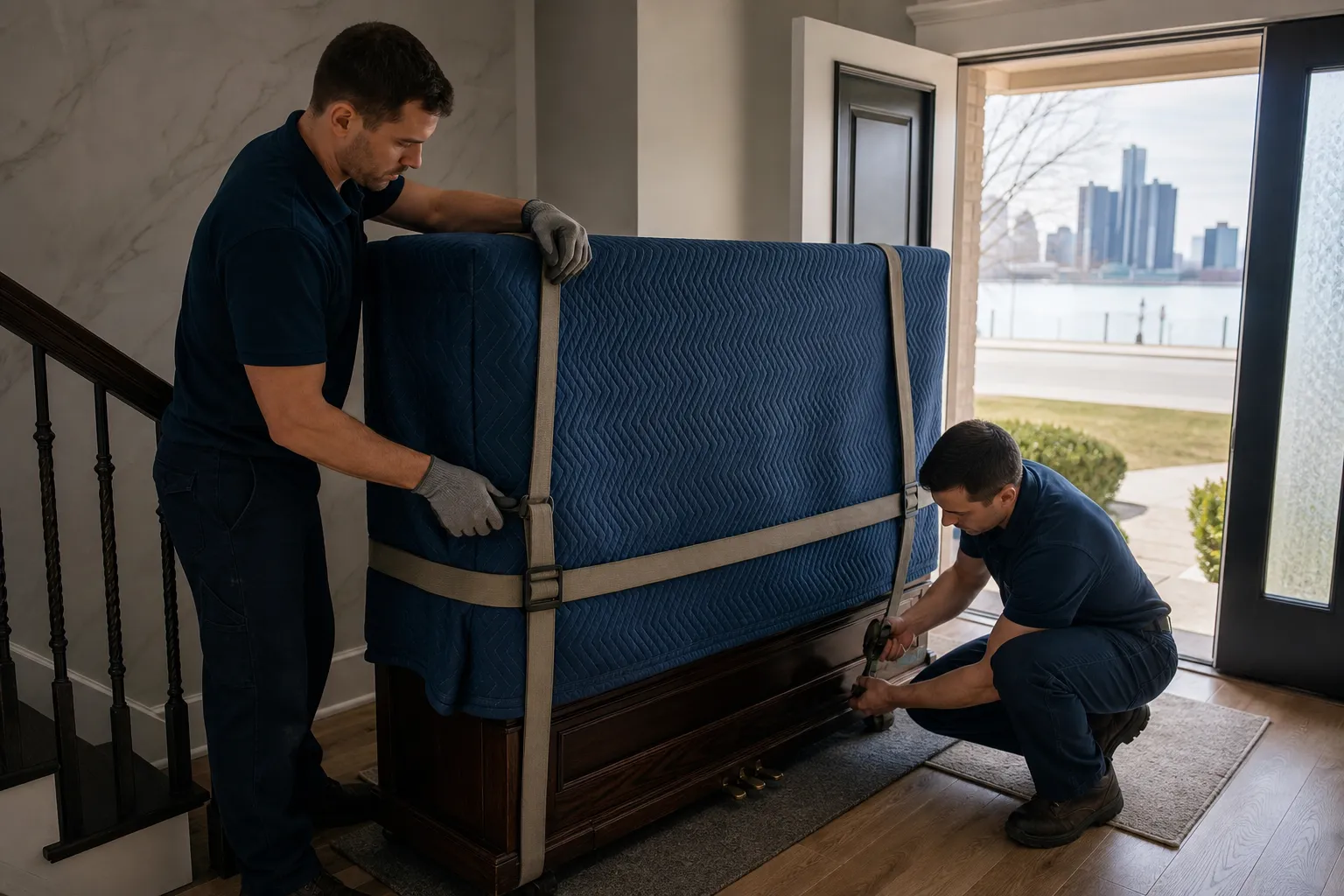
What Questions Should You Ask About Piano Moving Insurance?
Before booking piano movers, ask for written details about what protection applies to your piano, which exclusions and limits may affect a claim, who handles damage reports, and whether you should contact your own insurer. A mover describing its operations as insured is useful information, but it does not automatically explain how a particular piano, route, storage period, or type of damage would be treated.
The safest approach is to assess coverage alongside the moving plan. Describe the piano and access conditions accurately, document its condition, compare the quote with the contract, and ask an insurer or broker policy-specific questions when your own coverage may be relevant. These checks can help homeowners, renters, families, collectors, and businesses arranging piano moving in Windsor or elsewhere in Ontario.
Quick summary
- Ask the mover to identify the type of protection that applies specifically to your piano and provide important terms in writing.
- Do not treat general business insurance, cargo or transit coverage, valuation protection, and your homeowner’s or renter’s policy as interchangeable.
- Provide complete details about the piano, route, stairs, elevators, doorways, tight turns, and other access constraints.
- Take dated photos and retain condition notes, repair records, serial information, and appraisal or valuation documents where available.
- Before signing, confirm the scope, exclusions, claims process, deposit, price, storage arrangements, and responsibility for third parties.
Contents
- Understand piano moving coverage
- Ask coverage questions
- Disclose piano and access details
- Document condition before pickup
- Compare the quote and contract
- Confirm the claims process
- Contact your own insurer
- Use the checklist
Understand What Piano Moving Coverage May Mean

“Insurance” is often used broadly in moving conversations, but several different concepts may be involved. Asking the mover to name the protection that applies is more useful than relying on a general statement that the company is insured.
General business insurance
A moving company may carry business insurance for risks associated with its operations. That fact does not by itself confirm the amount available for your piano, the events covered, exclusions, deductibles, or the process for making a claim. Ask how the current coverage relates to customer belongings during loading, transportation, unloading, and any agreed storage or transfer period.
Cargo or transit coverage
Cargo or transit protection generally refers to belongings while they are being transported, but the exact meaning depends on the policy or contract. It may not answer questions about damage during preparation, loading, unloading, temporary storage, or handling at either property. Ask when protection begins and ends and whether the piano receives different treatment from ordinary household goods.
Valuation protection
Some moving agreements describe a mover’s responsibility through valuation terms rather than presenting a conventional insurance policy to the customer. The amount or method may depend on the agreement, item description, proof of condition, exclusions, and other conditions. Do not assume valuation protection equals replacement-value coverage. Ask whether repair, restoration, depreciation, a maximum amount, or a deductible applies.
Your own policy
Your homeowner’s, renter’s, condominium, specialty, or business policy may contain provisions relevant to a move, transit, or temporary storage, but coverage cannot be assumed. Contact your insurer or broker if you need to know whether your policy applies to the specific piano, route, dates, value, and storage arrangement. Policy-specific advice should come from the insurer, broker, or qualified legal professional.
Coverage Questions to Ask Before You Book
Ask these questions by email or request that the answers appear in the quote or agreement. Written responses make it easier to compare movers and reduce the chance that an important assumption exists only in a phone conversation.
Protection and scope
- What type of protection applies specifically to my piano?
- Does it apply during preparation, loading, transportation, unloading, and placement?
- Does it continue during temporary storage or a transfer between vehicles or locations?
- Is the piano included under standard terms, or does it need a separate declaration?
- Can you provide the relevant terms, certificate, or contract language?
Limits and exclusions
- Is there a stated limit for this piano or the whole shipment?
- Is there a deductible or customer contribution?
- Are pre-existing marks, finish variations, mechanical issues, tuning problems, or internal damage treated differently?
- Are there exclusions related to age, condition, value, stairs, weather, access, or customer packing?
- Does the agreement address repair, restoration, replacement, or depreciation?
These questions do not ask the mover to promise a claim outcome. They ask the mover to identify the terms that would govern the discussion if something went wrong. If a representative cannot explain a material exclusion or limit, pause and request clarification.
Responsibility and third parties
- Will your own crew perform every part of the move?
- Could a subcontractor, storage provider, delivery partner, or other third party handle the piano?
- If another company becomes involved, who is responsible and who receives a claim?
- Will third-party roles be identified in the written agreement?
- Does protection change when another company handles the piano?
Disclose the Piano and Access Details That Affect the Quote
A piano move should be quoted from real conditions, not a vague description such as “one piano from a house to a house.” The piano’s type, condition, size, route, and access challenges can affect the crew plan, equipment, time, and scope. Complete information also gives you a better basis for asking whether the quoted protection applies to the conditions disclosed.
Describe the instrument
Tell the mover whether it is an upright, baby grand, grand, digital piano, or another design. Provide the make and model if known, approximate age, dimensions, weight if available, and unusual features. Describe visible damage, loose parts, finish wear, sticking keys, pedal issues, previous repairs, altered components, or existing tuning concerns. You do not need to diagnose the piano. The goal is an honest starting record.
Describe both properties
Provide both addresses and the floor where the piano is located and will be placed. Mention stairs, narrow hallways, tight turns, low ceilings, elevators, balconies, uneven ground, gates, long outdoor paths, steep driveways, restricted parking, and building access rules. Photos or a short video of the route may help the mover understand conditions that are difficult to describe.
State whether the move is local or long distance, whether the piano travels with other belongings, and whether there is a gap between pickup and delivery. Mention renovation work, weather-sensitive paths, limited access hours, or a destination that is not ready. This information supports planning, but it does not itself establish coverage.
For specialty service in Windsor, see the EC Movers piano moving service. Ask the company to assess your specific piano and route rather than assuming a general service description answers policy questions.
Document the Piano’s Condition Before Pickup
Good records cannot guarantee that a claim will be accepted, but they can make the pre-move condition clearer. Documentation is especially useful when a piano has a valuable finish, repair history, visible wear, or mechanical concerns.
Take dated photographs and video
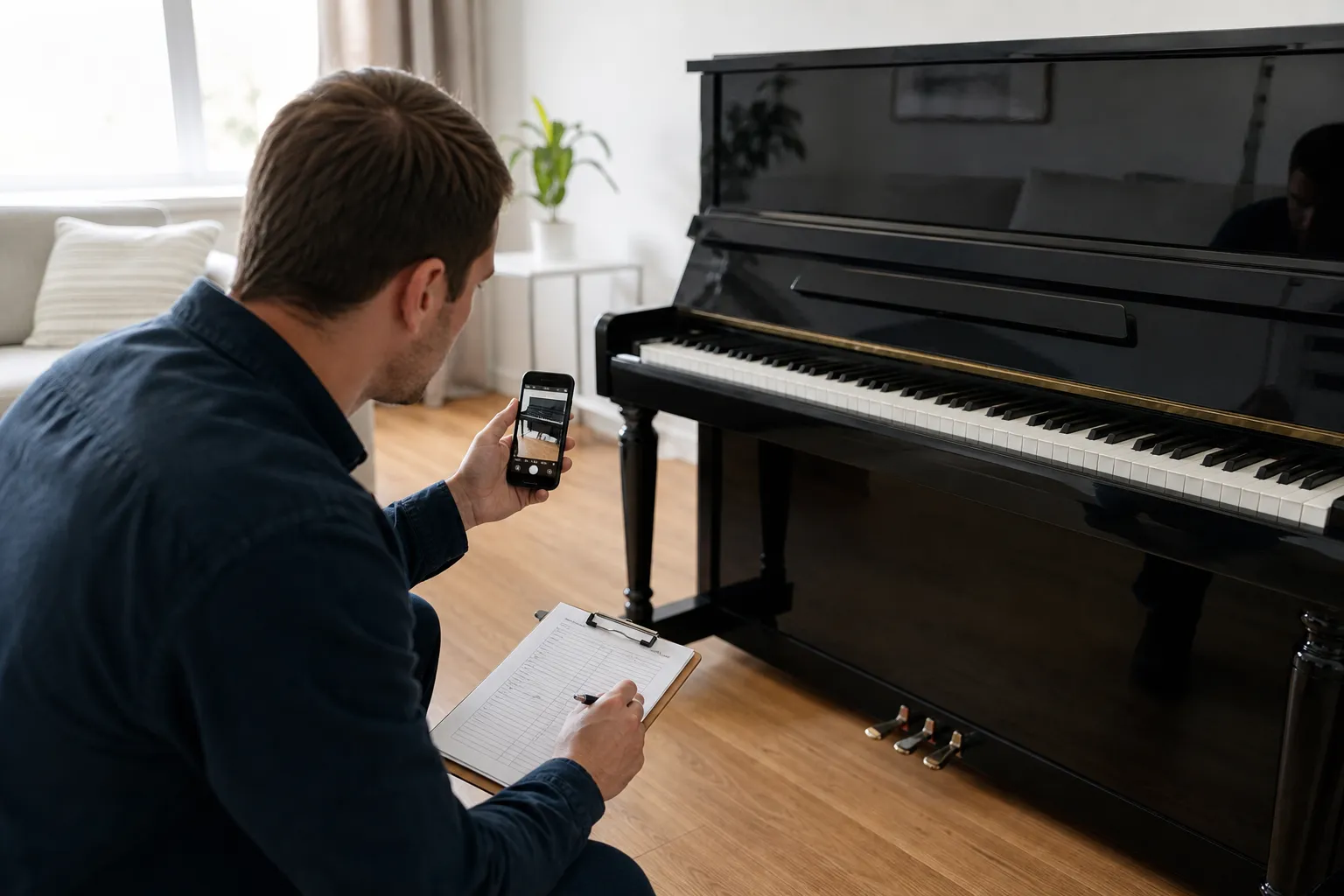
Photograph the piano from all sides before the crew arrives. Capture the keyboard, pedals, legs, casters, lid, hinges, music desk, finish, corners, and bench if included. Use enough light and detail to show the condition. A slow video can show the instrument and its surroundings. Keep original files and dates.
Retain supporting records
Keep the serial number, purchase records, appraisal or valuation documents, repair invoices, tuning records, and earlier photographs where available. These may help establish identity, history, or value, although the mover or insurer may request particular documents. If no appraisal exists, do not invent a value. Ask what information the mover needs.
Review the condition report
Ask whether the mover will create an inventory or condition report. Make sure existing chips, scratches, finish changes, broken parts, and mechanical issues are described accurately. Do not sign a statement that says the piano is free from damage when that is not true. An inventory is useful evidence, but it does not determine coverage by itself.
Compare the Quote, Contract, and Coverage Details
A quote explains what the mover expects to do and charge. A contract or booking confirmation may contain additional terms about scope, responsibility, exclusions, cancellations, and claims. Read both together before paying a deposit.
- Confirm the piano type, model if known, declared value, and special handling notes.
- Check both addresses, floors, entrances, stairs, elevators, and final placement.
- Confirm whether wrapping, disassembly, reassembly, loading, transportation, unloading, and setup are included.
- Check whether storage, a transfer, a second stop, or another vehicle is involved.
- Confirm the date, arrival window, crew scope, customer responsibilities, price, deposit, and cancellation terms.
A flat-rate quote can make moving costs easier to understand, but a flat rate does not automatically specify insurance protection. Ask whether access conditions, waiting time, additional stops, storage, or changes in scope can affect the charge. Price transparency and coverage clarity are related decisions, but one does not replace the other.
For broader selection criteria, see how to choose a moving company in Windsor, Ontario. When comparing companies, provide each one with the same piano and route information so the quotes are genuinely comparable.
Confirm How Damage Claims Would Be Handled
Ask what to do if damage is noticed during delivery or after the piano is placed. The answer should identify a contact method, required records, and reporting steps. Do not wait until an incident occurs to discover that the relevant contact is a general office address or an unrelated third party.
- Who is the claims contact, and how should a report be submitted?
- Is notice required at delivery or within a period stated in the agreement?
- What photographs, reports, invoices, appraisals, or other documents may be requested?
- Will the piano need an inspection before repair, tuning, restoration, or disposal?
- Who decides whether repair, restoration, replacement, or another remedy is considered?
- Are deductibles, limits, timelines, or exclusions stated in the booking documents?
Keep the quote, contract, inventory, photos, emails, messages, invoices, and delivery records together. Describe what you observed without guessing about the cause or making a legal conclusion. Preserve damaged packaging or components if requested. Ask what the delivery sign-off confirms and record visible concerns as soon as practical.
Know When to Contact Your Own Insurer or Broker
Contact your insurer or broker before the move if the piano is valuable, storage is involved, the move is long distance, the piano belongs to a business or collection, or you are uncertain whether your home or contents policy applies. Ask specifically about transit, loading, unloading, temporary storage, damage, deductibles, dates, route, and documentation.
Provide the piano’s approximate value, moving company, origin, destination, dates, transportation arrangement, and storage period. Request a written response if it will affect your booking decision. Do not cancel an existing policy or assume a mover’s insurance makes your own coverage unnecessary. The arrangements may address different risks.
Use Insurance Questions to Assess the Mover
A mover’s response to detailed questions can reveal how clearly it manages the booking. You are not looking for a promise that nothing can go wrong. You are looking for a company that can describe the scope, identify uncertainty, document the arrangement, and explain what happens if an issue arises.
Ask for current confirmation of insured status and any documentation the company can reasonably provide. If it states that it is licensed, bonded, insured, or WSIB certified, ask what each statement means for the planned move. WSIB certification should not be treated as piano-damage insurance or as a replacement for cargo, valuation, or other protection terms.
Ask how the company will approach your piano, route, stairs, turns, entrances, and final placement. Confirm who supervises the work, what preparation is included, how the item will be protected, and whether another company may be involved. Confirm who answers questions before the move and who handles changes or concerns during it.
What to Confirm With EC Movers Ltd
EC Movers Ltd offers piano moving as a specialty service in Windsor and Essex County. The supplied business information states that its operations are fully insured and WSIB certified and that its crews and trucks use protection gear for moving belongings.
The company also describes upfront flat-rate pricing, free quotes, loading, transportation, unloading, and setup. Packing and storage support is available through its broader moving services. These facts explain the service conversation, but they do not establish a specific piano coverage limit, deductible, valuation formula, exclusion, or claims outcome.
Before confirming a booking, ask EC Movers Ltd about the current protection type, covered stages, limits, exclusions, deductibles, pre-existing conditions, storage or transfers, subcontractors, and claims contact. Provide complete route and access information so the quote and written scope reflect the actual job.
A Pre-Booking Piano Moving Insurance Checklist
Before requesting a quote
- Identify the piano type, make, model, approximate age, dimensions, and known condition.
- Take dated photos and video of the instrument and route.
- List stairs, elevators, narrow doors, tight turns, outdoor paths, parking limits, and final placement.
- Gather serial information, repair records, appraisals, valuation documents, and purchase records.
- Ask your insurer or broker whether your policy may be relevant.
Before signing
- Obtain piano-specific protection information in writing.
- Confirm limits, exclusions, deductibles, pre-existing condition terms, and third-party responsibility.
- Check addresses, access conditions, services, price, date, storage, and customer responsibilities.
- Request the claims contact, reporting method, documentation requirements, and notice period.
- Ask what the delivery sign-off means.
Before and after pickup
- Review the condition record and correct inaccuracies.
- Keep copies of the contract, inventory, photos, messages, and receipts.
- Inspect the piano at delivery and record visible concerns promptly.
- Follow the written claims process and retain every communication.
Piano Moving Insurance FAQ
Does WSIB certification cover damage to my piano?
Do not treat WSIB certification as piano-damage insurance. Ask what the company’s WSIB status means for workplace coverage and separately request the cargo, valuation, or other protection terms that apply to your piano and move.
Does homeowner’s or renter’s insurance automatically cover a piano during a move?
No assumption should be made from the existence of a home or contents policy. Contact your insurer or broker and ask specifically about the piano, transportation, loading, unloading, temporary storage, dates, route, value, and exclusions.
What documents should I request from a piano mover?
Request a written quote and service scope, relevant protection or valuation terms, limits and exclusions, deductible information, third-party responsibility, and the claims contact and reporting procedure. Confirm that the piano description and access conditions are accurate.
Why document the piano’s condition before moving?
Dated photos, video, condition notes, serial information, repair records, and valuation documents can help distinguish pre-existing conditions from later observations. They do not guarantee a claim or determine the remedy, but they provide a clearer record.
Make the Coverage Check Part of the Booking Decision
Piano moving insurance is not a single assumption to accept or reject. The useful question is what protection applies to this piano, on this route, under this agreement, during each stage of handling. Get the answer in writing, review exclusions and limits, and ask who is responsible if another company or storage provider becomes involved.
Disclose access challenges, document the piano before pickup, and make sure the quote, contract, condition record, and coverage information describe the same move. If your own policy might be relevant, ask your insurer or broker for specific guidance before booking.
EC Movers Ltd provides piano moving services in Windsor and Essex County and states that its operations are fully insured and WSIB certified. Contact EC Movers Ltd for a piano-moving quote, provide your complete route and piano details, and ask coverage-specific questions before confirming the move.
Ready to move?
Get your free quote from EC Movers today.