
Before You Book Piano Movers in Windsor: Questions to Ask and Steps to Take
Planning piano moving in Windsor? Compare written estimates, check access and insurance, prepare your home, and protect your piano on moving day with confidence.
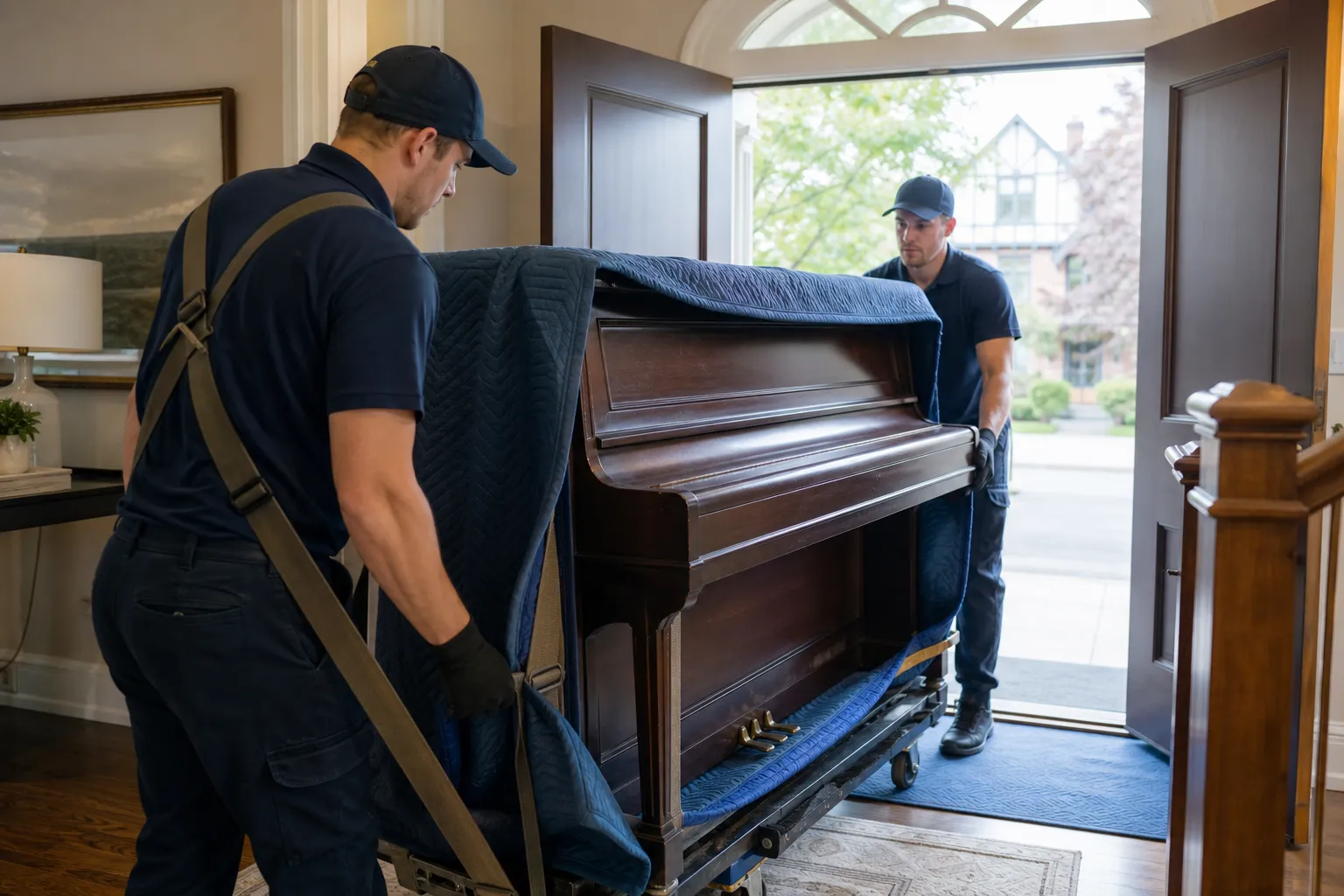
Moving a piano in Windsor is not the same as moving ordinary furniture. Its weight, shape, fragile internal components, finish, and sensitivity to stairs, turns, flooring, and tight doorways all affect the plan. The safest approach is to treat it as a specialist move from the first quote request.
This guide explains how to prepare the right information, compare piano movers in Windsor, review written terms, and set clear stop points on moving day. It is designed to help you make a confident hiring decision, not attempt heavy lifting or piano handling yourself.
Quick summary

- Measure access routes and record stairs, elevators, narrow turns, long carries, parking limits, and destination details before requesting quotes.
- Ask for written estimates that clearly state the scope, price basis, included services, access assumptions, and responsibility for changes.
- Confirm specialist piano experience, insurance, WSIB certification, protection planning, and whether disassembly or reassembly is included.
- Clear the route, document the piano’s condition, confirm its final placement, and keep children and pets away from the work area.
- Pause the move if actual conditions differ from the quote or the crew cannot explain how the piano will be protected and positioned.
Why a Piano Move Needs Specialist Planning
A piano’s size and weight can make even a short Windsor move complicated. Stairs, tight landings, narrow doorways, uneven paths, fragile flooring, and limited loading access can change the handling plan. A grand piano may also require a different assessment from an upright because of its shape and proportions.
The important question is not simply whether a mover can transport heavy furniture. Ask whether the company assesses the piano, access route, property protection requirements, and destination before the move begins. For complex instruments, piano moving services can provide the specialist planning and careful handling needed during transport.
Do not try to solve difficult parts with extra people, improvised straps, or household equipment. Piano mechanisms and heavy lifting should be left to qualified movers who can explain the proposed process and its limits.
Step 1: Collect the Details Movers Need Before Quoting
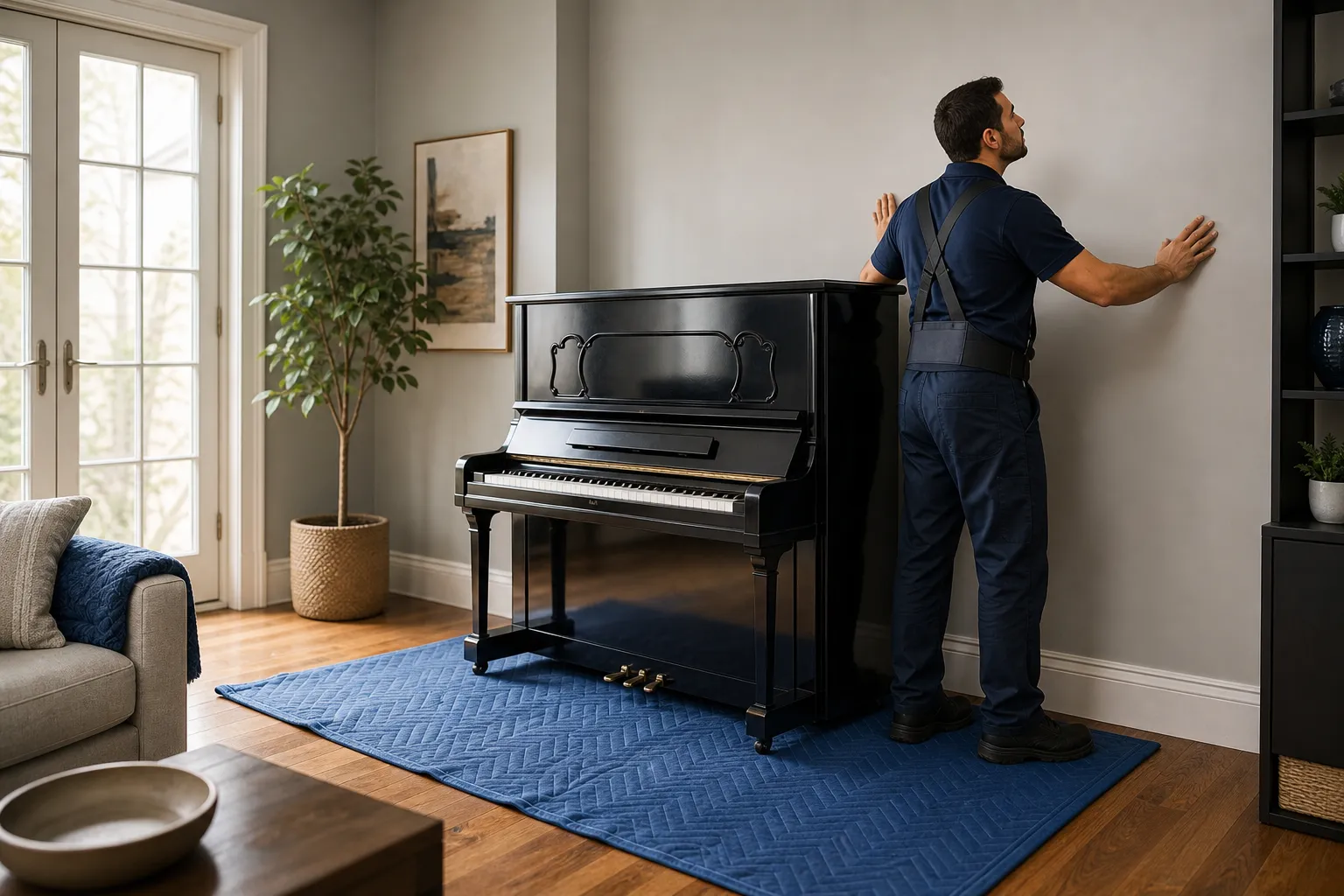
A useful quote starts with accurate information. Before contacting movers, gather these details for both the current property and the destination:
- Piano type: Identify whether it is an upright, baby grand, grand, or another style. If you know the make and model, include it.
- Approximate dimensions: Measure the piano’s length, width, and height where practical. For a grand piano, record the longest dimension.
- Access at both properties: Note stairs, narrow doorways, sharp turns, elevators, ramps, long walks from the truck, gates, and changes in level.
- Building requirements: Confirm elevator reservations, move-in rules, loading zones, condominium restrictions, or permission needed for a commercial vehicle.
- Parking and loading: Tell the mover where a truck can stop and whether the route from the vehicle to the door is blocked or unusually long.
- Property surfaces: Mention hardwood, tile, carpet, steps, fragile flooring, low ceilings, tight hallways, or walls that need additional protection.
- Timing and storage: Explain your preferred date, any closing or possession deadline, and whether the piano may need to be stored between locations.
Take clear photographs of the piano, doorways, stairs, landings, and path to the destination. If you are unsure about a measurement or access problem, say so. A professional quote should identify what still needs to be confirmed rather than quietly assuming ideal conditions.
Step 2: Compare Piano Movers on More Than Price
When comparing piano moving services, the lowest figure is not necessarily the best value if it excludes access planning, protection, or required handling. Ontario advises consumers to obtain at least three written estimates from different movers before signing a contract. Moving contracts worth more than $50 must be in writing. Ontario’s mover guidance explains these consumer protections.
| What to compare | What a clear answer should include |
|---|---|
| Written estimate | Addresses, date, piano description, access assumptions, scope, and price basis. |
| Insurance and WSIB | Confirmation of coverage and WSIB certification, along with available documentation. |
| Specialist experience | Experience with the relevant piano type and an explanation of how unusual access will be assessed. |
| Protection plan | How the piano, floors, walls, doorways, and surrounding belongings will be protected. |
| Disassembly and reassembly | Whether either service is needed, included, or excluded, and who is responsible. |
| Price changes | What happens if stairs, long carries, parking restrictions, or other conditions differ from the quote. |
| Communication | Who confirms the plan, how changes are approved, and how concerns are handled. |
| Service area | Whether the mover covers both addresses, including longer moves outside Windsor-Essex. |
EC Movers Ltd states that its piano service includes a specialist crew, fully insured operations, WSIB certification, flat-rate pricing, a free packing consultation, and furniture disassembly and reassembly. Treat these as items to confirm in your own written quote, especially when the piano or access conditions are unusual.
Step 3: Ask These Questions Before You Book
Use direct questions so the mover’s answer can be reflected in the written scope. Ask:
- How will you assess the stairs, narrow doorways, turns, elevator, and long carry at each address?
- Have you handled this type of piano before, and what information do you need to confirm the plan?
- What protection is included for the piano, flooring, walls, door frames, and nearby furniture?
- Does the quoted service include any required disassembly and reassembly? If so, which parts?
- What happens if the piano cannot pass through the planned route as expected?
- Which services are included in the flat rate, and which conditions could create an additional charge?
- Can you provide confirmation of insurance and WSIB certification?
- Who is responsible for documenting pre-existing marks or condition concerns?
- Where will the piano be placed at the destination, and will the crew confirm that position before unloading?
- How will a concern or damage report be recorded if something is noticed after placement?
A useful answer should be specific to your piano and properties. Be cautious of a quote that gives a price without asking about the piano type, stairs, access route, destination, or property protection.
Step 4: Review the Estimate and Written Agreement
Compare each estimate line by line instead of comparing totals alone. Check that the document names the correct pickup and delivery addresses, piano type, moving date, access conditions, included labour, protection expectations, disassembly or reassembly, and any storage or packing requirements.
Look for the price basis. A flat-rate quote can make costs easier to understand, but only when the assumptions behind that rate are clear. Ask the mover to explain how the price changes if a lift, stair route, long carry, restricted parking, or other condition was not included in the original information.
Before signing, confirm payment terms, cancellation or rescheduling terms, the person who can approve changes, and how condition concerns are recorded. Keep the written estimate, agreement, photographs, and messages together until the move is complete.
Step 5: Prepare the Piano, Access Route, and Destination
Once the plan is confirmed, prepare the property without attempting to alter the piano yourself:
- Clear furniture, boxes, rugs that can slide, decorations, and other obstacles from the route.
- Measure doorways, turns, stair landings, and the intended destination again if the layout has changed.
- Confirm elevator bookings, building access, parking arrangements, and required move-in notices.
- Remove valuable or fragile items near the route and secure doors that could swing into the path.
- Photograph the piano’s visible condition, nearby walls and floors, and any existing marks.
- Mark the intended final position so there is no confusion when the piano arrives.
- Keep children, pets, and bystanders away from the moving route.
Do not remove piano components, adjust internal mechanisms, or attempt to move the instrument into position before the crew arrives unless the mover specifically instructs you to do so. Preparation should make the route clear and instructions accurate, not replace specialist handling.
Step 6: Use Moving-Day Stop Points
Agree on a simple rule before work begins: if real conditions differ from the written plan, pause and resolve the difference. This protects you from making a rushed decision when the piano, property, or price is not as expected.
Stop and ask for clarification if:
- The piano, staircase, doorway, elevator, parking area, or destination differs materially from the quote.
- The crew proposes using a route that has not been discussed or does not appear adequately protected.
- The piano cannot pass without force, unsafe positioning, or damage risk to the property.
- Flooring, walls, door frames, or nearby belongings have not been protected as agreed.
- The written scope or price changes and you do not understand why.
- The crew cannot clearly explain the handling and placement plan.
Do not allow schedule pressure to replace a safe decision. Ask the mover to document any change, explain the reason, and obtain your approval before continuing.
Step 7: Check the Piano and Space After Placement
Before the crew leaves, inspect the piano’s visible exterior and the route it travelled. Check the finish, legs, pedals, lid, casters or other visible components, as well as walls, floors, door frames, stairs, and nearby furniture.
Confirm that the piano is in the agreed location and that doors, walkways, vents, and other household features remain usable. Photograph anything that appears different from the pre-move record and report concerns promptly using the contact method in your agreement.
Moving and tuning are separate considerations. Do not assume that tuning is included unless the written scope says so, and ask a qualified piano professional about tuning if the instrument’s condition or sound changes after the move.
Confirm Windsor and Essex County Service Coverage
For a local move, confirm that the mover covers both addresses in Windsor or the surrounding community. EC Movers states that it serves Windsor and nearby communities including LaSalle, Tecumseh, Amherstburg, Essex, Lakeshore, Belle River, Kingsville, Leamington, Harrow, Tilbury, and Chatham. It also states that it provides local and long-distance moving services across Canada.
Coverage alone is not enough. Give the mover the exact origin and destination, piano type, access details, building restrictions, and timing requirements. Homeowners comparing professional movers in Windsor can use those details to confirm whether the proposed service fits the move rather than relying on a general service-area statement.
For additional background on planning and specialist questions, you can also review this piano moving preparation resource. Use it as general planning information, then rely on your selected mover’s written assessment for the specific piano and properties involved.
Frequently asked questions
Do I need specialist piano movers for an upright piano?
An upright may be smaller than a grand piano, but it can still be heavy, difficult to manoeuvre, and vulnerable to damage on stairs, turns, and narrow access. Ask for a specialist assessment rather than assuming ordinary furniture movers are suitable.
What should I tell piano movers about stairs and narrow access?
Describe the number and shape of stairs, landings, doorway widths, sharp turns, ceiling height, elevator dimensions, outdoor paths, and distance from parking to the entrance. Photographs and measurements help identify details that may need confirmation.
Should I get multiple written estimates for piano moving in Ontario?
Yes. Ontario recommends obtaining at least three written estimates from different movers. Compare scope, access assumptions, included protection, specialist services, price basis, and terms, not just the total.
Can piano movers disassemble and reassemble every piano?
Not every piano or property has the same requirements. Ask whether disassembly is necessary, which components are included, who performs the work, and whether reassembly is part of the written scope. Do not assume it is included because another mover offers it.
What should I check before accepting the piano at its destination?
Check the piano’s visible exterior, agreed placement, surrounding floors and walls, door frames, stairs, and nearby belongings. Compare the condition with your pre-move photographs and report any concern promptly according to the written agreement.
Choose the Mover That Makes the Plan Clear
The strongest hiring decision is based on more than a low unexplained price. Choose a mover that asks about the piano and both properties, provides written terms, explains protection and access planning, confirms appropriate coverage, and tells you what happens if conditions change.
For piano moving in Windsor, prepare your measurements and photographs first, obtain multiple written estimates, ask specific questions, and set clear stop points before the crew arrives. That process gives you a practical way to compare movers and reduces avoidable surprises.
EC Movers Ltd provides piano moving services for grand pianos and uprights in Windsor and Essex County, with stated fully insured and WSIB-certified operations, flat-rate pricing, and free no-obligation quotes. To discuss your move, visit EC Movers Ltd.
Ready to move?
Get your free quote from EC Movers today.