
Compare 7 residential moving checklist stages versus common mistakes
A practical 7-step residential moving checklist comparing DIY, partial and full-service moves, with Windsor tips and exact questions to ask movers.

Compare 7 residential moving checklist stages versus common mistakes
Moving home is a series of decisions as much as a schedule. This residential moving checklist breaks your timeline into seven actionable stages and compares three common approaches: DIY packing, partial packing (you do some, the movers do some) and full-service moves. Use the side-by-side decision cues to pick the approach that matches your time, budget and risk tolerance.
If you want local support, EC Movers Ltd serves Windsor and Essex County with flat-rate pricing, insured crews, WSIB certification, and specialty-item experience for pianos, hot tubs and pool tables. For general consumer guidance on choosing a mover and moving-day protections, see CMHC moving-day advice and industry checklists that follow a similar weeks-to-days structure.
How to use this 7-step checklist and the comparison columns
Each numbered section below shows a timeline, a concise to-do list, and a short comparison: DIY vs partial vs full service. Use the decision cue at the end of each section to determine whether you should hire help now or later. For broader timeline models you can compare this plan to published checklists from moving providers and consumer agencies.
1. Eight weeks out: plan, inventory and book
What to do
Create a master inventory, measure doorways and large furniture, set your moving date, and decide whether you need specialty handling. Photograph high-value items and start a labelled spreadsheet that notes fragile pieces and appliances that must be disconnected professionally. Prioritise decluttering nonessentials to reduce load and cost.
DIY vs partial vs full-service
- DIY: You control cost but must allow time for measuring, scheduling a rental truck, and coordinating helpers.
- Partial: Book movers now for heavy or specialty lifts while you handle small-item packing to save money.
- Full-service: Reserve a date with a mover who provides an on-site estimate and specialist equipment if you have pianos, hot tubs or pool tables.
Decision cue: if you own specialty items or plan a summer weekend move, book a reputable mover early to lock in date and crew size.
2. Four to six weeks out: get written quotes and compare service options
What to do
Collect at least three written estimates that include insurance, any extra charges, and an itemised scope of work. Ask for timelines, crew size, truck dimensions and whether the quote is flat-rate or hourly. Consumer guidance recommends verifying a mover's reputation and getting written confirmation before you commit.
Questions to ask movers
- Are you licensed, insured and WSIB certified?
- Is this a flat-rate quote or hourly, and what triggers extra charges?
- Will you provide references or local reviews for similar moves?
- How do you handle claims and what is your damage reporting timeline?
DIY vs partial vs full-service
- DIY: Get a truck quote and plan labour from friends or hire casual help; insurance remains your responsibility.
- Partial: Choose a mover for heavy lifts and protection while you pack most boxes yourself to reduce labour cost.
- Full-service: Use one comprehensive quote that includes packing, transport and setup if you want turnkey delivery.
Decision cue: if you value transparent pricing and reduced risk of damage, favour written flat-rate estimates and confirm insurance details before booking. EC Movers Ltd advertises flat-rate pricing and full insurance coverage as part of their service offering.
3. Two weeks out: packing plan and supplies compared

What to do
Create a room-by-room schedule and order supplies: small and medium boxes, wardrobe boxes, bubble wrap, packing paper, heavy-duty tape, mattress covers and furniture blankets. Plan which rooms you will pack and which you may want professionals to tackle.
Room-by-room supply focus
- Kitchen: dish packs, foam dividers, marker labels 'FRAGILE' and 'OPEN FIRST'.
- Bedroom: wardrobe boxes, mattress covers, labelled small boxes for bedside items.
- Living room: furniture blankets, TV boxes and original electronics boxes where possible.
DIY vs partial vs full-service
- DIY: Lowest cost, highest time investment. Good if you have flexible time and want to control unpacking.
- Partial: Outsource fragile rooms (kitchen, china) and leave rest to DIY—balance cost and reduced breakage risk.
- Full-service: Movers bring supplies and pack efficiently; you pay for convenience and time savings.
Decision cue: if you work full time or need to protect heirlooms, paying for professional packing often reduces stress and breakage. Published packing guides can help size how many boxes and supplies you need for each room.
4. One week out: confirm logistics, permits and building rules
What to do
Confirm arrival window and crew size with your mover, reserve elevators or loading docks, arrange temporary parking or municipal permits if needed, and transfer utilities. Contact building management early to understand move-in rules and insurance requirements for common areas.
Windsor-Essex specifics
Condo and apartment move windows often require a 72-hour reservation and proof of liability insurance for the movers. If you need help with local move logistics or an organised move plan, request confirmation of building requirements when you book residential movers in Windsor.
DIY vs partial vs full-service
- DIY: You must coordinate permits and elevator bookings yourself; municipal parking rules may apply.
- Partial: Movers can handle bulky loading but confirm they will use your reserved slots and follow building rules.
- Full-service: Professional crews often manage permits and elevator coordination on your behalf as part of the service.
Decision cue: if your new or old building restricts move times or requires insurance certificates, confirm those details at least 72 hours ahead to avoid last-minute fees.
5. Moving day: arrival, protection and final walkthrough
What to expect and checklist
- Confirm mover ID and crew list, review the inventory and note any pre-existing damage.
- Supervise protection of floors, corners and doorways using runner carpets and furniture blankets.
- Keep a folder with signed estimates, payment method and essential documents; keep valuables with you.
- Take time-stamped photos of key items as additional documentation.
Consumer protection guidance recommends verifying credentials and keeping a signed condition note when movers handle fragile or high-value items. If payment terms include a deposit, confirm the final balance procedure with your mover.
DIY vs partial vs full-service
- DIY: You direct the loading order and are responsible for protection; ensure helpers know lifting safety.
- Partial: Movers handle heavy items and transport; you may still supervise box loading.
- Full-service: The crew manages packing, loading and unloading; your role is to inspect and direct placement.
Decision cue: ask movers to sign a damage acknowledgement and keep photographic evidence of item condition before and after loading.
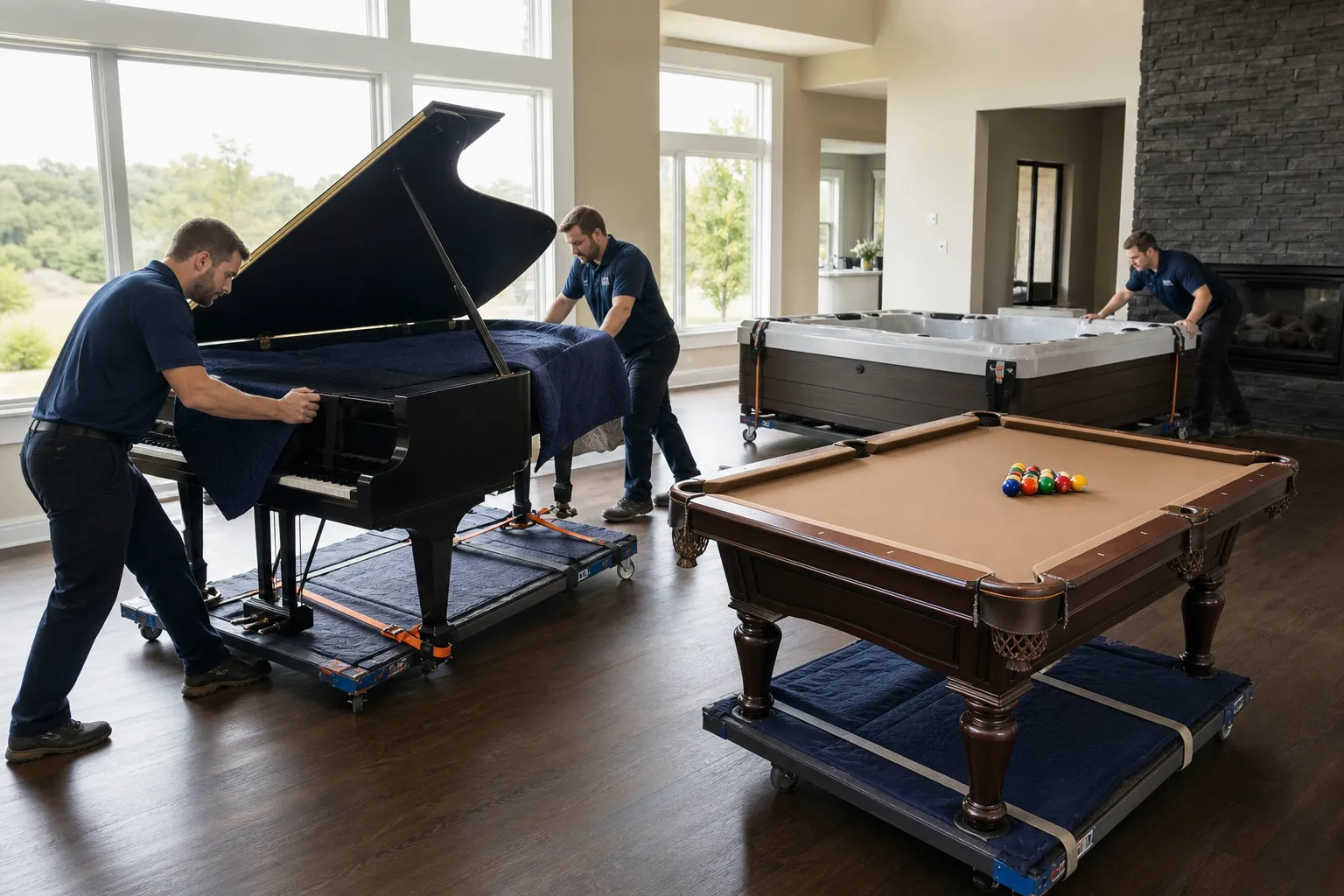
6. Specialty items: pianos, hot tubs and pool tables compared
What to check
Specialty items require equipment, experience and often a site visit. Ask for details about the mover’s specialist teams, proof of past moves of the same type, and any additional insurance or liability terms that apply. Many local providers list specialty moving as a separate service and can coordinate the required equipment and crew expertise for these jobs.
DIY vs specialist mover
- DIY: High risk; strong chance of property damage or personal injury without the correct tools and training.
- Specialist partial: Combine a specialty crew for heavy lifts and your regular mover for household items.
- Full specialist: Hire an experienced specialist mover to handle these items end-to-end for safety and insurance coverage.
Decision cue: if an item requires disassembly, heavy lifting or crane work, always use a specialist mover and request proof of liability coverage and WSIB status before scheduling.
7. After the move: unpack, change addresses and handle claims
Immediate priorities
- Unpack essentials box first, set up beds and hookup major appliances.
- Confirm utilities and internet are working, and update address with banks, government services and subscriptions.
- Inspect items for damage and document problems with photos and dated notes. If damage exists, follow the mover’s claims process immediately.
Damage-claims checklist
- Document damage with several photos and written notes.
- Contact the mover and provide your inventory reference and the signed estimate.
- Ask about the mover’s timeline for claims and whether they will coordinate repairs or reimburse you.
Decision cue: minor scuffs may be easiest resolved directly with your mover. For major loss or unresolved disputes, follow the mover’s claims steps and consider third-party advice if needed.
Printable checklist and local support
If you prefer a one-page printout or a moving-day quick card, request a free quote from EC Movers Ltd and ask them to email their printable checklist when you book. EC Movers offers free quotes and flat-rate pricing as part of their residential moving service. For service details see the residential movers Windsor page or the company website.
Frequently asked questions
Will professional movers add hidden fees and how do I avoid them
Avoid hidden fees by getting a written flat-rate quote that itemises what is included, confirming any potential extras such as parking permits, stairs or long carries, and asking for a final estimate in writing. Compare the written scope before signing.
What insurance or WSIB protections should I ask a mover in Windsor for
Ask movers to show proof of commercial insurance and WSIB certification, and request written details about liability limits and the claims process. Request a signed condition record for valuable items and ask the mover how they handle claims and repairs.
Can I book a last-minute move and what are the realistic expectations
Last-minute moves are possible but may incur higher rates and limited time windows. Expect reduced availability for preferred times and potential premium charges for rush bookings. Contact local crews directly to check same-day or next-day availability and confirm any extra costs in writing.
How should I decide between DIY packing, partial packing and full-service packing
Compare your available time, the value of items, physical ability and budget. DIY saves money but costs time and increases breakage risk. Partial packing is a compromise that protects fragile rooms while saving on cost. Full-service packing offers convenience and professional protection for a higher fee; review written packing inclusions before deciding.
How do I document and file a damage claim after a move
Take time-stamped photos immediately, keep your signed estimate and inventory, contact the mover with your documentation and follow their written claims process. If the mover is unresponsive, escalate per their published dispute steps and keep copies of all communications.
Ready to get a local quote or request a printable checklist? Contact EC Movers Ltd for a free, flat-rate residential moving quote and ask for their moving-day quick card on confirmation: EC Movers Ltd.
Ready to move?
Get your free quote from EC Movers today.