
Residential Moving Companies: Which Service Fits You?
Compare residential moving companies in Windsor-Essex by service level, access, scope, and practical terms before choosing the right help for your move.
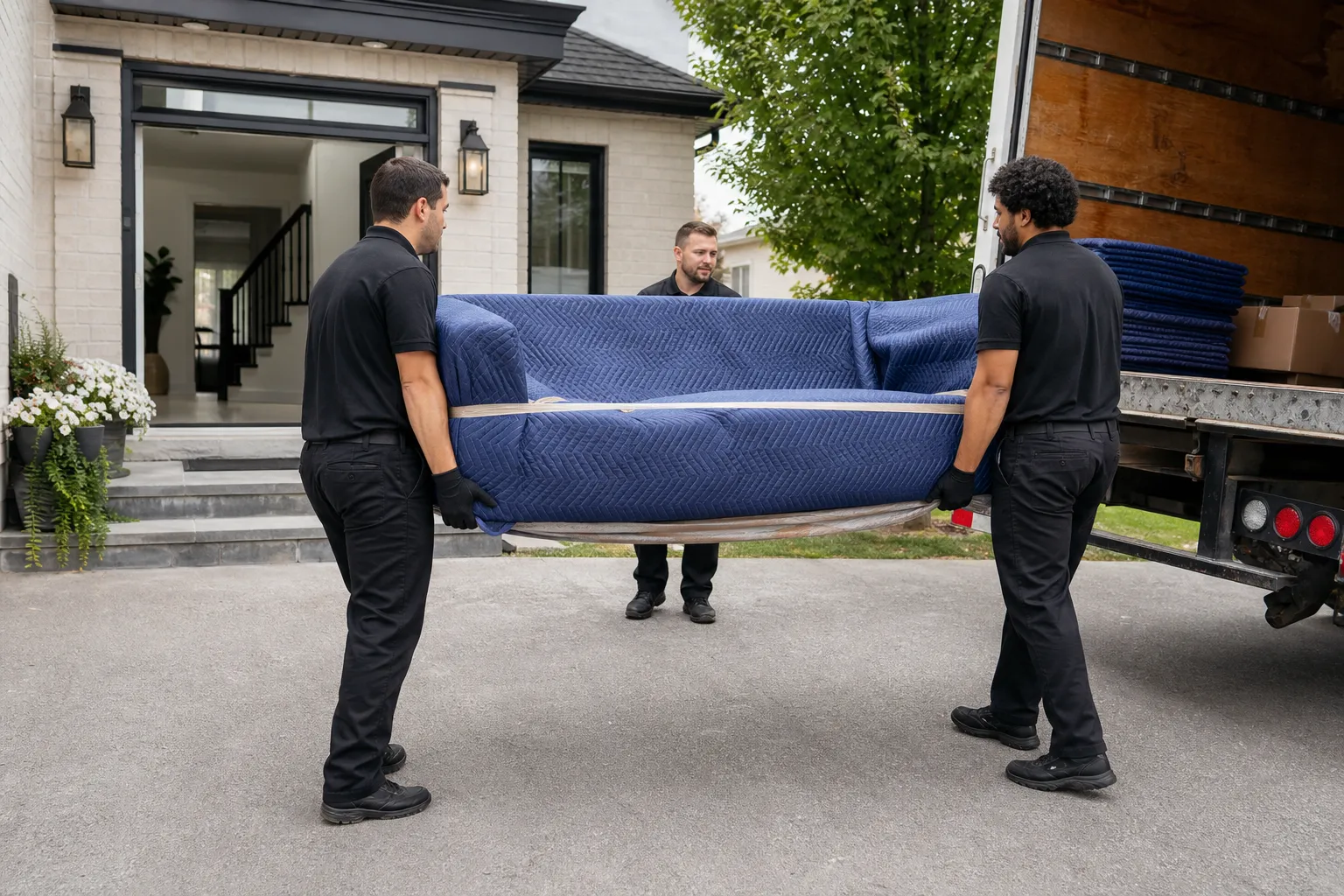
The right residential moving company should match your move, not just offer the lowest headline price. Compare self-moving, partial packing, full-service moving, storage coordination, and specialty-item support, then choose the level of help that fits your home, access conditions, time, and physical capacity.
What residential moving companies should handle
Residential moving companies help relocate household goods from an apartment, condo, house, or other residence. The usual service chain includes packing or packing support, loading, transport, unloading, placement, and sometimes setup at the destination.
Household goods generally include furniture, appliances, and personal effects moved as part of a household relocation. Ontario Regulation 643/05 uses this broad meaning when describing household goods carriage, so your moving plan should reflect the actual belongings and conditions involved.
A useful service plan starts with the job itself. You describe what is moving, where it is located, the access conditions at both properties, and the support you want. The company then identifies which parts of the move it can cover and what you must prepare yourself.
Ontario recommends researching movers and having them assess what needs to be moved so the estimate is more accurate. For a useful overview of the household relocation process, review this residential moving Windsor guide.
EC Movers Ltd presents residential moving for apartments, condos, and homes, including packing, loading, transportation, unloading, and setup. The exact combination of services belongs in your booking documents, especially if you need storage coordination, furniture assembly, or help with unusually heavy or fragile items.
Choose the service level that fits your move

There is no single best way to move a household. The sensible choice depends on your available time, physical capacity, property access, packing ability, budget, and the consequences of a delay or damaged item.
| Service level | Usually suits | What to decide |
|---|---|---|
| Self-move | Small, accessible moves with flexible timing and willing helpers | Vehicle capacity, equipment, loading time, stairs, and responsibility for damage |
| Loading or unloading help | People who can pack and drive but need help with heavy furniture | Labour scope, item exclusions, equipment, and loading order |
| Partial packing | Households that can pack ordinary items but want help with fragile or time-consuming rooms | Which rooms or items are packed, materials supplied, labelling, and unpacking expectations |
| Full-service residential moving | Families, busy professionals, downsizers, or anyone needing one coordinated process | Packing, loading, transport, unloading, placement, setup, and the agreed price |
| Moving with storage coordination | People facing a closing gap, renovation, downsizing, or delayed occupancy | Storage duration, access, handling, protection terms, pickup, and final delivery |
If you are moving from an apartment or condo
Choose more support if you have a long hallway, elevator booking, restricted loading area, several flights of stairs, or a narrow route from the unit to the truck. A student with a few boxes and accessible parking may only need limited labour, while a renter with a bed, sofa, appliances, and no elevator may benefit from a planned crew and equipment.
For an apartment, the service level is often determined by access rather than volume. Ten boxes on the fourth floor can take more coordination than twice as many boxes at a ground-floor house with a driveway.
If you are moving a family home
Full-service help becomes more valuable when several rooms, children, fragile goods, or a tight closing schedule are involved. If you have time but want to control the budget, self-pack ordinary items and request professional help with loading, furniture protection, appliances, and the largest pieces.
A practical split is to pack clothing, books, and labelled non-fragile items yourself, then reserve professional help for heavy furniture, appliances, fragile décor, and the loading sequence. This preserves some control without leaving you to manage the most demanding work.
If you are downsizing
Downsizing adds decisions that a basic transport-only booking does not solve. You may need to separate items for donation, disposal, storage, family members, and the new home before the truck is loaded.
A partial-packing or storage-supported plan can reduce last-minute sorting, but only if those tasks are included in the agreed scope. Decide where each group of belongings is going before moving day.
For a broader explanation of service levels and booking expectations, see what professional movers in Windsor do before deciding how much responsibility you want to retain.
Match provider capability to your household scenario
The right residential moving company is one that can handle the specific combination of property type, access, belongings, distance, and support you need. A company suitable for a small apartment move may not be the best fit for a household containing specialty items or facing a strict possession date.
A student moving from an apartment
If the inventory is small, the route is accessible, and you can pack ahead, limited loading or unloading support may be enough. Tell the mover about stairs, elevator access, the number of large items, and the distance from the entrance to the truck.
For example, a student with a bed, desk, dresser, and several boxes may need a shorter labour plan than a student whose building has a small elevator, a distant loading area, and several flights of stairs.
A family moving house within Windsor-Essex
A family with several rooms, children, fragile goods, and a firm possession date may choose full-service residential moving or a mix of professional packing and transport. A hypothetical family moving from a Windsor house to another home in the region might self-pack labelled clothing and books, request partial packing for the kitchen and fragile décor, and ask the mover to handle heavy furniture.
If that household also has stairs and a closing gap, storage coordination or full-service help may be worth considering. The choice depends on how much sorting, packing, and temporary handling the family can manage itself.
A household moving across Canada
For a long-distance move, compare route planning, pickup and delivery arrangements, storage, communication, transfer points, and responsibility during transit. The cheapest approach is often the one that moves the fewest belongings with the least paid service, such as decluttering, self-packing, and transporting non-fragile items yourself.
That approach is only cheaper if vehicle rental, fuel, accommodation, time away from work, equipment, and responsibility for the shipment remain acceptable. Ask any company you contact whether its long-distance service matches your route and requested dates.
A home with a piano, hot tub, or pool table
Ask for specialty handling as a distinct part of the quote. These items can require route measurements, disassembly, protective equipment, extra labour, and destination setup. Do not assume ordinary household moving includes the same preparation or reassembly work.
A piano may require a different route and handling plan from ordinary furniture. A hot tub may involve access, drainage, disconnection, and placement questions. A pool table may require disassembly, slate protection, reassembly, and levelling. Treat each item as a separate planning problem.
An office relocation
Choose commercial moving for an office relocation, not residential moving. Office moves involve business equipment, workstations, records, IT coordination, downtime, and a different continuity plan even if the premises are small.
For a household move, focus your comparison on residential capability. For a business move, ask for a commercial scope instead of assuming a residential crew or estimate covers the same responsibilities.
Plan access before requesting a residential moving quote
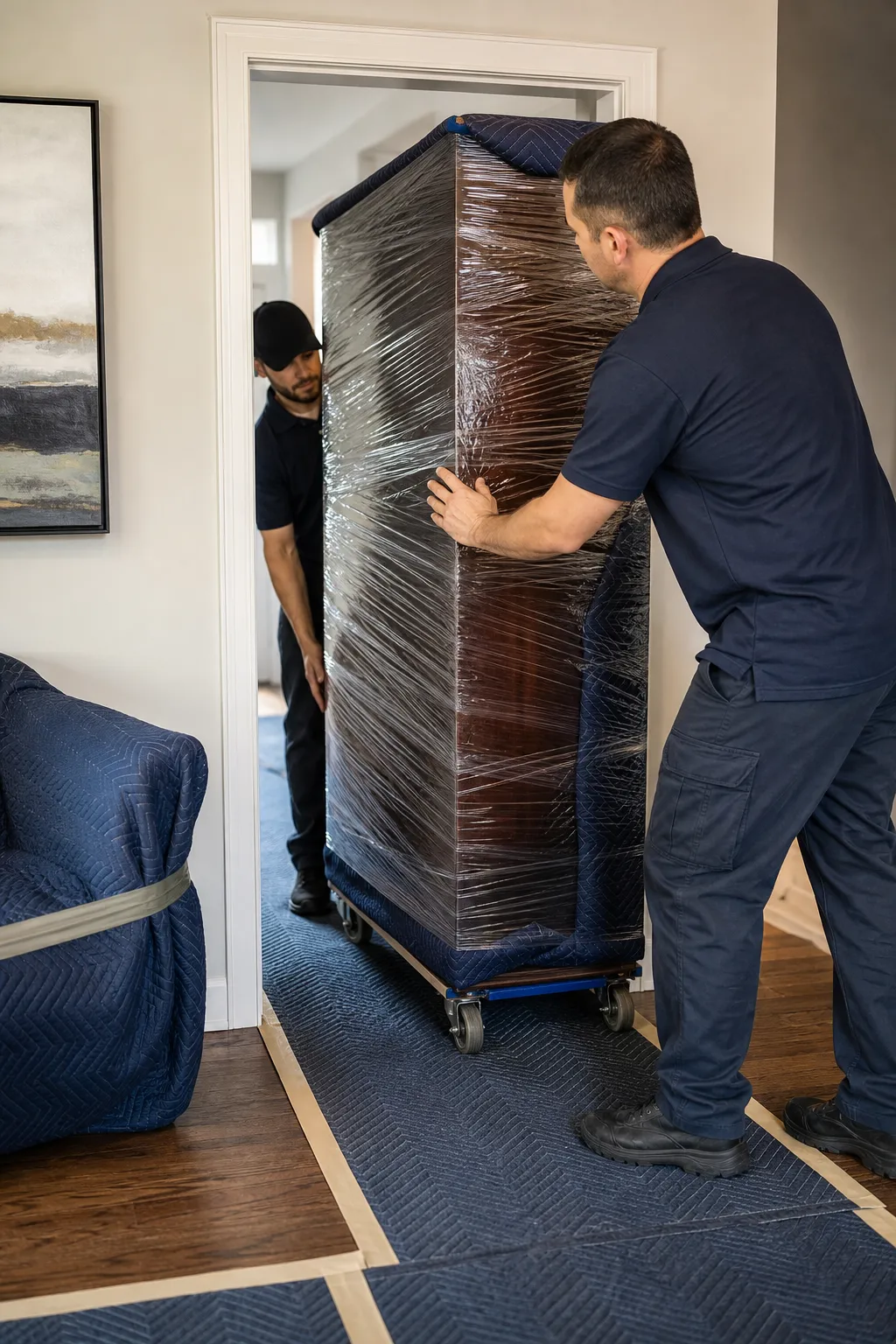
Access details often affect the work more than the number of rooms. Give the mover a short access brief for both addresses before accepting an estimate.
- Property type: apartment, condo, townhouse, detached house, rural property, or other residence.
- Stairs: number of flights, tight landings, exterior steps, and whether a large item must be carried upstairs.
- Elevators: whether one exists, its approximate size, and any building procedure you have been given.
- Parking and loading: truck access, distance from the entrance, driveway limitations, and loading instructions.
- Doorways and hallways: narrow openings, sharp turns, low ceilings, banisters, and removable doors.
- Surfaces: hardwood, tile, carpet, gravel, grass, snow, or uneven outdoor paths.
- Large or fragile items: appliances, glass, artwork, safes, exercise equipment, pianos, hot tubs, and pool tables.
Windsor-Essex moves can involve apartments, condos, suburban homes, rural properties, and travel between communities. Ask your landlord, property manager, condo board, or building staff about their own elevator, parking, insurance, and move-day procedures instead of assuming the mover can arrange them.
Use this Essex County moving checklist to organize access, packing, utilities, specialty items, and final move-day tasks before the crew arrives.
Compare service levels by the work you are keeping
A useful comparison asks, “Which tasks will I still be responsible for?” Two companies can appear to offer the same residential move while leaving you with very different workloads.
| Task | Self-move or moving-only help | Partial or full-service help |
|---|---|---|
| Sorting and decluttering | Usually remains with you | May remain with you unless separately arranged |
| Ordinary packing | You pack and label the boxes | Some or all rooms may be included |
| Fragile-item preparation | You choose materials and method | Confirm which items and materials are included |
| Heavy furniture | You provide labour and equipment | Ask which items the crew will handle and how |
| Loading order | You plan the truck layout | Confirm who decides loading and unloading sequence |
| Destination setup | You place and reassemble items | Confirm placement, assembly, and cleanup expectations |
This distinction is especially useful for families and downsizers. A lower-priced transport option can still demand several days of packing, sorting, lifting, and coordination from you. A fuller service can reduce that workload, but only when the additional tasks are clearly included.
Check the practical terms before you commit
Once you know the service level you want, compare the details that affect your workload and the move-day result. Canada’s Office of Consumer Affairs advises getting estimates from at least three reputable movers and specifying what each estimate should include. Source: Moving advice - Office of Consumer Affairs.
- Scope: Which rooms and item categories will be packed, loaded, transported, unloaded, placed, assembled, or stored?
- Access: Are stairs, elevators, long carries, narrow doors, parking distance, or difficult surfaces reflected in the plan?
- Price structure: Is the estimate flat-rate, hourly, or another arrangement? What circumstances can change it?
- Protection: What furniture, floors, doorways, appliances, and fragile items require special preparation?
- Timing: What date, arrival window, pickup sequence, delivery arrangement, and communication process are documented?
- Responsibility: Who handles disassembly, utilities, building procedures, packing, unpacking, and damage reporting?
- Specialty items: Are pianos, hot tubs, pool tables, safes, or oversized furniture assessed separately?
EC Movers Ltd states that it offers free quotes and no hidden fees. Treat those statements as a starting point for comparison, then ask for a written scope that reflects your particular home, inventory, and access conditions.
Before comparing totals, use these moving quote questions to identify missing services and unclear responsibility.
What to send in your quote request
A complete first message helps a mover assess the job without guessing. Copy and adapt this brief:
- Origin and destination addresses, including the community and postal code.
- Preferred moving date and how flexible that date is.
- Property type at each end, including apartment, condo, house, or rural property.
- Inventory of large furniture, appliances, fragile items, and anything unusually heavy.
- Number of stairs, elevator details, parking distance, narrow access, and long carries.
- Whether you want self-packing, partial packing, full packing, unpacking, or materials support.
- Storage needs, including the expected duration and whether pickup and delivery are required.
- Specialty items such as a piano, hot tub, pool table, safe, or oversized furniture.
- Where you want furniture placed and whether setup or reassembly is part of the request.
Then ask for the estimate and terms in writing. Compare the document, not just a verbal total. A clear quote should let you identify what is included, what you must prepare, and what event could change the price.
For additional context while building your comparison list, review this moving company overview.
After delivery: inspect, document, and settle in
Before the crew leaves, walk through each room and check larger furniture, appliances, fragile items, walls, floors, and the agreed placement. Note concerns promptly, retain your estimate and contract, and keep photographs, receipts, messages, and claim documents together.
Confirm that setup or reassembly included in the booking has been completed. If an item is damaged or missing, follow the written reporting process instead of relying only on a verbal conversation at the door.
Tipping is discretionary. There is no universal Ontario amount, so $100 per mover is not automatically the right figure. If you choose to tip, base it on the service you received and your budget, after the agreed work and inspection are complete. Source: Hiring a mover | ontario.ca.
Residential moving questions worth asking
Who is the most reasonable moving company?
The most reasonable mover is the one offering a clear scope at a price that fits the actual work. Compare at least three estimates using the same inventory and access details, then weigh service level, exclusions, timing, protection terms, and communication alongside the total.
What is the cheapest way to move things across Canada?
The cheapest option is often to reduce the shipment, self-pack, and accept more responsibility for transport and time. A professional long-distance mover can be better value when distance, vehicle costs, fuel, accommodation, heavy items, or work disruption make a self-move less practical.
How far in advance should I book movers?
Book as soon as your possession dates and inventory are reasonably clear, especially if you need a weekend, a particular date, packing, storage, or specialty handling. Earlier planning gives you more opportunity to compare service levels and solve access problems.
Is $100 each a good tip for movers?
$100 each can be appropriate for one customer and excessive for another. Tipping is optional, has no universal Ontario standard, and should reflect the service, complexity, and your budget after the move is inspected.
Choose your next step with EC Movers Ltd
Once you have your inventory, access details, preferred service level, and timing, request a scope-specific quote from EC Movers Ltd. The company lists residential moving for apartments, condos, and homes in Windsor and related moving service categories. Review the residential moving service and use your completed brief to ask for terms you can compare clearly.
Ready to move?
Get your free quote from EC Movers today.