
Van Lines in Canada vs Direct Movers and Brokers
Learn how van lines work in Canada, compare networks with direct movers and brokers, and check quotes, handoffs, storage and delivery terms before booking.
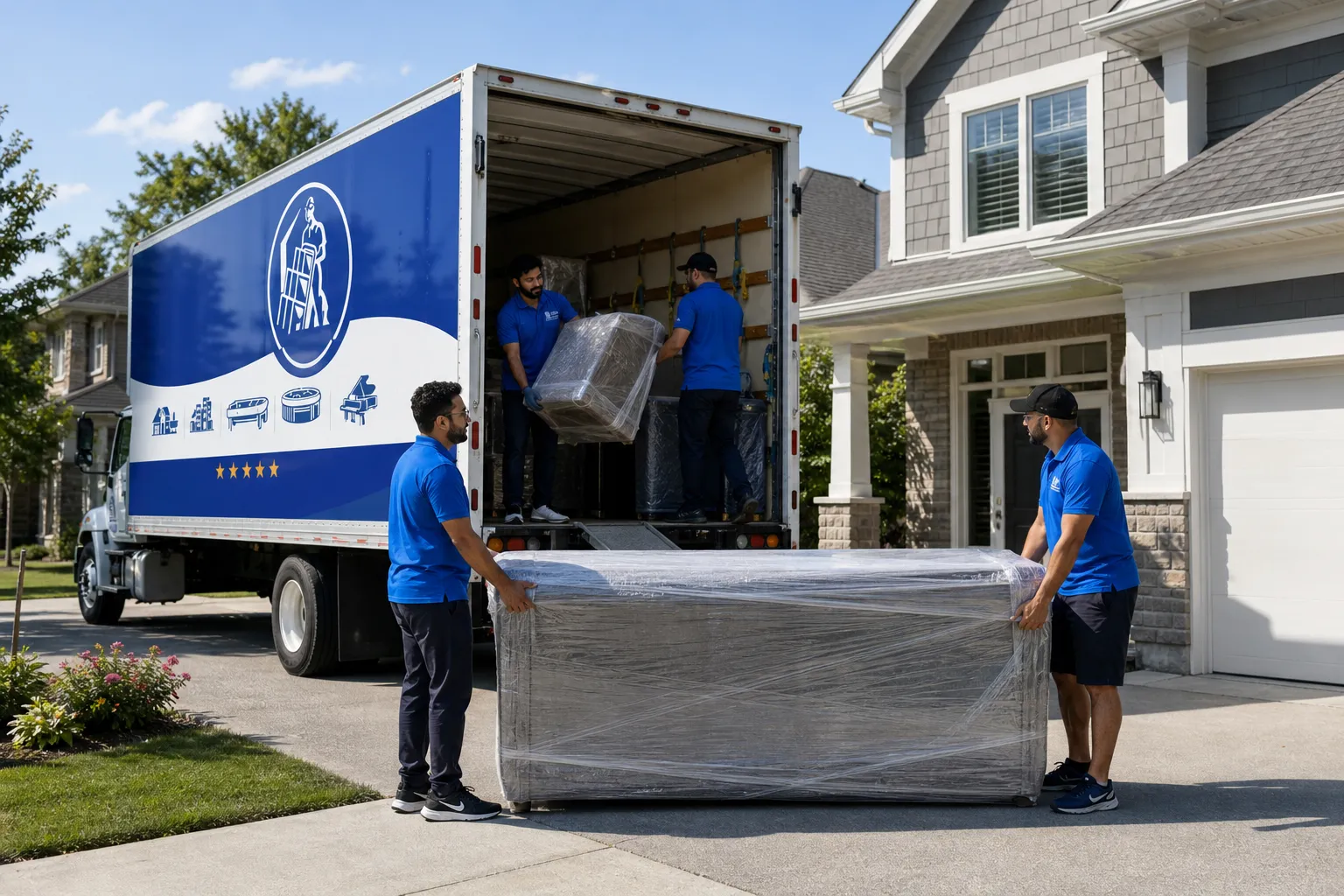
A van line in Canada is a coordinated household-goods moving network or carrier arrangement used for local, interprovincial and long-distance relocations. It can provide broader route coordination, packing and storage support, but you should verify who performs each stage, whether transfers or subcontractors are involved, how delivery timing is handled, and what the written quote includes. See also: Long distance moving canada logistics.
What is a van line in Canada?
“Van line” generally refers to an organized moving network that coordinates household-goods transportation through one or more carriers, agents, terminals or crews. The network may arrange the estimate, pickup, long-distance transport, storage and delivery, while different parties handle different parts of the journey.
The term does not guarantee that one company owns every truck, employs every crew or serves every route directly. A van-line arrangement can involve a central brand, local agents, partner carriers, transfer points or subcontractors, so the structure of your specific move belongs in the quote and contract.
In Ontario, household-goods transportation is addressed within the provincial carriage-of-goods regulation. Ontario Regulation 643/05 defines household goods and public trucks in the context of transporting goods for compensation, but a regulation alone does not verify a mover’s service quality, route, coverage or business practices.
Before booking, identify the company responsible for the work and ask for written terms covering the shipment, charges, delivery assumptions and claims process. The Canadian Association of Movers consumer information can help you begin that investigation.
Van line, direct mover, broker or freight carrier: what changes?
The main difference is who controls the moving work and how many organizations coordinate your shipment. A network can offer broad coverage and route coordination, while a direct mover may give you a clearer line of responsibility from pickup to delivery.
Van-line network
A van line can suit a full-house or interprovincial move when you need coordinated coverage across a long route, packing help, storage or delivery involving more than one operating region. The tradeoff is that you must clarify handoffs, transfer points, performing carriers and delivery windows.
Independent direct mover
A direct mover handles the agreed transportation itself, or clearly identifies the limited partners involved. This model can be attractive when the provider serves your route directly and you value one point of contact, fewer handoffs and a simpler explanation of responsibility.
For a local move, apartment move or shorter interprovincial route, a direct provider can be easier to compare than a broad network. Ask whether the company can handle your addresses, shipment size and access conditions without passing the work to another carrier.
Broker
A broker arranges moving services but may not be the company that arrives at your home. A brokered quote should identify the performing mover, the legal party responsible for the shipment, how the final price is set and what happens if the arranged carrier changes.
Freight carrier
Freight transportation may fit a small, durable shipment that can be palletized and does not require room-by-room service, unpacking or careful placement. It is usually a poor fit if you need movers to pack a household, carry furniture up stairs, disassemble beds or coordinate a complete home setup.
DIY rental or self-arranged move
DIY can suit a small local move when you have suitable equipment, willing labour, flexible timing and a realistic plan for stairs, lifting and vehicle access. For a full house, cross-country route or heavy specialty items, the household also takes on the coordination, equipment and damage risk.
Choose a network when broad route coordination matters, a direct mover when one provider can clearly handle the route, a broker only when the performing carrier is identified, freight when the shipment and service expectations are limited, and DIY when you can safely manage the entire operation.
For a wider overview of long-distance moving options, compare the route, packing, storage and delivery support you need before deciding which model belongs on your shortlist.
How a van-line move works from quote to delivery
A van-line move usually follows several stages, but the organizations involved can change from one booking to another. Treat every stage as a point where you confirm responsibility, timing and the condition of your belongings.
1. Inventory and access review
Start with both addresses, preferred dates, rooms and items being transported, and access conditions at each property. Record stairs, elevators, long carries, narrow turns, loading zones, parking restrictions, building rules and items such as pianos, hot tubs or pool tables.
2. Estimate and written scope
Confirm the service level, pricing method, inclusions and possible extra charges. Ask for the company name that will contract with you and any carrier or agent expected to perform the work.
3. Booking and preparation
Confirm the pickup window, delivery assumptions, payment schedule, change process and cancellation terms. Reserve elevators and loading areas if your building requires it, and send access instructions before moving day.
4. Pickup and inventory record
At pickup, the crew loads the agreed items and records the shipment. Look for a clear record of items, visible condition and exceptions. If an item is added or requires special handling, ask how the change affects the estimate before the truck leaves.
5. Line-haul transport, transfer or storage
The shipment may travel directly, move through a transfer point or enter storage before final delivery. Ask where transfers can occur, who has custody during each stage and how you will be notified if the plan changes.
6. Delivery, placement and inspection
Before delivery, confirm the date or window, receiving address, access arrangements and balance due. At delivery, check the inventory and visible condition before signing completion documents, then report damage or missing items through the mover’s stated process.
For a concrete example of a direct arrangement, EC Movers Ltd describes Windsor-to-London direct delivery as one-truck transport with no transfers. That example applies to the described route, not automatically to every booking.
What changes the price and service scope?
Moving prices change because the work, distance, access and responsibility change. The most useful quote is the one that describes the same shipment and work as the alternatives.
- Shipment size: Boxes, furniture and appliances affect vehicle space, labour and handling.
- Origin and destination: Distance, route complexity and delivery access affect the plan.
- Dates: A narrow pickup or delivery window can require different scheduling than flexible dates.
- Access: Stairs, elevators, long carries, narrow doors and parking can add labour or coordination.
- Packing: Full packing, fragile-item preparation and unpacking require different materials and labour.
- Storage: A gap between addresses adds collection, custody and later delivery arrangements.
- Specialty items: Pianos, hot tubs and pool tables need separate handling plans.
- Delivery expectations: Fixed appointments, room placement and reassembly require more coordination than basic delivery.
EC Movers Ltd offers hourly or flat-rate pricing depending on the move and scope, including residential, long-distance, packing, storage and furniture assembly services. Ask which method applies to your route and whether the written amount includes every requested service.
Prepare a quote brief the mover can actually use
Send the same information to each provider so the offers describe the same job:
- Pickup and delivery addresses, postal codes and property types.
- Preferred dates, acceptable range and any hard deadline.
- Room-by-room inventory, large furniture, appliances, box estimates and fragile items.
- Stairs, elevators, narrow access, long carries, loading zones and parking restrictions.
- Building rules, elevator reservations, move-in windows and access procedures.
- Who will pack, label, disassemble, reassemble, unpack and remove cartons.
- Storage dates, if move-out and move-in dates do not match.
- Specialty items and photographs of difficult access.
- Delivery constraints, such as lease deadlines or limited receiving hours.
- Questions about transfers, subcontractors, protection, claims and changes.
Hypothetical inventory example
Hypothetical example: A two-bedroom apartment is moving from Windsor to a detached house elsewhere in Ontario. The shipment includes two beds, a sectional sofa, a dining table with six chairs, two desks, a washer and dryer, 45 labelled cartons and fragile kitchenware. The apartment has one reserved elevator; the house has three front steps and a narrow side entrance.
This brief gives a mover more than “two bedrooms.” It identifies volume, access, appliances, elevator coordination, stairs, fragile packing and likely furniture assembly needs. Adding a piano, storage gap or second pickup should trigger a revised scope before work begins.
Compare Canadian moving quotes by responsibility, not the headline number
Two quotes are comparable only when they describe the same work, route, access and delivery assumptions.
| Item to verify | Quote A | Quote B | Follow-up question |
|---|---|---|---|
| Contracting and performing company | Who signs, collects and delivers? | ||
| Crew and subcontractors | Can another carrier perform any stage? | ||
| Pickup and delivery timing | Are these fixed dates or estimates? | ||
| Transfers | Will goods move between trucks or crews? | ||
| Packing and unpacking | Who supplies materials and removes cartons? | ||
| Disassembly and reassembly | Which furniture is included? | ||
| Stairs, elevators and long carries | Are access conditions included? | ||
| Storage | Who stores and delivers the goods? | ||
| Extra charges | Which fuel, travel or access charges are conditional? | ||
| Protection and exclusions | What is covered and excluded? | ||
| Inventory changes | What happens if the shipment changes? | ||
| Claims process | Who receives and handles a claim? | ||
| Cancellation and changes | What happens if dates or access change? | ||
| Payment schedule | When are payments due? |
A final price can rise when inventory, access, packing, storage or delivery assumptions change. Ask the provider to identify each trigger in writing instead of relying on a verbal promise that the estimate is all-inclusive.
Questions to settle before you book
- Who is contractually responsible from pickup through delivery?
- Which company and crew will collect, transport and deliver?
- Can another carrier, agent or subcontractor perform part of the move?
- Are transfers expected, and where can they occur?
- What information was used to prepare the estimate?
- What could change the estimate or delivery plan?
- What protection and exclusions apply?
- Which items, services or access conditions are excluded?
- What happens if an elevator, parking area or delivery route becomes unavailable?
- How are missing or damaged items reported?
- What are the cancellation and postponement terms?
- Will I receive the complete terms before booking?
Ontario readers should treat regulatory information as one part of due diligence, not as a substitute for checking the provider, agreement and coverage.
Hypothetical fit test: three Canadian household moves
Flexible full-house interprovincial move
Hypothetical example: A family is moving a complete three-bedroom home from Ontario to Alberta, needs full packing and two weeks of storage, and has flexible pickup dates. A van-line network may fit because broad route coordination matters more than one local crew handling every stage. The family should confirm carriers, transfers, storage responsibility, delivery windows and claims.
Small apartment shipment
Hypothetical example: A student is sending a bed, desk, bicycle and 12 boxes to another province with a wide delivery window. A small-load direct arrangement or freight option may fit better than full-service van-line moving, provided loading, unloading, access and delivery limits are understood.
Windsor-to-London household move
Hypothetical example: A couple is moving a furnished home from Windsor to London, needs packing and furniture reassembly, and prefers no transfer. A direct mover is attractive if it confirms the route, scope and access in writing. EC Movers Ltd describes this route as direct, one truck and no transfers.
Storage-gap variation
If the couple cannot enter the London home for three weeks, the quote must cover pickup, storage custody, protection, final delivery and any second access assessment. Compare the complete handoff, not only the initial pickup price.
A direct Canada-wide option for Windsor households
EC Movers Ltd is a Windsor-based moving company offering residential and long-distance moves across Canada, packing and unpacking, storage, furniture disassembly and reassembly, and specialty-item handling. It describes both hourly and flat-rate pricing and insured operations.
That makes EC Movers Ltd a direct moving option to compare with a van-line network. It should not be described as a van line unless the company confirms that status for your booking. Ask for the current route, crew, delivery assumptions, transfer plan, protection terms and full written scope.
Van-line questions Canadian movers ask
Can a van line move a small shipment across Canada?
Some van-line arrangements accept small shipments, but suitability depends on capacity, delivery flexibility, access and the services required. Compare a small-load direct mover and freight option, then confirm minimum charges, handling and inside delivery.
Will the same crew handle pickup and delivery?
Not necessarily. A network can use different crews, agents or carriers for pickup, transport and delivery. Ask for the identity and responsibility of each performing party.
What should I ask about subcontractors?
Ask whether subcontractors or partner carriers can perform any stage, who contracts with you, who carries responsibility, how handoffs are recorded and who handles damage or delay questions. Have the answer included in the written agreement.
Is a direct mover better than a van line for Windsor-to-London?
A direct mover can be the better fit when it handles the route, access and service scope directly and you prefer fewer handoffs. A van line may help when broader coordination or storage matters more. Compare written responsibilities instead of choosing by label.
Request a scope-specific moving quote
Prepare both addresses, your inventory, dates, access details, packing responsibility, storage needs and delivery constraints. Then ask each provider to state who performs the work, whether transfers are expected, what protection applies and which changes can affect the price.
For a Windsor household comparing direct Canada-wide transport, packing, storage or furniture setup, request a current quote from EC Movers Ltd for its long-distance moving service. Ask for the route-specific scope and delivery assumptions in writing so you can compare the offer fairly with any Canadian van-line proposal.
Ready to move?
Get your free quote from EC Movers today.